
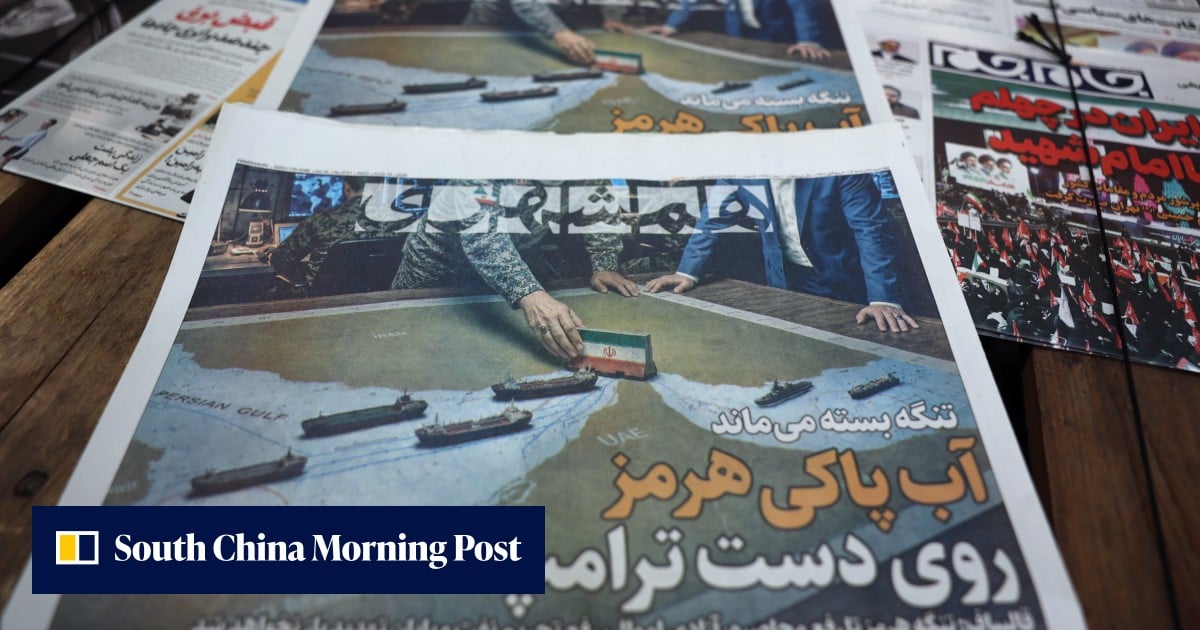
Iran’s military issued a stern warning to Gulf nations, cautioning against any collaboration with U.S. forces following a breakdown in relations stemming from recent attacks on commercial shipping. The situation escalates as tensions simmer in one of the world’s most critical waterways.
Iran’s Warning to Gulf Nations
On Wednesday, Iranian armed forces underscored their position by declaring that any support extended to the U.S. military by Gulf countries would be viewed as direct involvement in American military actions. This statement, reported by the Mehr news agency, highlights the increasing strain in the region’s dynamics, especially after the United Arab Emirates (UAE) announced a termination of its economic links with Tehran.
The UAE’s decision came just hours before Iran’s warning, reacting to reports of ballistic missiles fired by Iran at vessels off its coastline. The Strait of Hormuz—a strategic passage for oil shipments—remains an ongoing point of contention and a potential flashpoint for conflict. This maritime corridor is vital for the economies of several countries, particularly those in the Gulf region.
U.S. Military Presence in the Gulf
The Gulf region is home to numerous U.S. military installations, with heightened tensions complicating existing relationships. Even though the hostility between the U.S. and Iran had calmed recently, the threat level remains high as Iran has the ability to disrupt maritime traffic through the Strait of Hormuz—an essential thoroughfare for global trade. This ongoing instability raises concerns over international shipping and energy supplies, as attacks on commercial vessels persist.
On the diplomatic front, a proposed U.S.-Iran agreement aimed at alleviating tensions and reopening vital trade routes has failed to materialize. Despite both sides hinting at ongoing communications, U.S. President Donald Trump recently asserted that negotiations had collapsed. His social media message, which provocatively labeled the strait as a “NEW U.S. Territory,” emphasizes the continuing friction between the two nations and raises questions about future diplomatic engagements.
Recent Events and Future Implications
The series of events marks a critical juncture in U.S.-Iran relations. Iran’s military assertiveness coupled with the UAE’s severance of ties suggests escalating hostilities could lead to broader regional conflicts. The Iranian military’s chief of staff, Ali Abdollahi, has articulated that any Gulf state aiding the U.S. will be deemed as collaborating with an “aggressor.” Such rhetoric points to Iran’s commitment to defend its interests vigorously and warns neighboring countries against aligning with the U.S. military strategy in the region.
With effective navigation through the complex geopolitical landscape becoming increasingly paramount, the surrounding countries must strategize carefully. The risk of miscalculation or unintended escalation remains high, and all players in the Gulf region face the challenge of balancing their national interests with the impact of U.S. military actions. The current scenario underscores the necessity for diplomatic efforts to ease tensions and ensure maritime security in one of the world’s most pivotal areas.