
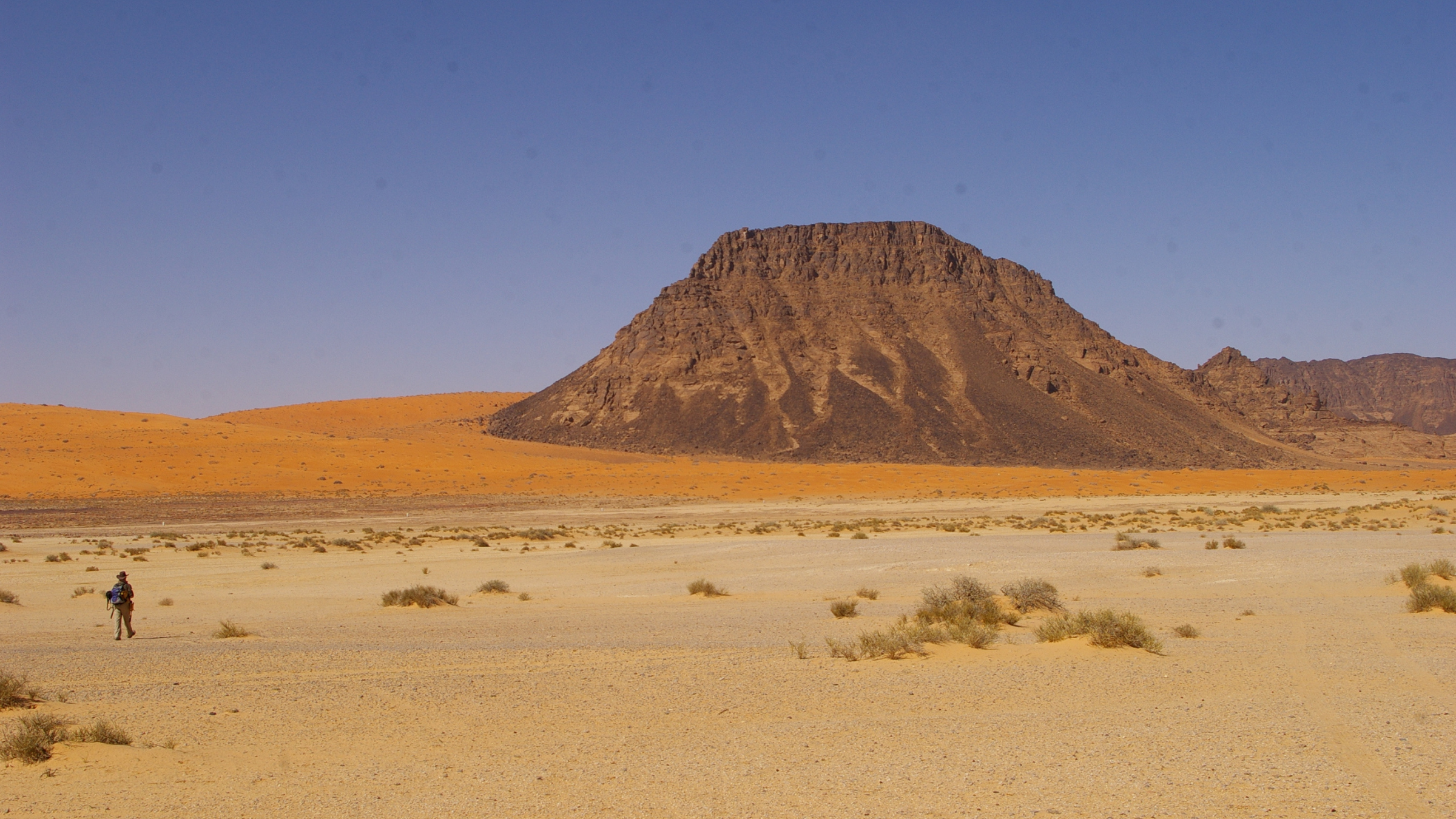
Neanderthals’ presence in the Arabian Peninsula might have been more extensive than previously believed, with evidence suggesting they ventured into the region’s deserts approximately 55,000 years ago. A recent study examining ancient stone tools indicates that these early humans might have occupied areas much further south than initially thought. This insight challenges the traditional perspective of Neanderthals as primarily cold-adapted beings confined to Europe.
Expanding the Neanderthal Range
The findings pinpoint archaeological evidence at Jebel Katefeh-1, an important site located next to an ancient lake near Jubbah in Saudi Arabia’s Nefud Desert. Researchers had previously been uncertain about who was utilizing these stone tools, as no Neanderthal remains had ever been identified in Arabia. However, the tools retrieved from this site displayed characteristics that resembled those crafted by Neanderthals rather than those of modern humans. This discovery expands the geographical understanding of Neanderthals and suggests that they may have been adaptive pioneers in more arid environments.
Study co-lead author Huw Groucutt, an archaeologist at the University of Malta, emphasized that this research significantly extends the known range of Neanderthals into the more open terrains of Arabia. While the evidence remains circumstantial, it opens the door to further exploration of the Neanderthals’ migratory behaviors and environmental adaptability.
Tools as Evidence
The stone tools analyzed in this study were meticulously crafted from a well-prepared stone core, differing in shape from tools made by Homo sapiens. Researchers utilized statistical comparisons to identify toolmaker identity, and the results overwhelmingly indicated that Neanderthals were the likely authors of these artifacts. Their method involved comparing hundreds of flake shapes from various archaeological sites across Arabia and surrounding regions.
To determine when these tools were created, the team employed optically stimulated luminescence dating on sediment layers, leading to the conclusion that these tools dated back to roughly 55,000 years ago. This period corresponds to a shift in climate conditions, shifting from aridity to increased humidity, suggesting that Neanderthals may have been following herds of grazing animals into these newly fertile regions.
The Climate Connection
The timing of Neanderthals’ potential foray into northern Arabia may be closely linked to these climate changes. As the surrounding desert transformed from barren to greener landscapes, it likely attracted grazing animals which in turn drew Neanderthals into the region. While some experts, like archaeologist Knut Bretzke, recognize the compelling evidence for the Neanderthal presence, they also caution that more concrete findings, such as bone or DNA evidence, would solidify this claim.
Bretzke pointed out that revisions to the underlying assumptions regarding the comparison sites used in the analysis should be considered, as they might influence interpretations. Despite this, the evidence currently stands as the best existing indicator of a Neanderthal presence in Arabia’s history, shedding light on the adaptability and expansion of these ancient humans.
In summary, while evidence of Neanderthal activity in the Arabian Peninsula remains circumstantial, it provides valuable insights into the capabilities and reach of these early hominins. As archaeological technology advances and more interdisciplinary studies are conducted, our understanding of Neanderthals’ geographic range and lifestyle continues to evolve.