
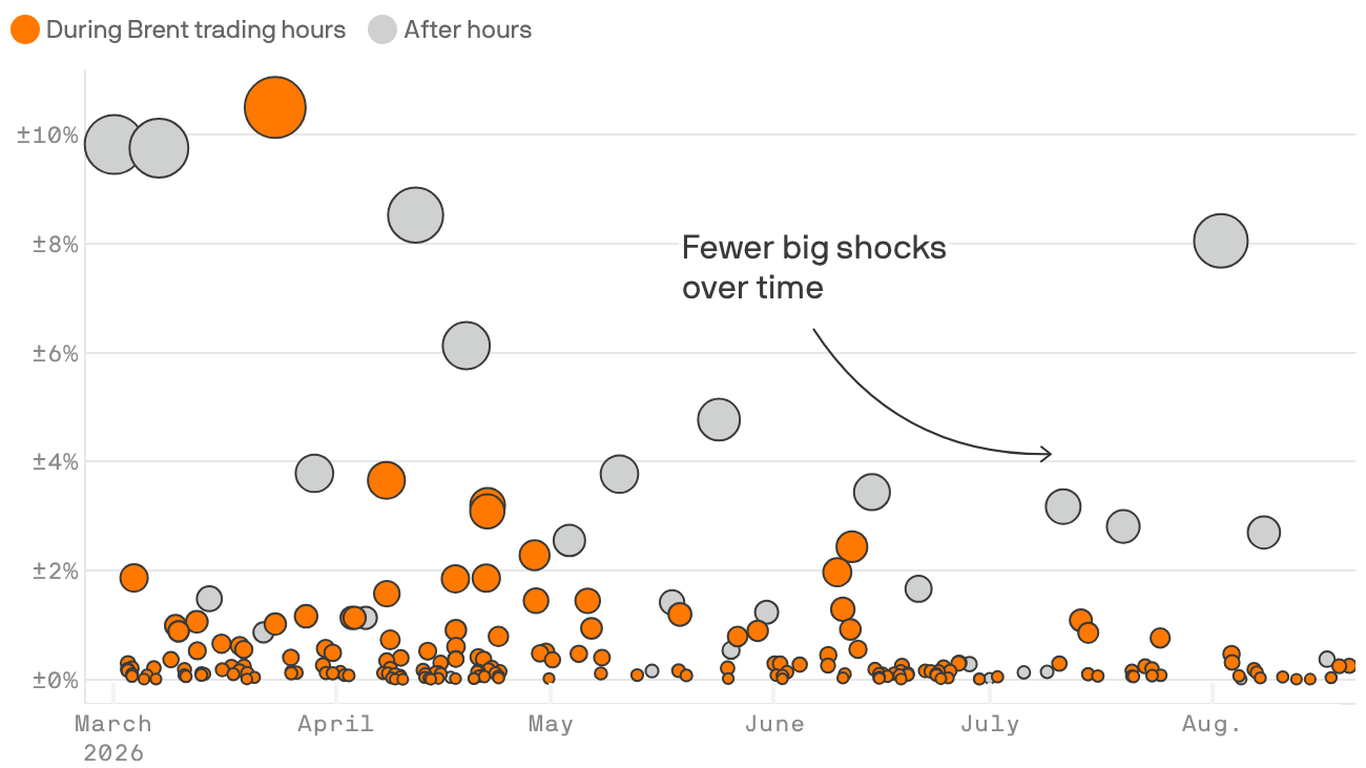
In recent times, political events have shown a significant influence on market dynamics. A prominent example of this is the fluctuation of prices following President Trump’s statements regarding the Iran conflict. This interaction between politics and market performance illustrates the broader impact that social media and political discussions can have on financial landscapes.
Market Reactions to Political Statements
Political announcements can lead to immediate consequences in the stock market, as investors often react to news with heightened emotions. When President Trump shared thoughts on the Iran war, there was a notable impact on various sectors, particularly in oil and defense. Investors closely monitor such statements, assessing potential risks and opportunities. As social media becomes a more common avenue for political communication, the speed at which markets respond is increasing, leading to swift price changes.
In many instances, prices can surge or plummet within minutes of a significant announcement, demonstrating just how volatile the markets can be in reaction to political discourse. For example, the oil market saw volatility as investors speculated on the impact of potential military action on supply chains. Similarly, defense stocks often see noteworthy fluctuations when news of military tensions arises, as companies in this sector stand to benefit from increased government spending.
Effects of Social Media on Market Perception
The advent of social media has altered the landscape of communication in significant ways. Traditional news outlets often take time to verify information before dissemination. In contrast, social media allows political figures to convey messages directly to the public, which can lead to immediate market reactions. This direct communication can amplify the effects of a statement, causing market fluctuations even before analyses and expert opinions are formulated.
With political figures like President Trump utilizing platforms such as Twitter, the implications for market volatility are profound. Investors knowledgeable about this dynamic may try to predict stock movements based on upcoming posts from influential leaders. However, the rapid changes in market perceptions can also lead to miscalculations, as emotional responses often overshadow analytical thinking, presenting risks for investors who act hastily.
Long-term Implications of Market Volatility
While short-term price changes can present opportunities for quick profits, they can also create a climate of uncertainty. Over time, continual volatility can shake investor confidence, influencing long-term investment strategies. If market participants believe that prices will be subject to sudden swings due to political rhetoric, they may become more conservative in their spending decisions and investment strategies.
This caution could lead to a slowing down of investment in certain sectors, impacting overall economic growth. As an example, industries like oil and defense might see shifts in long-term project funding as financial institutions weigh the potential for political instability. Investors are advised to remain aware of these dynamics and consider not only immediate market responses but also potential long-term consequences.
In conclusion, the influence of political statements, particularly on social media, has made an indelible mark on market performance. Understanding these interactions is crucial for anyone looking to navigate the complexities of today’s financial landscape. By staying informed and adaptable, investors can position themselves to better handle the rapid changes that accompany our era of instantaneous communication.