
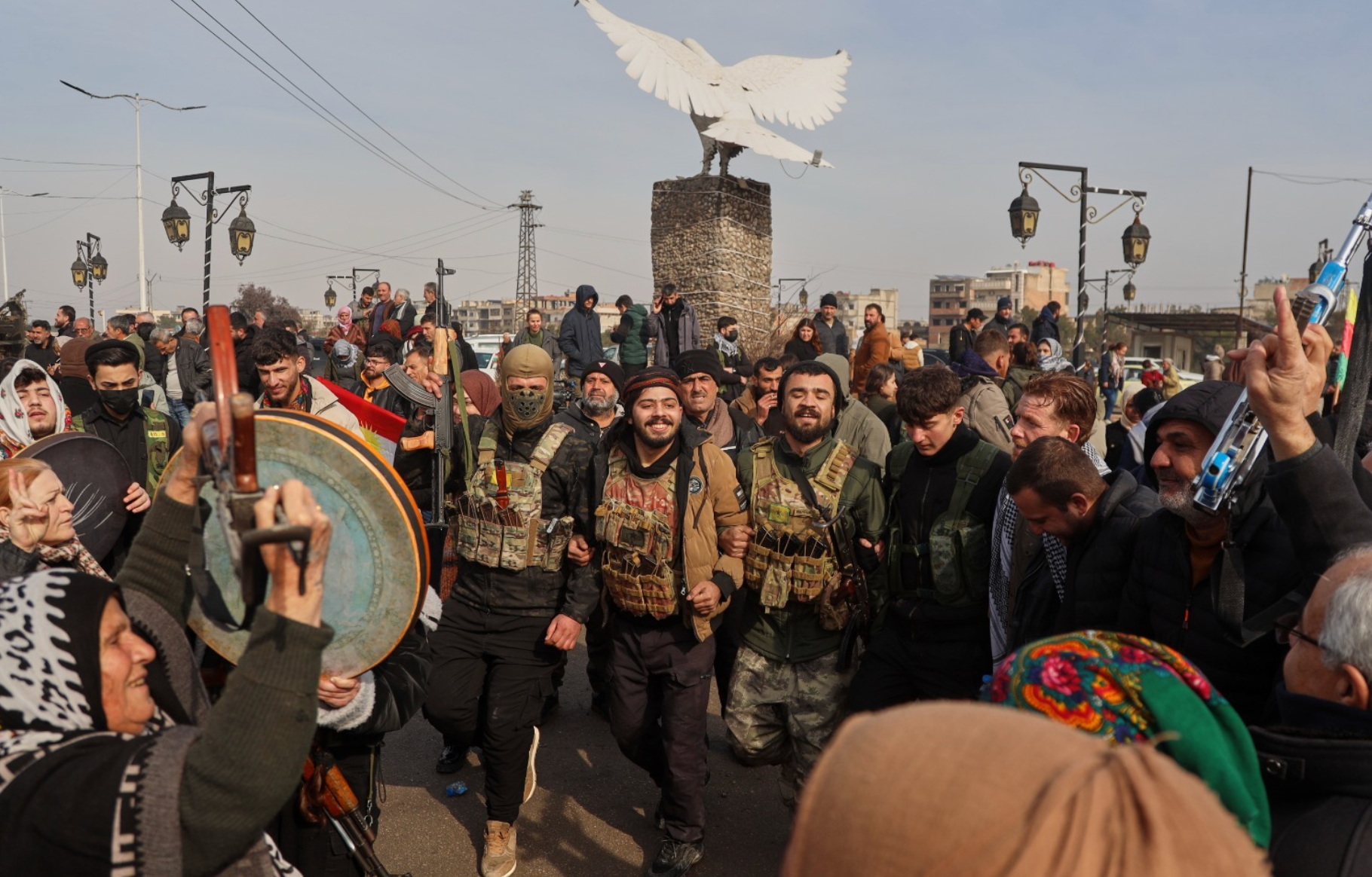
In recent days, unsettling developments have emerged from Turkish media, creating waves of misinformation regarding the Kurdish military’s relationship with Israel. Reports have surfaced, falsely attributing statements to senior Kurdish figures depicting Israel as an adversary. These claims have been promptly denied by the individuals involved, contributing to a climate of suspicion and tension at a critical juncture for Syria’s future.
The Narrative of Conflict: Kurdish Leaders Misrepresented
The troubling trend began on August 17 when Türkiye Gazetesi published fabricated comments from M. Berxwedan, a YPG commander from Kobani. The paper suggested that Kurdish forces would take up arms against Israel if ordered, painting Israel as a looming threat to Kurdish interests. These assertions were quickly debunked by the Syrian Observatory for Human Rights, which highlighted that the claims not only lacked any factual basis but also risked damaging Berxwedan’s reputation within Kurdish society. As a prominent figure in the liberation of Kobani from ISIS, such misrepresentation could gravely affect his standing among those he leads.
Shortly after, on August 22, the same newspaper released another dubious report featuring Sipan Hemo, a founding member of the Syrian Democratic Forces (SDF). Here, Hemo was allegedly quoted as saying that Israel was actively attempting to disrupt Kurdish integration with the Syrian interim government, along with insinuations about Israel trying to manipulate Kurdish forces. However, once again, these statements were swiftly denied by Hemo himself and confirmed as inaccurately reported by an SDF official, further emphasizing the questionable motives behind these publications.
Implications of Misinformation: The Regional Stakes
The duplication of such incidents within a single week raises serious concerns beyond mere journalistic error, indicating a calculated misinformation strategy. Turkey appears to be attempting to exploit the evolving dynamics between the Kurds and Israel, seeking to influence the political and military landscape of Syria to align with its own agendas. This strategy seemingly aims to sow distrust between Kurdish forces and Israel, especially during a time when both groups could find common ground against common threats, such as jihadist organizations.
Should Turkish propaganda succeed in portraying Kurdish leaders as belligerent towards Israel, it could foster a perception of enmity that did not previously exist. If Kurdish leaders start to be viewed as adversaries to Israel, it risks creating a rift that could be exploited by Turkey to further its interests. The Turkish government aims to frame the narrative around the Kurds and their relationship with Israel, ensuring that any potential cooperation is scrutinized and potentially sabotaged.
The Importance of Direct Dialogue: A Path Forward
In light of these ongoing manipulations, Israel faces a crucial decision regarding its engagement with Kurdish leaders. It can either continue to process information about the Kurds through the lens of Turkish narratives or establish direct lines of communication with Kurdish political and military representatives. The latter option, fostering genuine dialogue, would be vital for ensuring clarity regarding Kurdish intentions and ambitions.
The Kurds are not merely a tool for regional powers; they are an independent entity with their own goals. If Israel fails to engage meaningfully with them, it leaves considerable space for Turkey to define the narrative. This lack of direct engagement allows Turkey to paint the Kurds in various lights depending on the audience—portraying them as terrorists to its own citizens, as proxies to the Arab world, and as enemies to Israeli interlocutors.
Ultimately, if Turkey’s strategy is rooted in fear of a burgeoning Kurdish-Israeli relationship, it underscores the need for Israel to consider this relationship seriously. By ensuring an open dialogue, both sides could potentially mitigate misunderstandings rampant in the region. In navigating the complexities of the evolving geopolitical landscape, it is crucial not to let manipulated narratives dictate the future of Kurdish-Israeli relations.