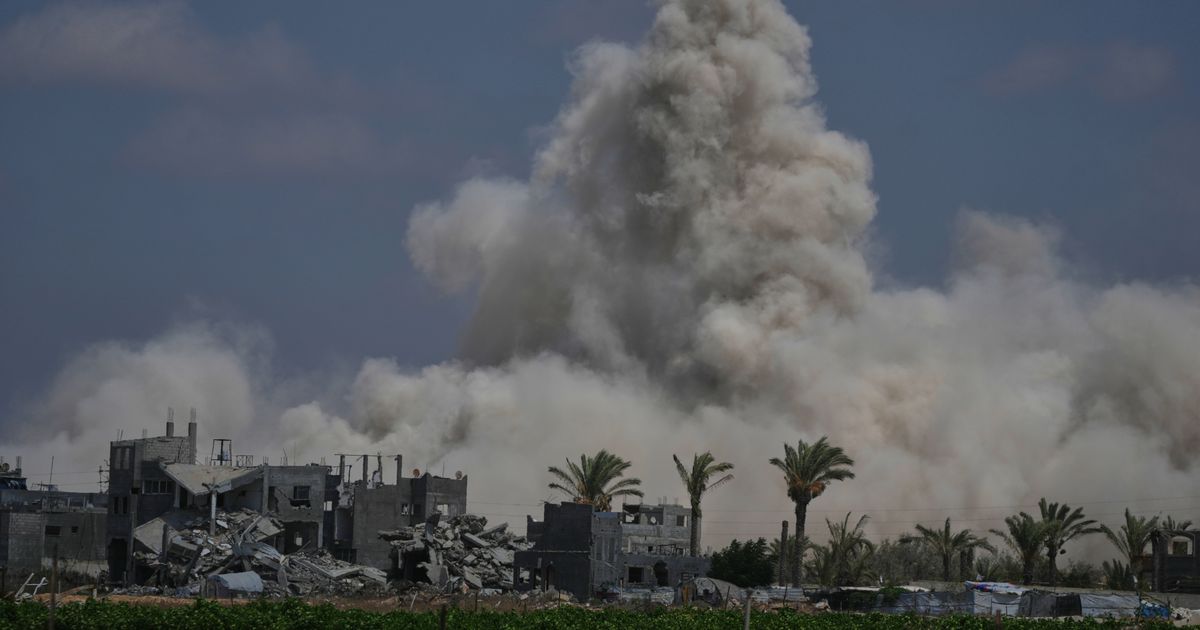
International Troop Deployment Discussions in Gaza
Recent discussions held in Israel indicate a potential commitment of military personnel from Uganda and Burundi for an international security force in Gaza. Military representatives from both nations visited Israel to explore the logistics and implications of this deployment, which is part of a broader initiative led by former U.S. President Donald Trump’s Board of Peace aimed at establishing a fragile ceasefire in the region.
Uganda Approves Troop Contribution
According to officials, the Ugandan delegation joined their Burundian counterparts in meetings that focused on troop deployment. The Ugandan Parliament recently approved the troop contribution, which is anticipated to comprise around 1,200 personnel. Technically, discussions with Burundi are still in the early stages, but expectations are high that they will eventually participate as well. An official from the Board of Peace highlighted the productive nature of the discussions, indicating that military leaders from Burundi showed significant interest in the proposed mission.
It remains unclear what specific offerings or gains Uganda and Burundi may seek from this collaboration, as military spokespersons have not provided insights into the situation. This lack of clarity raises questions surrounding mutual benefits and logistics of the proposed deployment, especially in context of the ongoing conflict in Gaza.
International Force Formation Remains Challenging
If Burundi follows suit and formally commits troops, they would join a growing list of nations including Morocco, Kosovo, Kazakhstan, and Albania that have made similar pledges. While Uganda stands ready to contribute 1,200 troops, Morocco has indicated a willingness to send up to 500 personnel. Collectively, the total troop commitments from Kosovo, Kazakhstan, and Albania add approximately 80 troops to the force. Indonesia was prepared to deploy 8,000 troops, but postponed its plans after escalations in the U.S.-Iran conflict.
The envisioned multinational force aims to number around 20,000 troops, with U.S. Maj. Gen. Jasper Jeffers at the helm. However, current troop commitments fall significantly short of this target. Notably, last month marked the announcement of a deal that would mandate Hamas to disarm and lead to Israel’s withdrawal from Gaza. Under this agreement, an International Stabilization Force would be placed in areas of the region managed by an incoming technocratic committee.
This force is intended to monitor the ceasefire, bolster Palestinian police training, and facilitate humanitarian aid delivery. The ceasefire instated last October has faced challenges due to disagreements regarding the timeline for Israeli withdrawal and Hamas’ disarmament. Recent high-stakes meetings between a U.S. delegation and both Hamas and Israeli Prime Minister Benjamin Netanyahu did not yield any concrete commitments, with Netanyahu opposing the proposal unless Hamas is entirely disarmed.
Experience and Motivations for Peacekeeping
Experts underline that Uganda and Burundi possess significant peacekeeping experience, particularly from their extensive military engagements in Somalia against the extremist group al-Shabab as part of the African Union’s mission. Their military leaderships have demonstrated resilience, often willing to endure high casualty rates without opting for withdrawal.
With the Somali mission nearing its conclusion, both nations may seek to leverage this opportunity in Gaza to secure vital financial and logistical support. Experts suggest that collaboration with U.S. forces could provide a critical avenue for military enhancement and sustainability. Uganda’s military is reportedly in the process of selecting personnel for this potential deployment, though official sources remain guarded on specifics.
The complexities surrounding troop contributions and agreements, alongside the geopolitical landscape, hint at a challenging road ahead for fostering stability in Gaza through international intervention.