
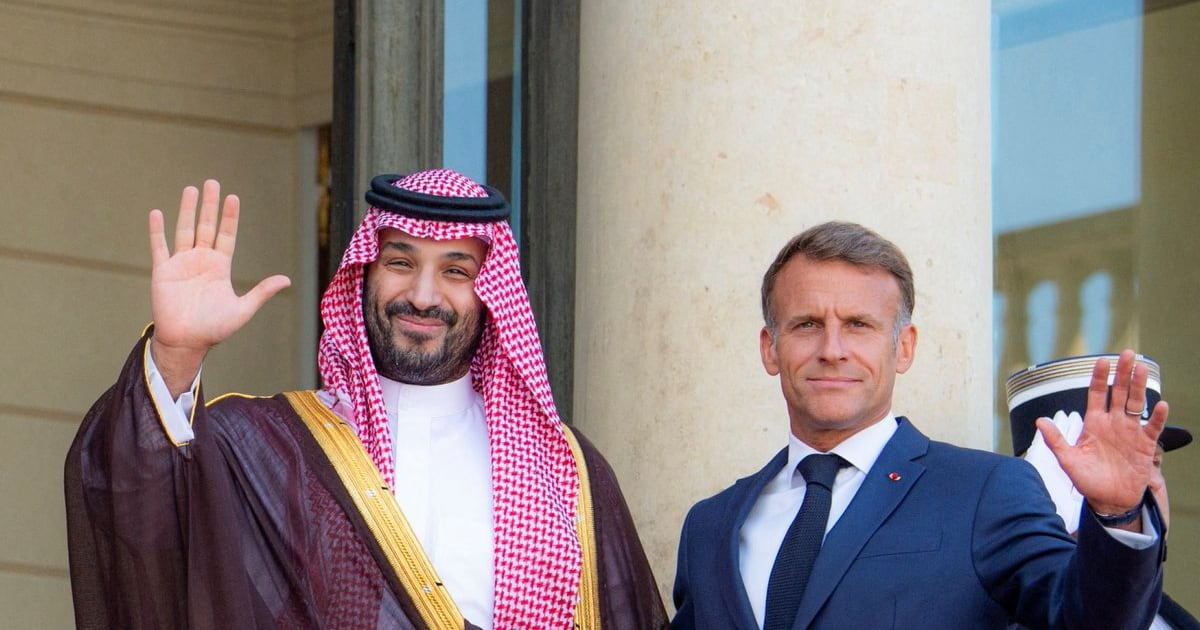
Saudi Crown Prince Mohammed bin Salman recently concluded a two-day visit to Paris, where he and French President Emmanuel Macron issued a joint statement calling for the restoration of normal navigation in the Strait of Hormuz. This meeting highlighted the ongoing concerns surrounding maritime security in a region that is crucial for global oil transport.
Concerns Over Maritime Safety
The leaders emphasized the need to return navigation in the Strait of Hormuz to its usual state, which they described as vital for “freedom of navigation, regular shipping traffic, and the absence of any direct or indirect tolls or restrictions,” strictly adhering to international law. Their statements come amid increasing tensions due to various attacks on ships and general threats to waterway security. The U.S. has unveiled plans for secondary sanctions against Iran, aimed at curbing its aggressive actions in the region. Treasury Secretary Scott Bessent warned that countries must cease operations linked to Iran or risk being excluded from the dollar-based financial system.
Iran has countered this economic pressure with threats, notably after a U.S.-Israeli assault led to the closure of the Strait, impacting the flow of approximately 20% of global oil traffic. The necessity for dialogue and resolution is palpable, as the stakes continue to rise.
Negotiated Solutions for Regional Security
In light of the escalating tensions, France and Saudi Arabia have called for a “negotiated solution” to address not only maritime stability but also the broader issues surrounding Iran’s nuclear program. Recent assaults by the Iran-backed Houthi militias in Yemen further complicate the situation, with attacks on maritime routes and Saudi oil installations, drawing condemnation from both Macron and Prince Mohammed.
The statement reaffirmed France’s solidarity with Saudi Arabia, emphasizing their rejection of any attacks on the Kingdom. The meeting also addressed several regional issues, including those concerning Israel, Palestine, Lebanon, and Syria. Macron’s recent visit to Damascus has positioned France as a key player in seeking stability, aiming to reposition Syria as a critical link between Europe, the Gulf, and Asia.
Strengthening Economic and Defense Ties
During the visit, several business and defense agreements were finalized. One notable development was a $6 billion Saudi investment aimed at constructing manga-themed amusement parks in France. This reflects both countries’ interest in deepening economic collaborations. Additionally, a strong defense partnership was reinforced, particularly in light of recent tensions in the region.
France’s existing defense agreements with Gulf nations, including the UAE, further bolster its role as a partner for regional security. The collaboration comes at a time when Gulf states have sought support against Iranian missile and drone threats. Furthermore, a preliminary agreement between the French and Saudi ministries focused on advancing cooperation in artificial intelligence, quantum computing, and other emerging technologies.
Business representatives also engaged in fruitful discussions, leading to significant contracts, including a €434 million deal between French shipping giant CMA CGM and Saudi Arabia’s Red Sea Gateway Terminal. Another agreement featured French rail company Alstom signing a €500 million contract to develop metro lines in Riyadh.
Saudi Aramco announced partnerships with French firms expected to be valued at over $3.7 billion, including procurement for drilling equipment and ventures into industrial AI. These agreements illustrate the burgeoning economic ties between the two nations, showcasing their shared interests beyond just security, emphasizing a future of collaboration and growth.