
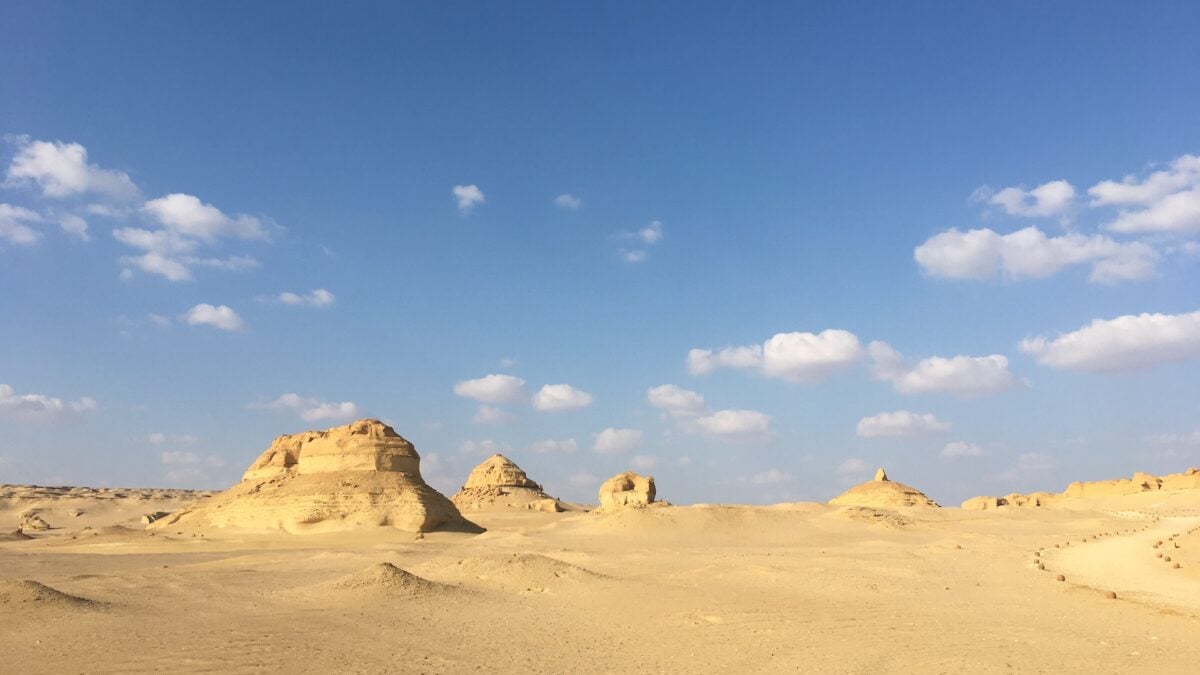
Millions of years ago, marine ecosystems thrived in the waters that now make up Egypt’s Western Desert. Today’s Duwi Formation, rich in phosphate, provides a window into this ancient world. Recent paleontological research has uncovered significant insights into the diversity of animal species that inhabited these waters during the Late Cretaceous period.
Discovering Ancient Sharks
A research team led by Tarek Yassin from Cairo University has made exciting strides in uncovering the history of marine life in Egypt’s Abu-Tartur Plateau. Their findings include fossilized teeth from at least seven distinct species of sharks, five of which have never been registered in this area before. These discoveries were documented in a recent publication in *Cretaceous Research*, which highlights the nutrient-abundant marine ecosystem that existed tens of millions of years ago before the gradual retreat of the sea.
Around 80 million years in the past, a shallow sea extended into the Western Desert, linking to the southern Tethys Ocean. The warm waters enveloped the Duwi Formations, including the phosphate-rich Abu-Tartur area. However, geological changes and falling sea levels ultimately exposed these underwater landscapes, transforming them into the arid desert seen today. The phosphate deposits within the Duwi Formation continue to provide vital information about the ancient ecosystems.
The research team had previously identified two shark species from teeth they discovered at the site. Their recent expedition to Abu-Tartur led to the collection of 14 additional shark teeth, showcasing a range of shapes and sizes. Some teeth were long and slender, while others were curved or broad with serrated edges, indicating distinct feeding mechanisms and ecological roles within this prehistoric marine environment.
A Complex Marine Ecosystem
Sharks, largely composed of cartilage instead of bone, do not fossilize as completely as other animals, making teeth the most reliable indicators of ancient shark populations. Utilizing these teeth, the researchers traced the newly unearthed specimens to five previously unidentified extinct species: *Cretalamna* cf.* maroccana*, *Scapanorhynchus* cf.* raphiodon*, *Serratolamna* cf.* serrata*, *Squalicorax bassanii*, and *Squalicorax pristodontus*. Notably, two of these species—*Serratolamna* cf.* serrata* and *Squalicorax bassanii*—are entirely new to Egypt.
Each of these species likely occupied different niches within the marine ecosystem. According to the researchers, the presence of Squalicorax suggests habitats close to the shore, while Scapanorhynchus points to conditions found in deeper waters, such as those on the outer shelf and slope.
The findings contribute significantly to our understanding of the diverse marine life that once thrived in the tropical seas of North Africa, showcasing the rich biodiversity and complex interactions within these ancient ecosystems. As research continues, the Duwi Formation promises to reveal even more secrets about the vibrant life that once existed in these now-dry landscapes.