
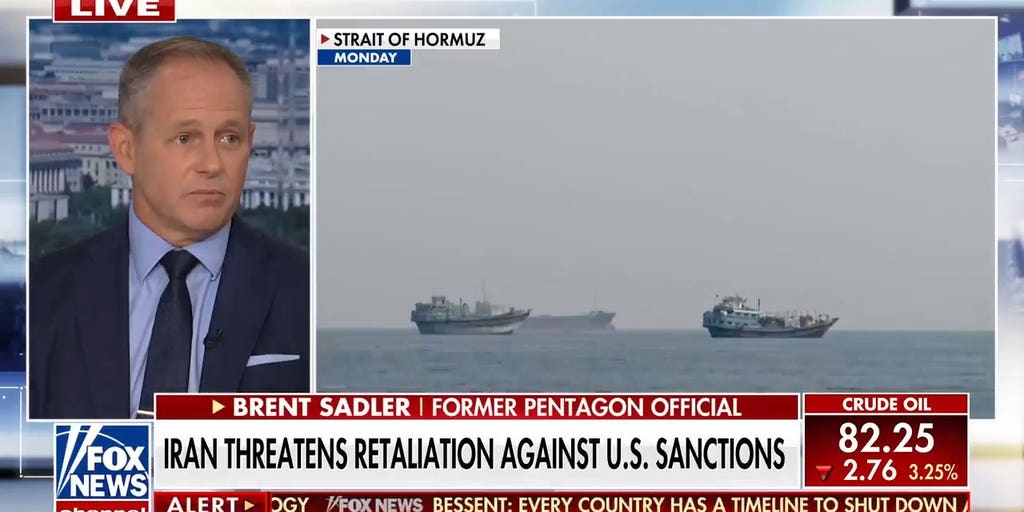
Former Pentagon official Brent Sadler recently appeared on ‘America Reports’ to provide insights into U.S. military actions and economic sanctions targeting Iran. His analysis highlights the operational readiness of the U.S. military and the pervasive effects of sanctions on Iran’s internal stability.
Understanding U.S. Military Operations in Iran
During his segment, Sadler explained the role of U.S. military operations in the region, particularly focusing on the strategic significance of the Strait of Hormuz. This vital waterway is crucial for global oil transport and is often a flashpoint for geopolitical tensions. Sadler emphasized that Space Force personnel are actively monitoring activities within this area to ensure U.S. interests are safeguarded. Their surveillance not only provides real-time intelligence but also acts as a deterrent against potential threats from Iranian naval forces.
The Impact of Economic Sanctions
Economic sanctions have become a vital tool in U.S. foreign policy aimed at curbing Iran’s nuclear ambitions and regional influence. These sanctions significantly impact Iran’s economy, leading to soaring inflation, currency devaluation, and a general scarcity of essential resources. Sadler elaborated on how these economic pressures have triggered widespread discontent among Iranian citizens. He noted that the Iranian government often points to foreign adversaries as the root cause of these issues, deflecting blame from their own economic mismanagement.
Domestic Unrest and Government Response
As citizens express their frustrations over rising costs and resource shortages, Sadler highlighted the Iranian government’s response strategies, which often include crackdowns on protests. The regime’s militaristic approach to handling dissent indicates a healthy fear of losing control, especially given the volatile economic climate. Sadler underscored that the combination of external sanctions and internal discontent could pose significant challenges for the Iranian leadership, potentially destabilizing the government in the long run.
The Broader Implications for U.S. Foreign Policy
The insights provided by Brent Sadler reveal that the dynamics between military operations and economic sanctions play a crucial role in shaping U.S. foreign policy in the Middle East. By maintaining a vigilant military presence while simultaneously applying economic pressure, the U.S. seeks to influence Iran’s behavior without escalating to outright conflict. However, maintaining this balance is delicate, as internal unrest in Iran could lead to unpredictable outcomes that may affect regional stability.
In conclusion, the discussion on ‘America Reports’ sheds light on the intertwined complexities of military operations and economic sanctions against Iran. As the situation evolves, both U.S. officials and the global community must closely monitor how these factors continue to influence not only Iran’s domestic landscape but also wider geopolitical relations in the Middle East.