
Türkiye’s Cross-Border Security Efforts: A Necessity for National Safety
In recent times, the importance of Türkiye’s arguments regarding cross-border security is becoming increasingly clear. The nation has consistently taken decisive steps to ensure the safety of its citizens and territory against external threats, particularly from terrorist organizations that exploit weaknesses in neighboring regions.
The Persistent Threat to Türkiye’s Security
For years, Türkiye has faced challenges that necessitated action beyond its frontiers. The rise of terrorist groups within bordering countries posed significant risks, as these organizations utilized power vacuums to orchestrate attacks against Türkiye. Given this context, Türkiye’s cross-border operations were not simply strategic choices; they were essential for national defense. The country emerged as a frontline player in combatting Daesh, undertaking direct military actions that resulted in significant territorial gains and reduced the capacity of these terrorist organizations to operate along its borders.
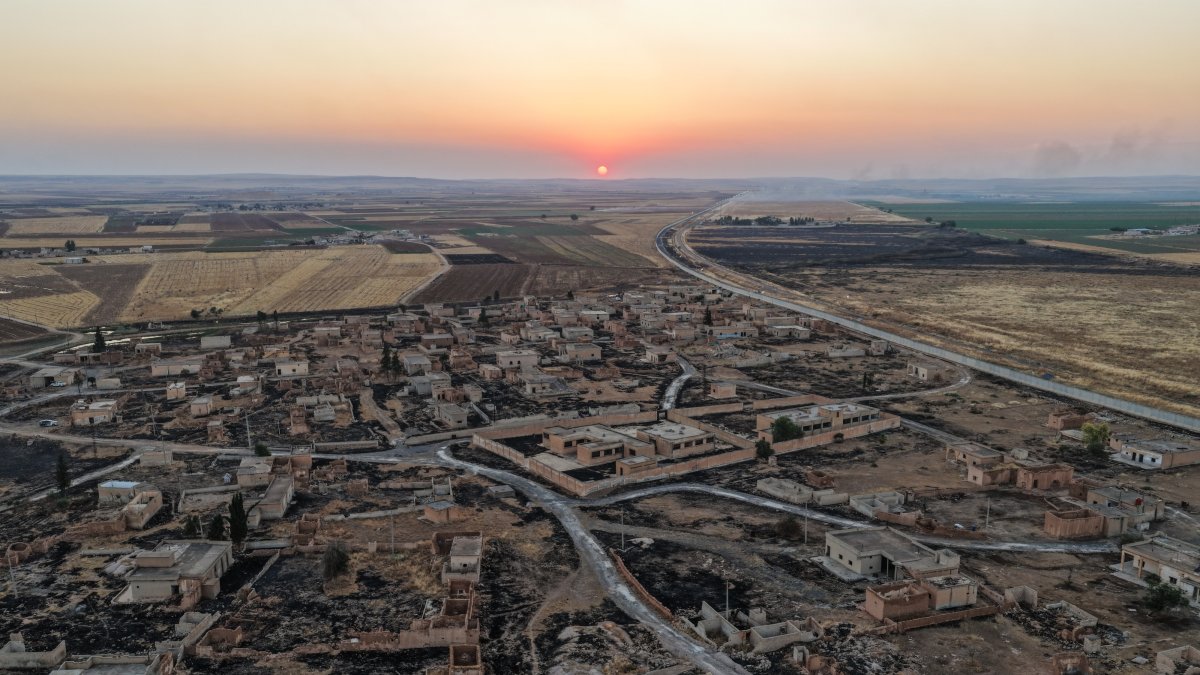
The Euphrates Shield Operation is a prime example of Türkiye’s commitment to thwarting terrorist ambitions. This initiative successfully dismantled Daesh’s presence along its border, liberating vast areas from terrorist control. Additionally, it effectively curtailed the PKK and its affiliates from establishing a terror corridor, thereby protecting Türkiye from future incursions.
Commitment to Regional Stability
It is crucial to understand that Türkiye’s regional aims have never included dismemberment of neighboring states. On the contrary, Türkiye has consistently advocated for the political unity and sovereignty of Iraq and Syria. The fundamental principle guiding Türkiye’s actions is clear: no territory adjacent to Türkiye should serve as a sanctuary for terrorist activities aimed at undermining its security. Despite numerous warnings over the years, these concerns were often disregarded, leading to escalating dangers.
Throughout the Assad regime’s tenure, Türkiye voiced strong opposition to the PKK’s activities on Syrian soil, which included providing safe havens and support for their leadership. The power void in northern Iraq further exacerbated the situation, allowing terrorists to cross into Türkiye with impunity. For an extended period, Türkiye awaited action from its neighbors and the international community to mitigate these threats. However, in the absence of any substantive response, Türkiye recognized that it could no longer rely solely on diplomatic efforts while its citizens remained under direct threat.
Understanding Türkiye’s Strategic Necessity
It is vital to clarify that Türkiye is not an “occupying” force, as some critics might suggest. Had Türkiye aimed for territorial expansion, it could have capitalized on the chaos unfolding in its vicinity. Instead, Türkiye made the conscious decision to uphold the territorial integrity of Syria and Iraq. Its operations were aimed at stabilizing these regions, enabling civilians to return to their homes, and restoring local order.
When assessing Türkiye’s cross-border operations, it’s important to differentiate between cause and effect. The instability in the region was not a direct result of Türkiye’s incursion; rather, these interventions became necessary due to the collapse of state authority, allowing extremist groups to threaten Türkiye’s sovereignty. As Syria and Iraq work toward reconstruction, Türkiye remains committed to fundamental principles such as strong governance, respect for territorial integrity, and the establishment of secure borders free from terrorist influence.
Predictions for the Future
Ankara is acutely aware that fragmentation among neighboring nations doesn’t just jeopardize its security; it endangers regional stability as a whole. Efforts to stabilize countries plagued by ethnic and sectarian divisions must be prioritized to prevent new conflicts, massive refugee movements, and possible wider wars. Türkiye envisions a region characterized by robust political unity, secure borders, and a firm stance against the presence of terrorist organizations.
Those who previously questioned Türkiye’s motivations for cross-border operations are now facing similar security dilemmas. The question must be reframed: if Türkiye had not taken proactive measures, who would ultimately bear the consequences of a terrorist belt encircling its borders? As history unfolds, it becomes evident that Türkiye’s military initiatives have been integral to safeguarding its sovereignty and securing a peaceful future for the region.