
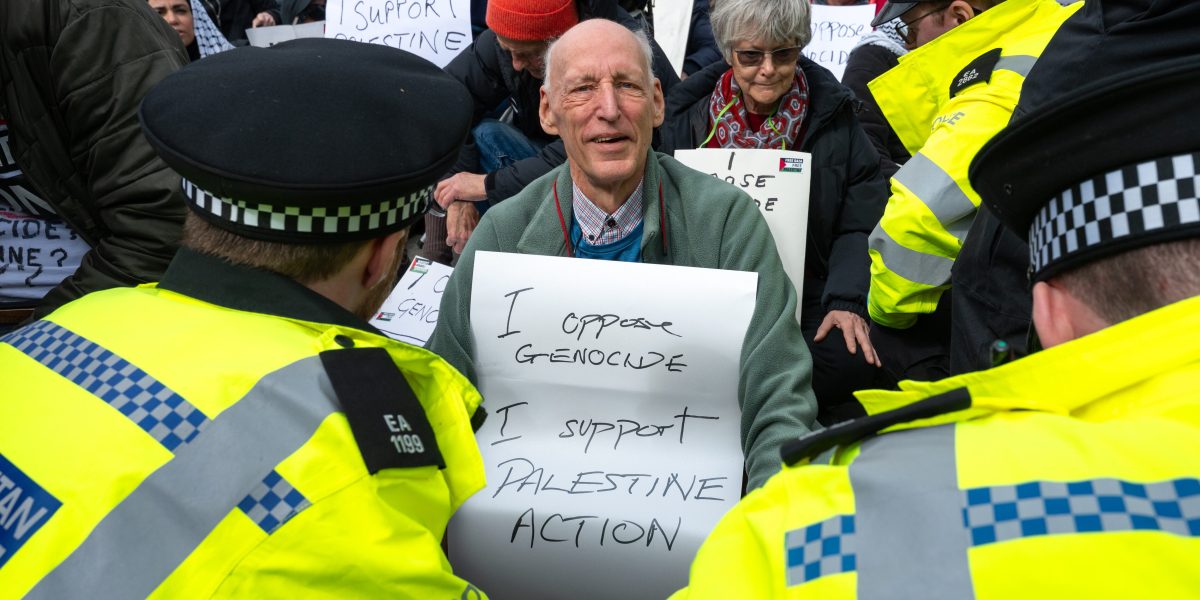
In 2021, American peace activist Max Geller was arrested in Kent, United Kingdom, for chaining himself to a van in protest against an Israeli-owned weapons factory. Initially prepared for the risks of arrest, Geller had no idea that his past involvement with a so-called terrorist organization could lead to U.S. sanctions years later. The recently announced sanctions against the U.K.-based protest group Palestine Action have raised significant alarm regarding the treatment of activists opposing perceived injustices.
U.S. Sanctions and Palestine Action
The Trump administration’s sanctions against Palestine Action, a group dedicated to anti-genocide protests, mark a troubling escalation in how the U.S. government addresses dissent. Palestine Action has orchestrated numerous demonstrations, including the one that led to Geller’s arrest, aimed at opposing the actions of Elbit Systems—Israel’s largest arms manufacturer. The sanctions aim to “protect Americans from risks associated with far-left terrorism,” sending a strong message that dissent will not be tolerated.
In response to these developments, Geller expressed his concerns. As a former spokesperson for Palestine Action, he noted how the legal landscape has shifted drastically in recent years. With the British government criminalizing membership in the group, Geller emphasized that ordinary activists fighting against perceived genocide are now being labeled as terrorists. The impact of such sanctions is severe; they disrupt financial support and choke off resources, making it nearly impossible for organizations like Palestine Action to function effectively.
The Broader Impact of Sanctions
The specifics of these sanctions remain somewhat vague, but they are designed to restrict financial transactions and support from American citizens and businesses to sanctioned entities. The chilling effect of these measures can not only deter potential activists from supporting Palestine Action but also has broader implications for human rights advocacy and anti-war movements. Organizations operating under severe scrutiny may find their ability to mobilize or even exist threatened, particularly when funding becomes a central concern.
Huda Ammori, co-founder of Palestine Action, emphasized the importance of persistent advocacy amidst these authoritarian tactics. She asserted that the current moment is critical for the movement and that adapting to oppressive conditions is essential for progress. While the U.K. has incurred criticism for cracking down on pro-Palestine dissent, the U.S. sanctions reflect a growing tendency to criminalize not just individual activists but entire movements advocating for policy change.
Repression Beyond the U.K.
The Trump administration’s actions fit into a wider strategy to suppress advocacy for Palestinian rights. Sanctions targeting other organizations and individuals involved in similar pursuits have likewise eroded the foundation for civil rights activism. This has resulted in both U.S. and U.K. authorities creating an atmosphere of fear, where ordinary persons are hesitant to speak out or support calls for justice.
As Palestine Action continues to endure the ramifications of these sanctions, activists across the globe remain unyielding. Despite the threats and arrests—over 3,000 since the crackdown began—demonstrations supporting Palestinian rights persist, as momentum builds against oppressive regimes. The resilience of individuals who mobilize to challenge military actions underscores a collective commitment to addressing issues of injustice, regardless of governmental efforts to silence dissent.
In conclusion, the recent imposition of U.S. sanctions against Palestine Action underscores an escalating trend aimed at undermining activism around Palestine. As these movements adapt to changing political landscapes, the willingness to confront state-sanctioned violence and oppression remains unwavering, highlighting the ongoing struggle for human rights.