
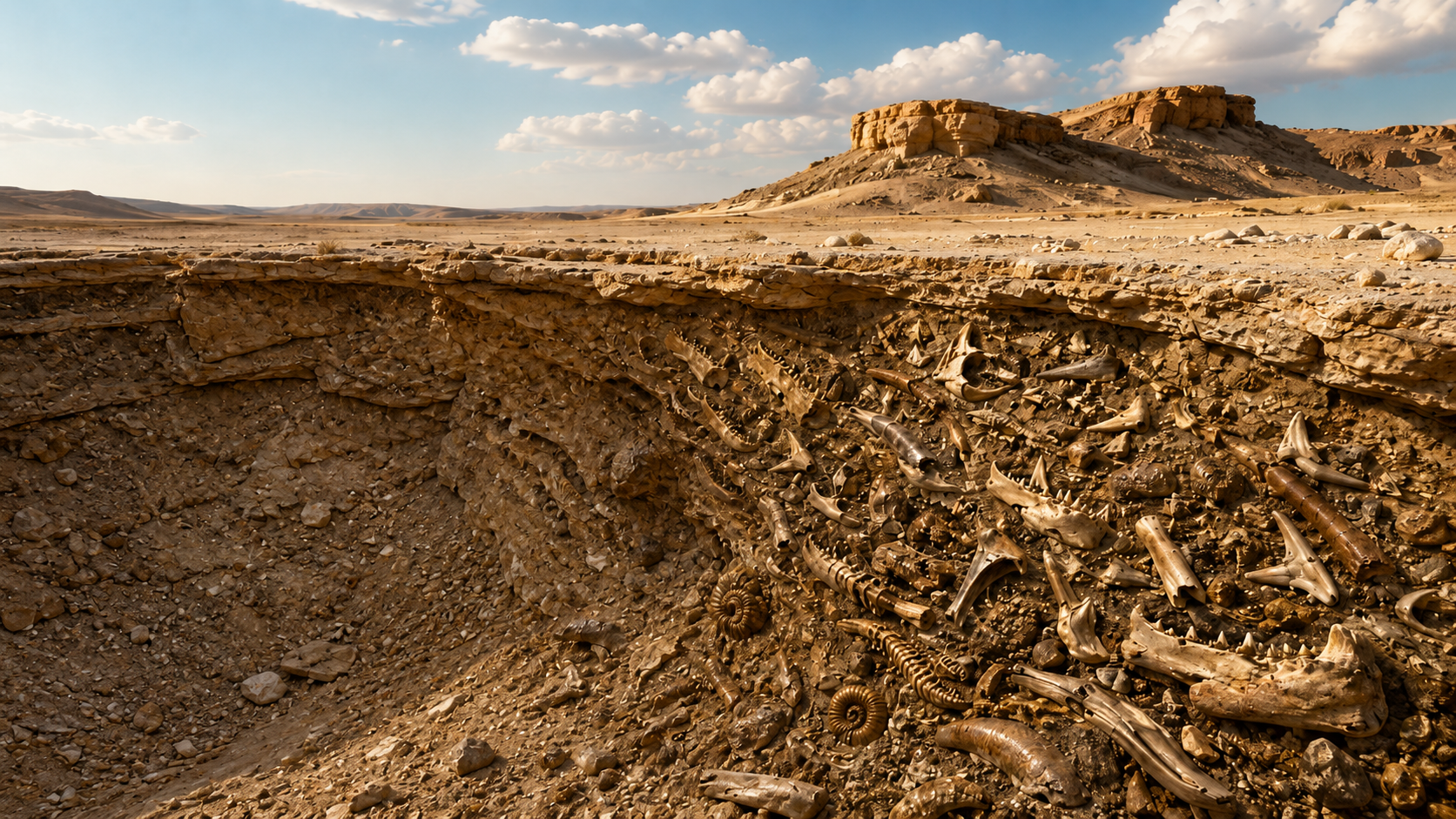
Recent discoveries in the Abu-Tartur region of Egypt have unveiled fascinating insights into the marine life that once thrived in its waters during the Late Cretaceous. The find comprises a collection of fossilized shark teeth that offers a vivid glimpse into ancient aquatic ecosystems, shedding light on the diverse shark species that inhabited this area.
Five Extinct Shark Species Revealed
Researchers unearthed fourteen fossil teeth that belong to five distinct species of extinct lamniform sharks, a group commonly referred to as mackerel sharks. Among these discoveries, two species had not previously been documented in Egypt, while one may constitute the youngest known instance and the first record of its kind from Africa. The findings significantly enhance our understanding of shark diversity in the region, raising the total number of known shark species at Abu-Tartur to at least seven. This indicates a marine ecosystem rich in variety and predation.
The fossils were extracted from the Duwi Formation, located at the Abu-Tartur phosphate mine, an area that was submerged under warm, tropical waters roughly 70 million years ago. Current research indicates that many marine species, including fish and marine reptiles, thrived in nutrient-rich environments during this era, paving the way for a vibrant food web.
Insights into Cretaceous Ecosystems
This remarkable collection of shark teeth offers researchers valuable information about the ancient oceans that once covered the Abu-Tartur region. The authors of the study, led by Tarek Yassin from Cairo University, highlight that the extensive presence of these sharks points to a complex marine environment rich in biodiversity. The sample reveals varying tooth morphologies, indicating that distinct species occupied different ecological niches, reflecting the layered and diverse nature of ancient marine life.
The findings suggest that the conditions during the Late Cretaceous supported a productive ecosystem, which was likely enriched by upwelling nutrients. This helped sustain both small and larger predators, creating a balanced marine environment. Notably, the diverse tooth shapes—from narrow triangular crowns to broader serrated edges—reveal adaptations that enabled these sharks to exploit different prey types within the ecosystem.
Significance of the Discoveries
The study, published in the journal Cretaceous Research, not only adds to the fossil record but also connects the shark diversity of Abu-Tartur with similar fossil assemblages found in other regions of North Africa and the Middle East. This underscores the broader ecological and evolutionary narratives surrounding Late Cretaceous marine habitats.
Researchers believe that the teeth of two species, Squalicorax bassanii and Serratolamna cf. S. serrata, hold particular importance as they had not previously been reported in Egypt. Meanwhile, teeth assigned to Scapanorhynchus cf. S. raphiodon potentially mark the species’ first recorded occurrence in Africa, extending its known geographical range significantly.
These findings not only enhance our understanding of ancient shark species but also provide a window into the ecological frameworks that supported diverse marine life during the Late Cretaceous, reshaping our comprehension of evolutionary patterns in prehistoric seas. As researchers continue to analyze these ancient remains, they contribute to a growing narrative of aquatic life that flourished long before the present-day deserts took form.