
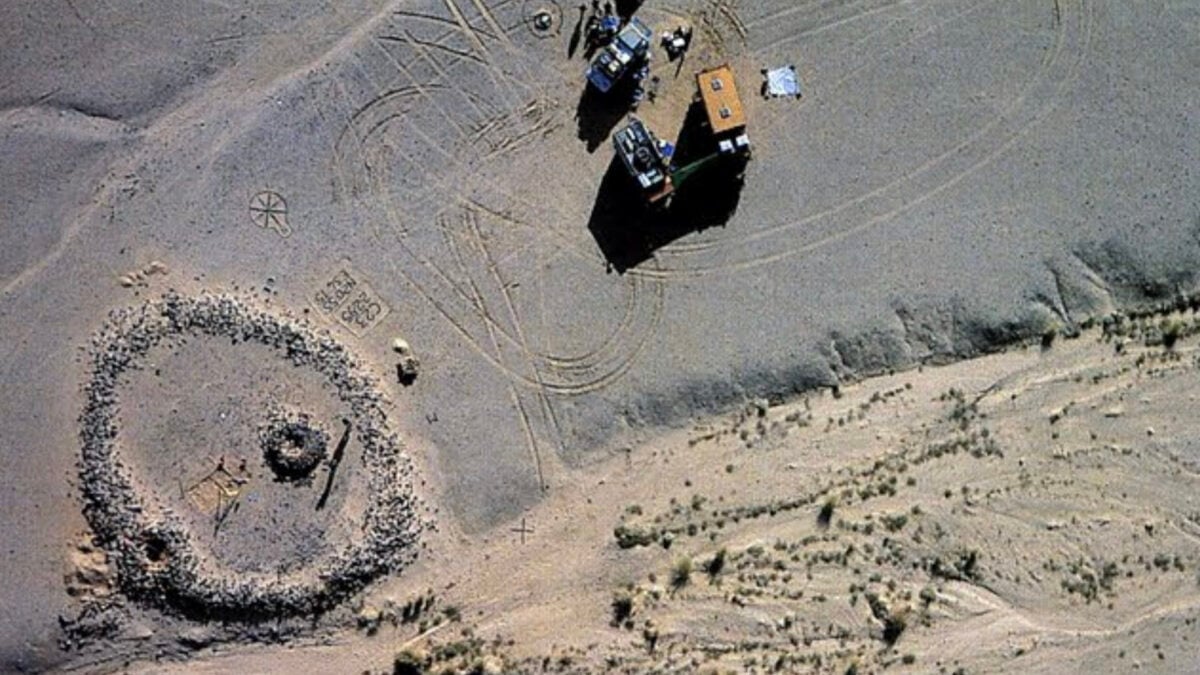
The Sahara Desert, spanning a staggering 3.6 million square miles, is not just an arid expanse of sand; it houses several distinct deserts throughout North Africa. Among them lies the lesser-known Atbai Desert, a rugged area situated between the Nile River and the Red Sea, which remains largely unexplored. Recent archaeological endeavors employing satellite imagery have unveiled numerous haunting sites believed to date back to the eras preceding ancient Egypt.
Unveiling Ancient Burials
In a groundbreaking study, archaeologist Julien Cooper and his colleagues have utilized advanced remote-sensing techniques to uncover over 260 new burial sites throughout northeastern Sudan. These ancient graves, characterized by circular stone enclosures containing remains, are estimated to have been constructed between 4000 and 3000 BCE. Many of these monumental Neolithic graves can reach up to 262 feet in diameter and contain the remains of nomadic herders alongside domesticated animals. Cooper explains that these findings reveal a complex societal structure among nomadic communities, highlighting their remarkable organizational skills and adaptability.
Insights into Nomadic Societies
While the timeline of social stratification among nomadic groups in the Sahara remains uncertain, the discoveries in the Atbai Desert hold crucial clues. Archaeologists have been piecing together an understanding of when these populations began to develop class hierarchies during the Middle to Late Holocene. Previously, 20 similar burial sites had been documented, with one significant site at Wadi Khashab being more thoroughly excavated. Radiocarbon dating of artifacts from the Wadi Khashab graves has shown an evolution of burial practices over generations, revealing a rich tapestry of cultural interactions in a time before widespread urbanization.
Interestingly, the structures at these burial sites suggest a divergence from contemporary cultures, with Cooper’s team highlighting that these nomadic people were distinctly Saharan. This revelation reinforces the notion that they operated independently from their urban Egyptian neighbors, maintaining their own cultural practices and rituals.
Challenges in Exploration
The current geopolitical climate in Sudan poses substantial challenges for further archaeological investigations. Cooper and his team, who conducted their research remotely, face obstacles due to the ongoing civil conflict, which has rendered on-the-ground surveying nearly impossible. Moreover, the war has led to illegal mining activities threatening to destroy valuable archaeological evidence, putting these ancient sites at significant risk. Despite efforts to gather data remotely through satellite imagery, the urgency of physical site exploration persists.
The urgency to carbon date the remains and preserve the unique burial monuments grows as illegal mining intensifies. Many of these structures have stood the test of time for thousands of years, yet some are vanishing within days due to unregulated mining activities. The situation is critically dire, as the cultural heritage represented by these sites hangs by a thread.
In conclusion, recent archaeological discoveries across the Sahara, particularly in the Atbai Desert, have revealed intricate burial practices and highlight the complexity of nomadic societies. Despite the challenges posed by conflict and illegal mining, this research underscores the need for continued exploration and preservation of these invaluable historical sites.