
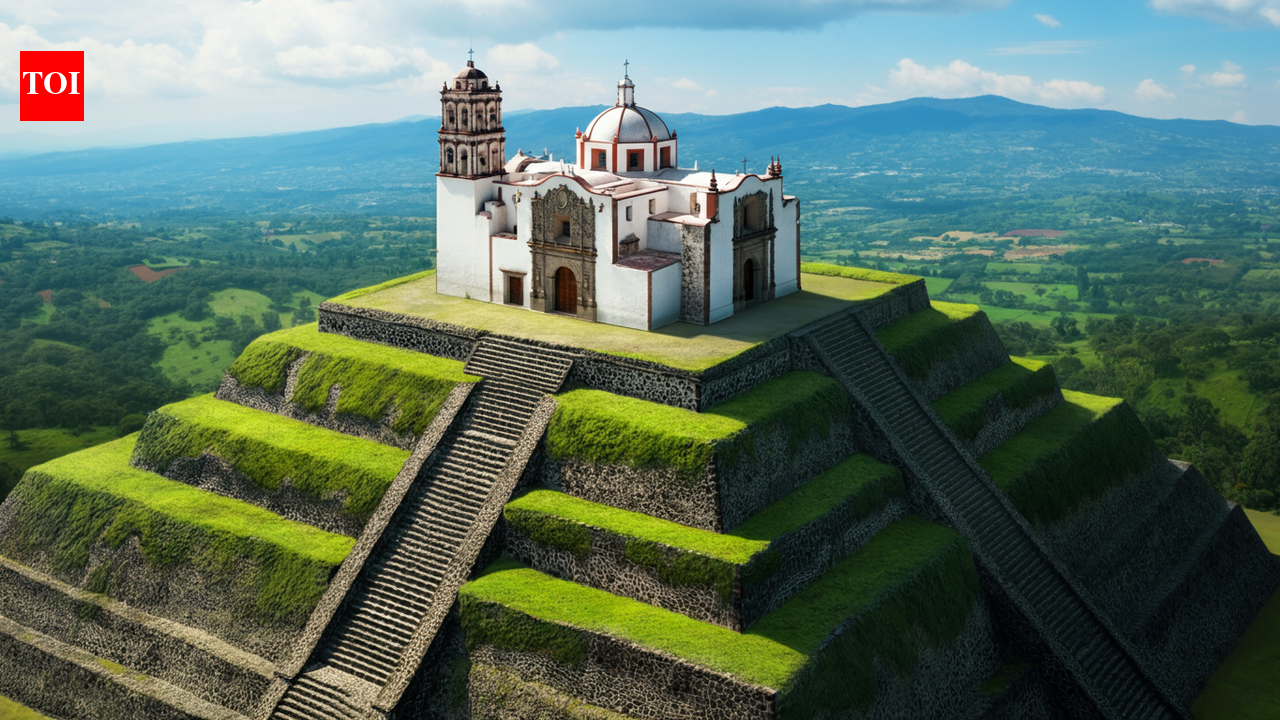
When we think of impressive ancient structures, images of Egypt’s pyramids often come to mind. These monumental feats of engineering have captivated generations. However, many people are unaware that the largest pyramid in the world is not found in Egypt but in Mexico. The Great Pyramid of Cholula is a true giant, hidden beneath centuries of vegetation and even a colonial church, challenging preconceived notions about what defines a pyramid.
The Great Pyramid of Cholula: The World’s Largest Pyramid
Located in the Mexican state of Puebla, the Great Pyramid of Cholula, known as Tlachihualtepetl, is an extraordinary example of ancient architecture. Its base measures approximately 450 meters on each side, making it far more extensive than the Great Pyramid of Giza. Constructed in multiple phases over nearly a thousand years by various Mesoamerican cultures, this pyramid remains an essential landmark for both history and archaeology. When Spanish conquistadors arrived, they found it so overgrown that they built a church atop its summit, completely oblivious to its significance as a monumental structure.
In terms of volume, the Great Pyramid of Cholula is nearly twice that of the Great Pyramid of Giza, which is often celebrated for its height. The latter originally stood at 146.6 meters and is regarded as an engineering marvel of its time. However, when we shift our criteria from height to total structural volume, Cholula stands unrivaled. Its sheer mass and the depth of history embedded within its layers surpass those of any pyramid worldwide.
A Closer Look at Other Major Pyramids
While the Great Pyramid of Cholula takes the crown for overall volume, it’s essential to acknowledge other significant pyramids around the globe. Following Cholula is the Great Pyramid of Giza, a symbol of Ancient Egypt’s engineering prowess. Built using around 2.3 million stone blocks, it features a remarkable degree of precision. The structure has stood the test of time, becoming the quintessential icon of ancient construction techniques.
Next in line is the Pyramid of Khafre, also in Giza. While it appears taller than its neighbor, the Great Pyramid, this effect is due to its elevated foundation and the original smooth casing stones that cap its peak. Close by is the Red Pyramid at Dahshur, which is renowned for being the first true smooth-sided pyramid in history.
Challenges in Measuring Ancient Structures
When ranking these massive constructions, historians face a daunting task in measuring them accurately. Many have suffered from natural erosion and human interference over the centuries. In the case of Cholula, the monument is intentionally preserved, buried under layers of soil and roots to safeguard the 16th-century church built above it.
As a result, accurate calculations of volume often rely on educated estimates rather than straightforward measurements. This variability adds an intriguing layer to the study of ancient architecture, highlighting the ingenuity of civilizations that constructed these monumental structures. From the vast stone blocks in Egypt to the clay bricks utilized in Mexico, these ancient peoples transformed their landscapes, leaving behind legacies that continue to inspire admiration today.
In conclusion, the Great Pyramid of Cholula represents an often-overlooked chapter in the narrative of ancient architecture. As we continue to explore and understand these incredible structures, it becomes increasingly clear that human creativity and determination have shaped our world in ways we are only beginning to appreciate. Understanding these architectural giants in a broader context underscores the achievements of different cultures, reminding us that history is a vast tapestry weaving through time and geography.