
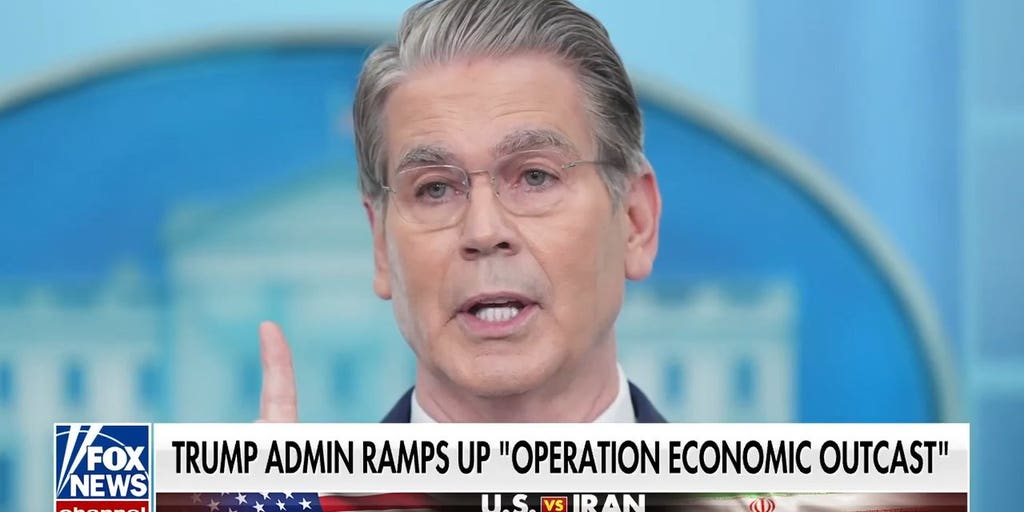
The Trump administration’s economic strategy towards Iran is intensifying, with a sharp focus on tightening sanctions. As the international community gathers for the G20 finance summit, Treasury Secretary Scott Bessent is leading efforts to persuade allies to adopt stricter measures against the Iranian regime. The plan, labeled “Operation Economic Outcast,” aims not only to isolate Iran economically but also to disrupt financial networks that support its actions on the global stage.
Overview of “Operation Economic Outcast”
“Operation Economic Outcast” signifies a concerted effort by the U.S. to inflict significant economic pressure on Iran. This initiative is designed to rally support from other nations attending the G20 summit, which may allow for a unified front against Tehran’s financial activities. By amplifying sanctions, the administration hopes to limit Iran’s access to essential financial resources and hinder its economic capabilities. This approach aims to create a more isolated Iran, pushing it further away from the global economy.
The Impact of Shadow Banking on Iran
Recent developments from Tel Aviv indicate that the crackdown on shadow banking is gaining momentum. Shadow banking refers to financial entities that operate outside the traditional banking regulatory framework, and the Iranian regime has relied heavily on such networks to sustain its operations. By targeting these channels, the U.S. is aiming to strangle the financial lifeline of Iran’s government and its associated entities. This tactic not only hampers Iran’s ability to conduct international trade but also complicates its efforts to fund military endeavors.
Military and Economic Strategies: A Combined Approach
In conjunction with heightened economic sanctions, the Trump administration continues to employ a military strategy aimed at containing Iranian influence in the region. The combination of ongoing military responses and economic pressure forms a dual-front approach to deal with what the U.S. perceives as Tehran’s destabilizing activities. By aligning financial action with military posturing, the administration seeks to strengthen its leverage in negotiations, signaling to Iran that both its economic foundation and its military capabilities are at risk.
Political and Economic Ramifications for Tehran
As sanctions tighten, the repercussions for Iran’s economy are poised to be severe. Key sectors may experience debilitating effects, including increasing unemployment and inflation. The combination of domestic unrest and international isolation could compel the Iranian government to reconsider its current policies. Economic hardship might drive citizens and political factions to push for a change in approach regarding both domestic policies and foreign relations.
In conclusion, the economic and military measures employed by the Trump administration are designed to create comprehensive pressure on Iran. By leveraging the G20 summit to gain broader support for sanctions, the U.S. aims to not only isolate the Iranian economy but to fundamentally alter its strategic operations on a global scale. This dual approach represents a significant shift in U.S. foreign policy, making Iran’s future precarious as it faces both economic strangulation and military vigilance.