
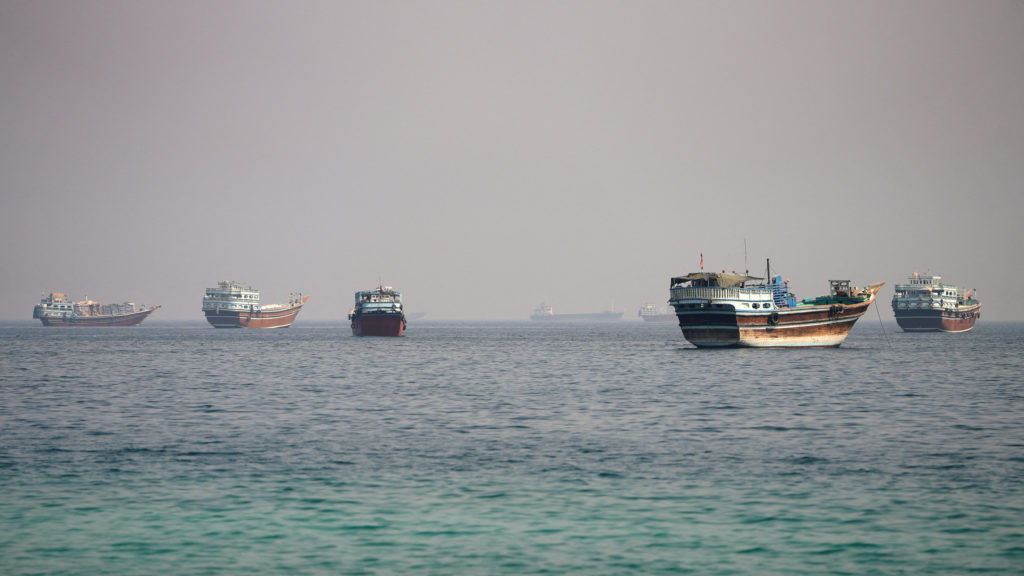
The geopolitical landscape in the Middle East is once again fraught with tension as the United Arab Emirates (UAE) confirmed intercepting an Iranian drone over its waters. This incident has emerged against the backdrop of escalating hostilities between the United States and Iran, marking a disturbing continuation of military engagement in a region of critical global significance.
Renewed Hostilities and Casualties
In a recent clash, Iranian officials reported two fatalities and multiple injuries following a U.S. military strike on Larak Island in the strategic Strait of Hormuz. The strike, which occurred previously, incited a retaliatory missile launch by Iran targeting U.S. installations in Jordan, although these were subsequently intercepted. The ongoing volatility has implications for international trade, particularly as the Strait of Hormuz is a vital shipping route for a substantial portion of the world’s oil.
While a temporary cessation of hostilities had been observed, the U.S. has intensified economic measures aimed at compelling Iran to reconsider its aggressive military posturing. The authenticity of these tactics is put to the test as they attempt to re-establish safety in the Strait and restore normal shipping operations. The aftermath of prior strikes has resulted in Iran maintaining a tight grip over this crucial passage, which historically accounted for about 20% of global oil trade.
Impact on Global Oil Prices
As military tensions reignite, the repercussions extend beyond regional borders, impacting global oil prices. Brent crude oil prices surged past $90 a barrel, reflecting a nearly 25% increase since the onset of recent conflicts. The rise in energy costs raises concerns for U.S. leadership and voters, especially with midterm elections on the horizon. The situation has prompted calls from leaders like Anwar Gargash, an advisor to the UAE’s president, for a sustainable political resolution that would facilitate safe navigation in the Strait.
In light of the renewed violence and rising oil prices, the atmosphere remains charged with uncertainty. Gargash notably underscored that a prolonged state of neither war nor peace is untenable, advocating for an actionable political discourse rather than ambiguous agreements between Iran and the U.S.
UAE Condemns Iranian Drone Interception
The UAE Defense Ministry issued stern comments following the interception of the Iranian drone, labeling the act as a serious violation of national sovereignty and a potential threat to public safety. Despite claims from the Iranian military suggesting that targets within the UAE were struck, the Emirati authorities swiftly refuted these assertions. The UAE’s diplomatic stance emphasizes its commitment to defending its territorial integrity and its readiness to respond to any perceived threats.
Iranian officials, for their part, maintain that they will exercise their right to self-defense against what they term military aggressions. Iranian President Masoud Pezeshkian, attending a summit in Kyrgyzstan, affirmed that while the nation does not seek open conflict, decisive retaliation is on the table should provocations continue. This commentary came amidst strained relations, underscoring Iran’s position as it navigates international scrutiny and regional tensions.
Ongoing U.S. Military Engagement
Over the weekend, U.S. Central Command confirmed a targeted strike against Iranian launch sites in response to intelligence indicating preparations for new attacks on maritime traffic. American officials assert that their actions were precise and aimed at thwarting aggressive maneuvers rather than provoking further conflict. This military intervention highlights the ongoing strategic battle over the Strait and reflects the complexities involved as the U.S. seeks to stabilize the situation.
With continued military engagements and rising stakes, the need for diplomatic avenues becomes increasingly vital. As U.S. officials engage in meetings with global finance leaders to further isolate Tehran economically, the clash regarding territorial waters and airspace remains a dangerous focal point in an already volatile region. The trajectory of U.S.-Iran relations hangs in the balance, shaped by military actions and economic strategies, as both nations navigate the unpredictable waters of international diplomacy.