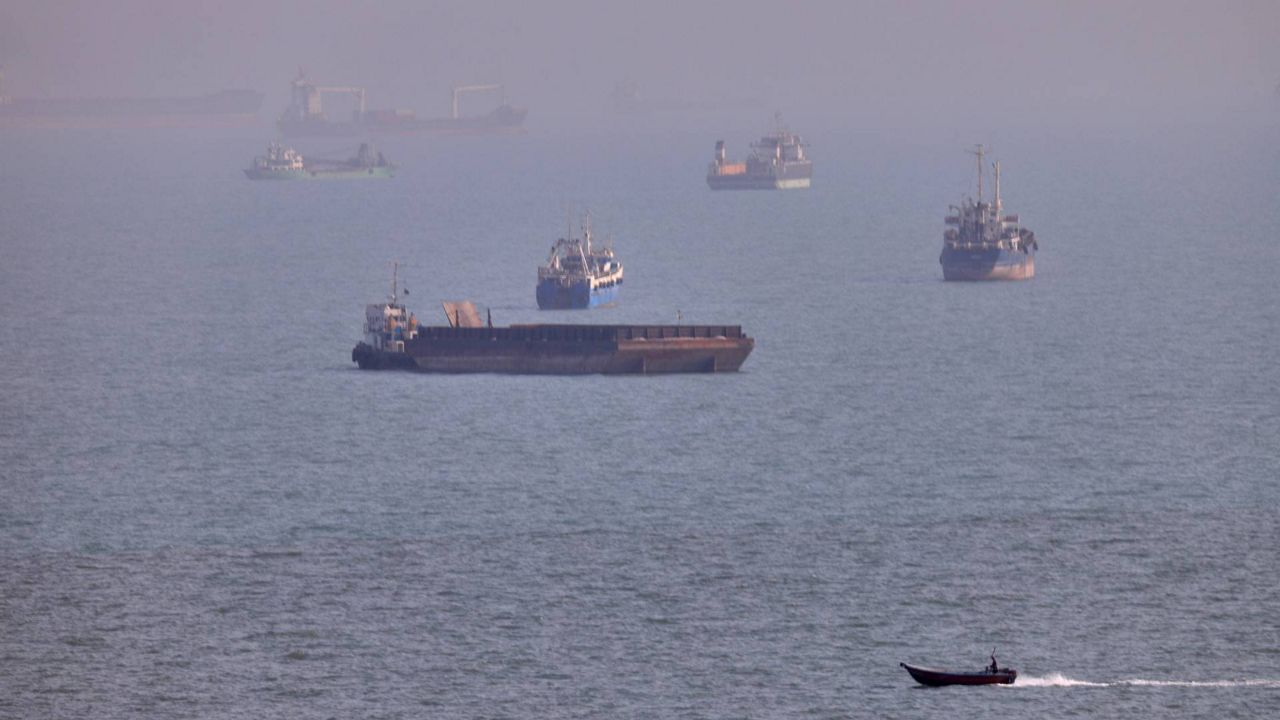
An Iranian drone was intercepted early on Monday while entering the territorial waters of the United Arab Emirates, according to a statement from the Defense Ministry. This incident followed escalating tensions over the weekend, marked by a rare military exchange between Iran and the United States, signifying the first major military confrontation in over a month.
Military Actions and Escalation of Tensions
The situation intensified when the U.S. targeted rocket launchers stationed on an Iranian island on Sunday. American officials claimed these launchers were preparing to deploy mines into the strategically vital Strait of Hormuz. In retaliation, Iran launched missiles aimed at U.S. military sites in Jordan; fortunately, all incoming projectiles were successfully intercepted. This back-and-forth between the two nations highlights the fragile state of relations amidst ongoing conflicts.
Iranian President Masoud Pezeshkian commented on the current state of affairs, stating that while the country is not actively seeking war, it will not hesitate to deliver a decisive response to any aggressors. The United Arab Emirates denounced Iran’s actions, labeling them as a “dangerous escalation.” This recent hostility underscores the persistent volatility in the region and raises concerns about future conflicts.
U.S. Economic Pressure on Iran
Amid this renewed military engagement, the U.S. has been increasing economic pressure on Iran in hopes of eliciting concessions from the Tehran government. Central to these efforts is the reopening of the Strait of Hormuz for maritime shipping. This crucial waterway is significant not only for Iran but for many other nations relying on it for oil transport. By leveraging economic sanctions and diplomatic pressure, the U.S. aims to compel Iran to curb its aggressive actions.
USS Abraham Lincoln’s Deployment and Upcoming Port Call
In a related development, the USS Abraham Lincoln, a major American aircraft carrier, is currently en route to Thailand for a scheduled port visit. This follows the carrier’s extended operational deployment in the Middle East. With a crew of approximately 5,000 sailors, the Lincoln is sailing toward the Gulf of Thailand and is expected to dock near Pattaya.
The USS Abraham Lincoln, recognized as one of the largest vessels in the U.S. Navy’s fleet, has played a pivotal role in supporting American operations in the ongoing conflict with Iran. Notably, this deployment included an unprecedented 250 consecutive days at sea, highlighting the strategic importance of U.S. military presence in the tense geopolitical environment.
In summary, the recent military actions and ongoing economic strategies underscore the complexities of U.S.-Iran relations. With heightened tensions and military showdowns, both nations appear to be bracing for potential future confrontations while also navigating the intricate web of diplomacy and warfare in the region.