
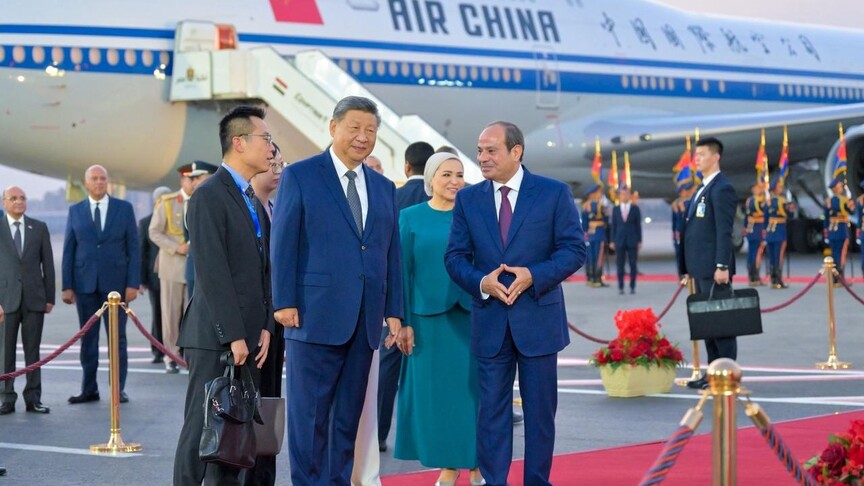
Chinese President Xi Jinping’s recent visit to Egypt marks a pivotal moment in the evolving relationship between the two nations. After a decade since his last trip, Xi’s arrival underscores a desire to transition from a one-sided partnership to a collaborative alliance that benefits both Egypt and China. The visit, characterized by deepening economic ties, aims to foster mutual growth and development in various sectors.
Shifting Dynamics in Sino-Egyptian Relations
The essence of the new partnership is moving away from China solely financing and building infrastructure for Egypt, towards a model of collaboration. As Einar Tangen, an analyst based in Beijing, articulated, Egypt is eager to engage with China in a way that prioritizes local production capacities, technology transfer, and supply chains integrated into Egyptian manufacturing. This shift reflects Cairo’s ambition to become an active participant in the Global Southern economy, rather than just a consumer of Chinese goods.
This reorientation comes as both nations recognize the strategic value of a stronger partnership. While China seeks to enhance its industrial and logistical presence in developing markets, Egypt aims to tap into Chinese investment and expertise. As Tangen pointed out, Xi’s visit is not about establishing a military alliance; rather, it is focused on positioning Egypt as a key player within the growing landscape of the Global South.
Economic Cooperation and Technological Transfer
Anticipations regarding Xi’s visit are rooted largely in economic discussions. Cairo hopes to secure Chinese commitments for technology transfer, increased industrial investment, and possibly even defense collaboration. There is a general consensus that the establishment of Chinese manufacturing units in Egypt could considerably advance the country’s economic development. Analysts maintain that this collaboration isn’t just about importing Chinese technology; it is about embedding this technology within Egypt’s production framework.
Beijing, in turn, views Egypt as a strategic access point for African and Arab markets while also providing a gateway to Europe. The Suez Canal remains a focal point of interest; however, the intention goes beyond simple shipping logistics. Tangen highlighted plans to develop the Suez Canal Economic Zone into a comprehensive industrial ecosystem that includes manufacturing, logistics, and renewable energy. This aligns with the next phase of the Belt and Road Initiative, emphasizing industrial capacity and supply-chain integration.
Military Ties Within Limits
While Xi’s visit may enhance military cooperation, analysts do not foresee the establishment of a formal military alliance between the two countries. Recent military exercises have shown improving operational collaboration; however, both nations are likely to avoid a mutual defense treaty. Egypt benefits from a historically strong defense relationship with Washington and is cautious not to undermine this by overcommitting to China militarily.
Analysts suggest that Egypt is well aware of the potential repercussions regarding its expanding ties with Beijing. Keeping the cooperation primarily economic will likely lessen concerns from the United States. Yet, a substantial military deal could escalate tensions, forcing Cairo to navigate a delicate balance between its relationships with both superpowers.
Future Bilateral Relations and Economic Growth
The future of Sino-Egyptian relations appears promising if both nations can align their economic ambitions effectively. Tangen notes that financial cooperation, particularly a 30 billion yuan currency-swap facility, could facilitate greater use of the Chinese yuan in trade. As Egypt seeks to reduce its reliance on dollar-denominated debt, this could significantly affect its economic landscape.
Moreover, developments in renewable energy and other sectors indicate a robust future for collaboration. Initiatives like the SANY wind project demonstrate Egypt’s potential for local green technology manufacturing. Focus areas include improving infrastructure in ports, rail, and logistics, alongside enhancing trade, particularly in agricultural exports.
As Egypt continues to expand its partnership with China, it must remain mindful of maintaining its strategic autonomy while navigating a rapidly changing geopolitical landscape. The growth of this relationship not only promises economic benefits but also serves as a critical test of Egypt’s diplomatic prowess on the global stage.