
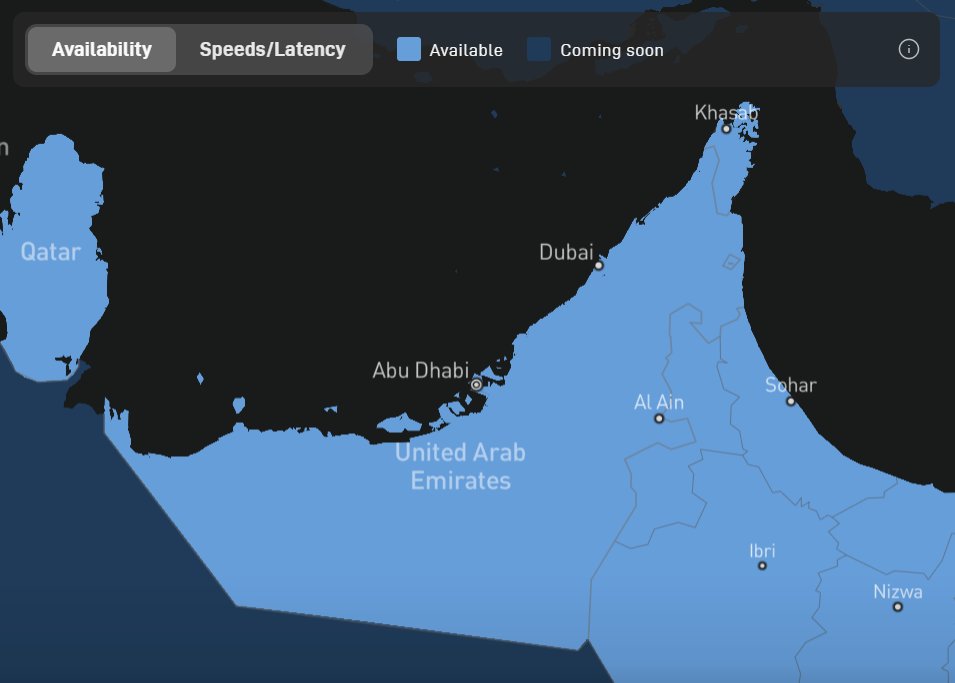
SpaceX has officially launched its Starlink satellite internet service in the United Arab Emirates (UAE). Confirmed by both Elon Musk and the official Starlink account on September 3, 2026, this expansion into the UAE marks a significant milestone for the service. The UAE is now part of over 150 countries and territories where Starlink operates, but its importance goes beyond mere numbers, presenting unique opportunities and challenges in this evolving market.
Path to Launch
The journey to this launch began back in June 2024 when the UAE’s Telecommunications and Digital Government Regulatory Authority (TDRA) issued a 10-year General Satellite Services License to Starlink Satellite Communications Services LLC. This license, valid until June 2034, covers various sectors including residential, business, government, maritime, and aviation. Majed Sultan Al Mesmar, the TDRA Director-General, labeled the license a significant move to enhance the telecommunications landscape in the UAE, fostering innovation and improvements in service delivery.
Residential service saw its first rollout on March 18, 2026, indicating that the September announcement is more of a commercial expansion rather than an initial introduction. The confirmation from Starlink underscores that the service has navigated any remaining operational barriers, allowing for a full-scale launch.
Subscription Plans and Hardware Costs
Starlink has structured its pricing in the UAE to cater to various user needs. Here’s a breakdown of the plans available:
- Residential Lite: AED 230 (~$63)
- Standard Residential: AED 300 (~$81)
- Business (starting from): AED 248 (~$68)
- Roaming / Portable (100GB): AED 190 (~$52)
- Roaming / Portable (Unlimited): AED 370 (~$101)
In terms of hardware, the standard kit costs AED 1,465 (~$398), while a portable Mini Kit is priced at AED 1,099. Prospective subscribers can join a waitlist for high-demand areas with a small deposit of AED 285.71, which will be deducted from the kit price upon purchase. Users can expect download speeds between 50–200 Mbps and latency of 20–40ms, making it competitive with traditional broadband services across the region.
Understanding Capacity Limitations
Despite the promising rollout, not all residents in the UAE can subscribe immediately. Reports indicate that areas like Dubai and Abu Dhabi are already at maximum capacity, requiring new interested customers to be placed on a waitlist. This situation reflects limitations in satellite beam capacity, typical for Starlink’s launches in urban environments, rather than specific regulatory challenges. Residents of other Emirates are likely to have more immediate access to the service, allowing for a broader reach.
How Starlink Stands in Aviation
Interestingly, Starlink’s presence in the UAE began with its aviation services before ground-based operations. Emirates and flydubai introduced in-flight Wi-Fi powered by Starlink in 2025. Emirates has committed to deploying free Starlink Wi-Fi across its entire fleet of Boeing 777 and A380 aircraft, with a rollout aiming for completion by mid-2027. As a result, travelers in the UAE experienced Starlink performance even before they had the option to access it at home.
The Significance of the UAE Market for SpaceX
The UAE presents a market rich with potential due to its high smartphone penetration, international expatriate population, and government initiatives focusing on technology. The long-term licensing agreement signifies a level of regulatory stability that SpaceX can leverage for commercial contracts across various sectors, extending beyond just consumer subscriptions.
Although the launch may seem like a minor addition to Starlink’s portfolio, the combination of a stable regulatory environment, an affluent consumer base, and existing partnerships in aviation makes the UAE entry strategically important. The true test will be how quickly the waitlist clears in urban centers, revealing how much capacity SpaceX has allocated for this market. For updates on Starlink and SpaceX’s ongoing expansions, keep an eye on their official communications and local news outlets.