
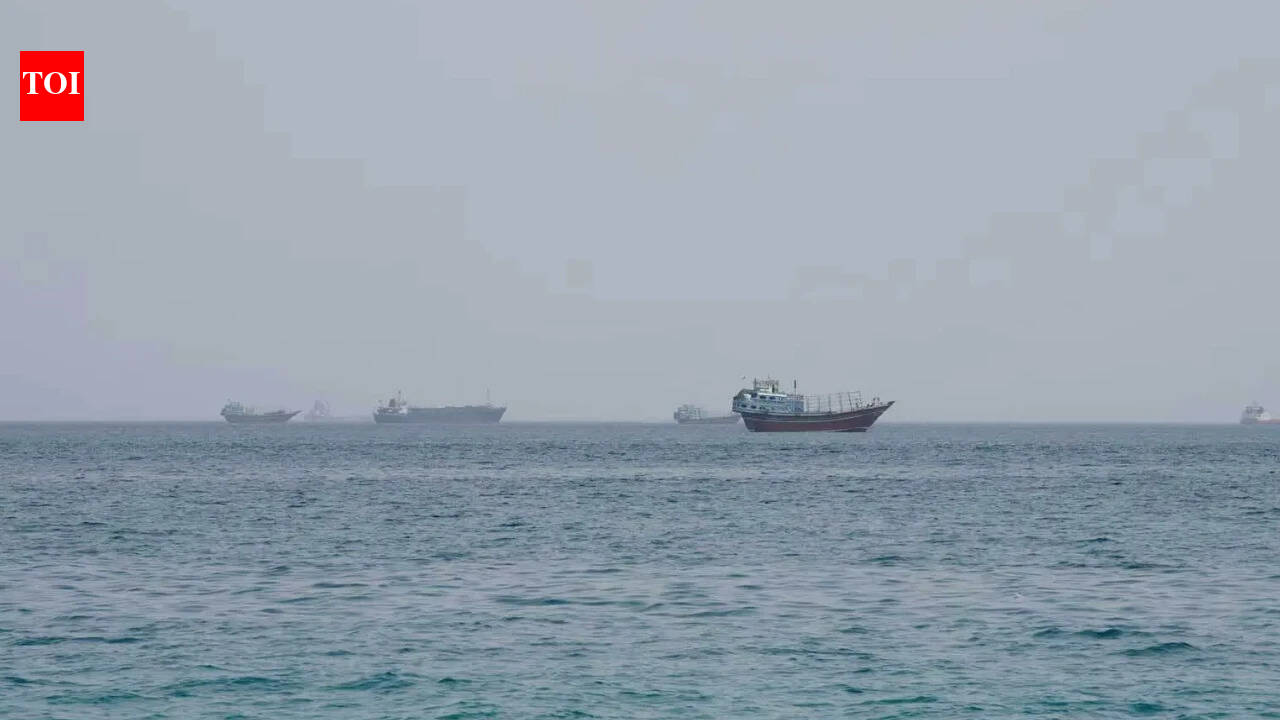
Iran’s evolving strategy for disrupting maritime traffic in the Strait of Hormuz reflects a new approach that could pose additional challenges for shipping lanes in this crucial area. As tensions escalate with the United States and Israel, Iran is reportedly considering the deployment of sea mines using land-based rocket launchers. This method could enhance the speed and stealth with which mines are scattered, altering the dynamics of naval operations in the region.
Shift in Deployment Tactics
Recent U.S. military actions have highlighted this shift in Iran’s tactics. On Sunday, U.S. forces targeted Iranian rocket launchers located on Larak Island, indicating that these assets were prepared to launch rockets equipped with sea mines into the strategically vital Strait of Hormuz. This military operation resumed after a month-long lull in U.S. strikes against Iranian positions. The new approach has raised eyebrows among maritime security analysts as it deviates from Iran’s historical reliance on small, nimble boats to deploy mines.
Traditionally, Iran’s deployment of sea mines has been executed using fast boats, submarines, or low-flying aircraft. These methods, while effective, involve more logistical challenges and risks compared to the newly suggested tactic. Sea mines are notorious for their unpredictability, as they can sit on the seabed, remain moored underwater, or float just beneath the surface. These characteristics make navigation in mined waters exceedingly perilous for vessels.
Innovative Use of Rocket Launchers
The utilization of land-based rocket launchers to deploy mines is a significant shift for Iran. Maritime security specialist Dirk Siebels noted that this strategy, if implemented, would represent a novel method of mine deployment. However, some analysts, including former U.S. naval officer Harlan Ullman, express skepticism about this tactic, pointing out potential risks such as damage to the mines upon their entry into the water.
Despite skepticism, the concept is not entirely unprecedented. In January 2025, Iranian state media reported on the Fajr-5 Multiple Launch Rocket System (MLRS), describing its capability to lay mines in the Strait of Hormuz. According to experts like Sidharth Kaushal from the Royal United Services Institute (RUSI), Iran has been exploring the potential of Fajr-5 launchers to deploy mines for some time.
Advantages of the New Strategy
Employing missiles to release sea mines presents a strategic advantage for Iran. Traditional methods require boats to venture into potentially hostile environments to distribute mines, which involves greater risk. In contrast, launching mines from land could minimize exposure while enabling quicker deployment. Kaushal emphasized that utilizing a rocket launcher allows for immediate loading and firing, which could drastically reduce the time and manpower required for mine deployment.
Furthermore, experts like Mark Hilborne from King’s College London have suggested that innovative techniques, such as parachute-assisted mine drops, could mitigate the impact when the mines hit the water, ensuring they remain operational. This level of tactical innovation not only complicates the operational environment for naval forces but also amplifies the threat faced by commercial shipping throughout the Strait of Hormuz.
In summary, Iran’s shift to using land-based rockets for sea mine deployment signals a strategic evolution in its maritime capabilities. This new methodology poses a significant threat to maritime security in the Strait of Hormuz, highlighting the need for enhanced vigilance and countermeasures from involved nations. As tensions rise, maritime navigation in this crucial waterway is set to become increasingly complicated.