
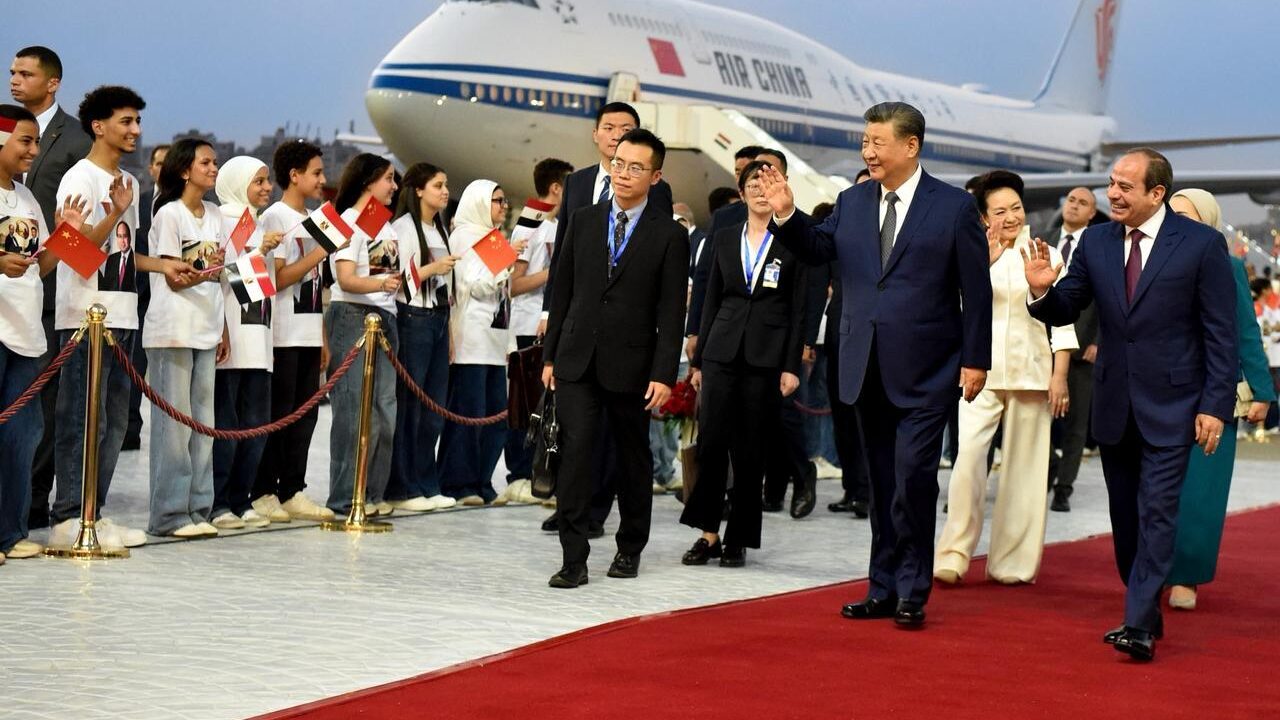
Chinese President Xi Jinping has commenced a significant state visit to Egypt, marking his first trip to the country in a decade. This rare Middle Eastern engagement serves as a platform for China to enhance its economic, military, and diplomatic relationships with Egypt, a nation closely allied with the United States.
The Significance of Xi’s Visit
Xi’s trip is not just a bilateral affair; it’s a response to the evolving geopolitical landscape of the Middle East. The backdrop of the US-Iran conflict has led to concerns about shipping and energy stability, prompting regional leaders to reevaluate their international partnerships. During the discussions at Cairo’s Ittihadiya Palace, Xi and Egyptian President Abdel Fattah el-Sisi engaged in meaningful dialogue, culminating in several signed agreements that commemorate 70 years of diplomatic ties between the two nations.
China’s Vision for Regional Security
In his dialogues, Xi advocated for Middle Eastern countries to minimize reliance on external forces in matters of security. His stance resonates amid regional tensions, particularly around the strategic Strait of Hormuz. By positioning China as a credible alternative for trade, infrastructure development, and diplomacy, Xi seeks to foster a collaborative approach without compelling nations to align strictly with either side of the US-China rivalry.
Egypt: A Strategic Partner
Egypt holds immense strategic value for China, not only for its proximity to the crucial Suez Canal but also as a significant recipient of US military aid. Nevertheless, Egypt has actively diversified its international relations, forming stronger ties with Beijing, Moscow, and various European nations. Officials in Cairo emphasize this diversification as a pursuit of strategic equilibrium rather than a direct pivot away from Washington.
Deepening Economic and Military Cooperation
China has invested significantly in Egypt’s economic initiatives, particularly within the Suez Canal Economic Zone, as well as in diverse sectors such as transport and renewable energy. Recent agreements point toward expanded collaboration in security, counterterrorism, and the exchange of critical resources like semiconductors and minerals. Notably, military cooperation has gained visibility through joint exercises named Eagles of Civilization, featuring both Chinese and Egyptian combat aircraft, signaling a robust military partnership.
As the two leaders addressed pressing regional issues—including the ongoing Gaza conflict and broader stability in the Middle East—they affirmed their mutual support for a two-state solution to the Israeli-Palestinian crisis. This aligns with China’s attempts to position itself as a diplomatic player, especially following its role in fostering reconciliation between Iran and Saudi Arabia earlier this year.
Geopolitical Context and Economic Implications
Xi’s visit also unfolds amid economic considerations, particularly as Washington threatens to broaden sanctions linked to Iran that would impact both Chinese and Egyptian businesses. China remains a primary buyer of Iranian oil, highlighting its vested interest in maintaining stable trade routes and curbing any negative economic effects that could arise from the regional unrest.
In summary, Xi Jinping’s visit to Egypt represents a strategic opportunity for both nations. For Egypt, this engagement offers vital investment and political leverage, while for China, it solidifies its position in the intricate tapestry of Middle Eastern diplomacy. As regional dynamics shift, the implications of this partnership are likely to resonate far beyond the immediate context, influencing future security and economic policies in the region.