
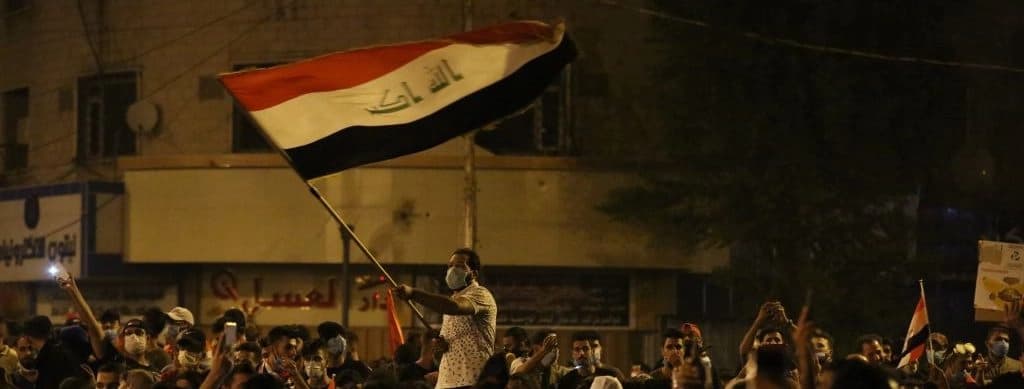
In the wake of the Tishreen protests that ignited in Iraq in October 2019, many lives were irrevocably changed. One such individual is Hanan Salem, who, prior to this movement, had little engagement with politics. Her story illustrates the transformative power of activism and its capacity to awaken a collective voice for change among Iraq’s youth.
Emergence of the Tishreen Movement
As a graduate student during the protests, Salem was originally focused on her studies and career prospects. However, the spontaneous protests prompted her to shift her priorities. She joined countless young Iraqis—men and women alike—who took to the streets to challenge a political system perceived as corrupt and ineffective. These demonstrations were framed by many activists as a “revolution,” reflecting deep-seated frustrations that had been brewing in the country since the U.S.-led invasion in 2003.
Salem’s evolution from a student to an investigative journalist speaks volumes about the profound impact of activism. Initially, she and her sisters participated in the protests on October 3, 2019, to support their voices in a predominantly male-driven dialogue. This prompted a surge of female participation, especially on October 25, when thousands of women rallied across Iraq, motivated by a desire to ensure their presence was felt in a movement that aimed to reshape their nation.
The Roles of Women in the Protests
Salem recounts how, in the first days of the protests, women were tasked with encouraging others to join. As more women became engaged, their contributions diversified into crucial areas such as medical assistance and food preparation for demonstrators. For Salem, photography became her means of documenting the significant changes unfolding around her. This was especially poignant following the loss of notable young leaders during the protests under mysterious circumstances, further igniting her passion for journalism.
Similarly, Mohammed Husseini, an academic and activist, found his motives aligned with those challenging the status quo. He noted the uplifting spirit in protest squares, filled with patriotism and determination. Husseini highlighted his fear of losing the freedoms gained since 2003, which motivated him to take part in the demonstrations to safeguard those liberties that were hard-won.
The Government’s Response and Aftermath
The Tishreen protests marked the largest pro-reform movement in Iraq’s recent history, igniting widespread discontent regarding governmental corruption and maladministration. Protesters demanded an end to a political system rooted in ethno-sectarian divisions that favored a select few over the majority. The government’s violent crackdown, including the use of live ammunition, only intensified the resolve of the demonstrators.
The repercussions were catastrophic, with reports indicating that over 600 protesters were killed and thousands injured. Yet, accountability remains elusive, raising questions about the future of activism in Iraq. Many activists are now calling for justice, especially in light of recent comments by political figures like Hadi al-Amiri, who referred to the Tishreen movement as “sedition.” His remarks ignited outrage among activists and protesters who viewed them as a blatant dismissal of legitimate grievances.
In the face of adversity, figures like Hanan Salem continue to push for change. She asserts that actions and statements cannot erase the historical realities of the protests. Salem remains steadfast in her commitment to activism, emphasizing the importance of the community’s desire for a brighter future. She believes that the ongoing struggle for rights and acknowledgment will not falter, regardless of the challenges posed by political rhetoric and systemic issues.