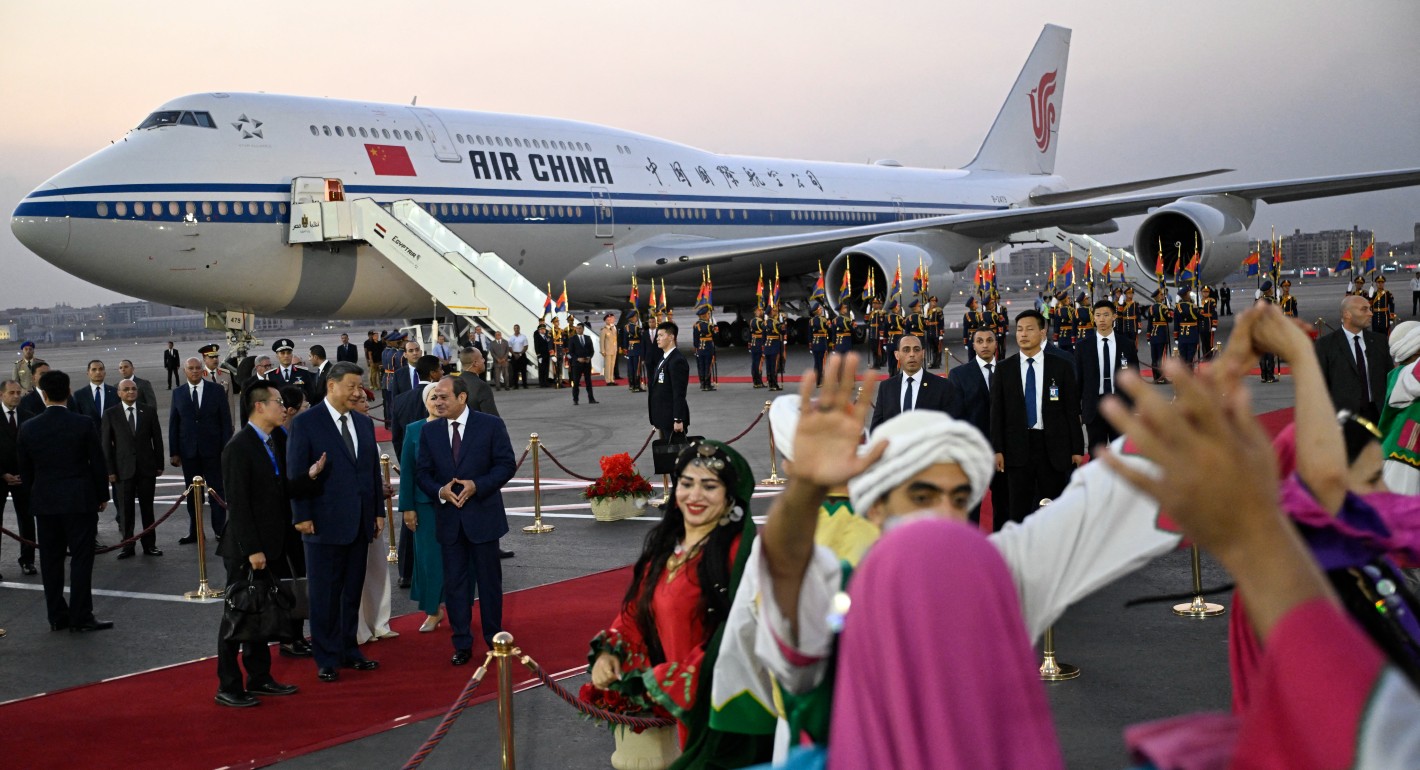
Earlier this week, Chinese President Xi Jinping made an official trip to Egypt, marking the seventieth anniversary of diplomatic relations between the two nations. While the visit was presented as a celebration of growing economic and security ties, it also came at a crucial time when the Middle East is fraught with conflicts that affect both countries’ interests in maintaining stability. The strategic partnership developing between Cairo and Beijing is largely driven by these regional challenges, although both nations are cautious about exclusivity in their foreign engagements.
Egypt’s Security Concerns Amid Regional Turmoil
As a pivotal power in a tumultuous region, Egypt has invested heavily in securing its national interests while navigating ongoing conflicts. The Suez Canal, a significant economic asset, has seen a dramatic decline in revenues, losing over 60% due to the Israeli-Hamas war and other geopolitical tensions, including the U.S.-Iran standoff. Consequently, China, Egypt’s primary trading partner, has also felt the impact of these conflicts, leading to disruptions in energy supply routes through the Strait of Hormuz and increasing logistical challenges in Middle Eastern exports. Both countries, sharing a vested interest in regional peace, have a mutual understanding of the stakes involved.
China’s Noninterventionist Approach
Since signing a peace agreement with Israel in 1979, Egypt has sought to utilize diplomacy and mediation to foster peace between Israel and the Palestinians, as well as with neighboring Arab nations and Iran. Meanwhile, China has championed diplomatic relations across the Middle East, forming strategic partnerships with diverse nations. By promoting economic collaboration and emphasizing non-intervention, China seeks to position itself as a peace-driven superpower, contrasting sharply with the military-focused involvement of the United States. This strategy allows China to enhance its geopolitical influence while providing regional powers the agency to manage their conflicts.
Significant Developments During Xi’s Visit
Xi’s visit to Egypt was marked by formidable diplomatic symbolism, including a grand reception by Egyptian President Abdel Fattah al-Sisi. The two nations signed 25 bilateral agreements aimed at enhancing cooperation in various sectors such as economy, trade, technology, and security. Notably, they agreed to align Egypt’s Vision 2030 with the Chinese Belt and Road Initiative, further integrating their economic strategies. Additionally, the countries committed to increasing trade using local currencies, a strategic move that aims to diminish Egypt’s dependency on the U.S. dollar. This visit also highlighted military cooperation, following joint air force training exercises that featured both Chinese and Egyptian aircraft in simulated combat scenarios.
Balancing Diverse Partnerships
Despite the depth of their newly forged partnership, both Egypt and China continue to maintain relationships with other global and regional powers. For Egypt, historical ties with the United States remain a crucial component of its military and diplomatic strategy, particularly regarding stability in the region. On China’s part, it has developed partnerships with various Middle Eastern nations, including Iran and Israel, positioning itself as a key player in regional dynamics.
Cairo aims to diversify its international relationships without becoming too reliant on any single superpower. Unlike its past role as an ally of the Soviet Union during the Cold War, Egypt seeks a balanced approach by nurturing multiple partnerships, especially in military and technological domains.
In conclusion, Xi Jinping’s visit to Egypt underscores the rising influence of China in the Middle East amid ongoing regional instability. The evolving relationship between Cairo and Beijing reflects both countries’ strategic aims, rooted in mutual interests for peace and cooperation in an increasingly complex geopolitical landscape.