
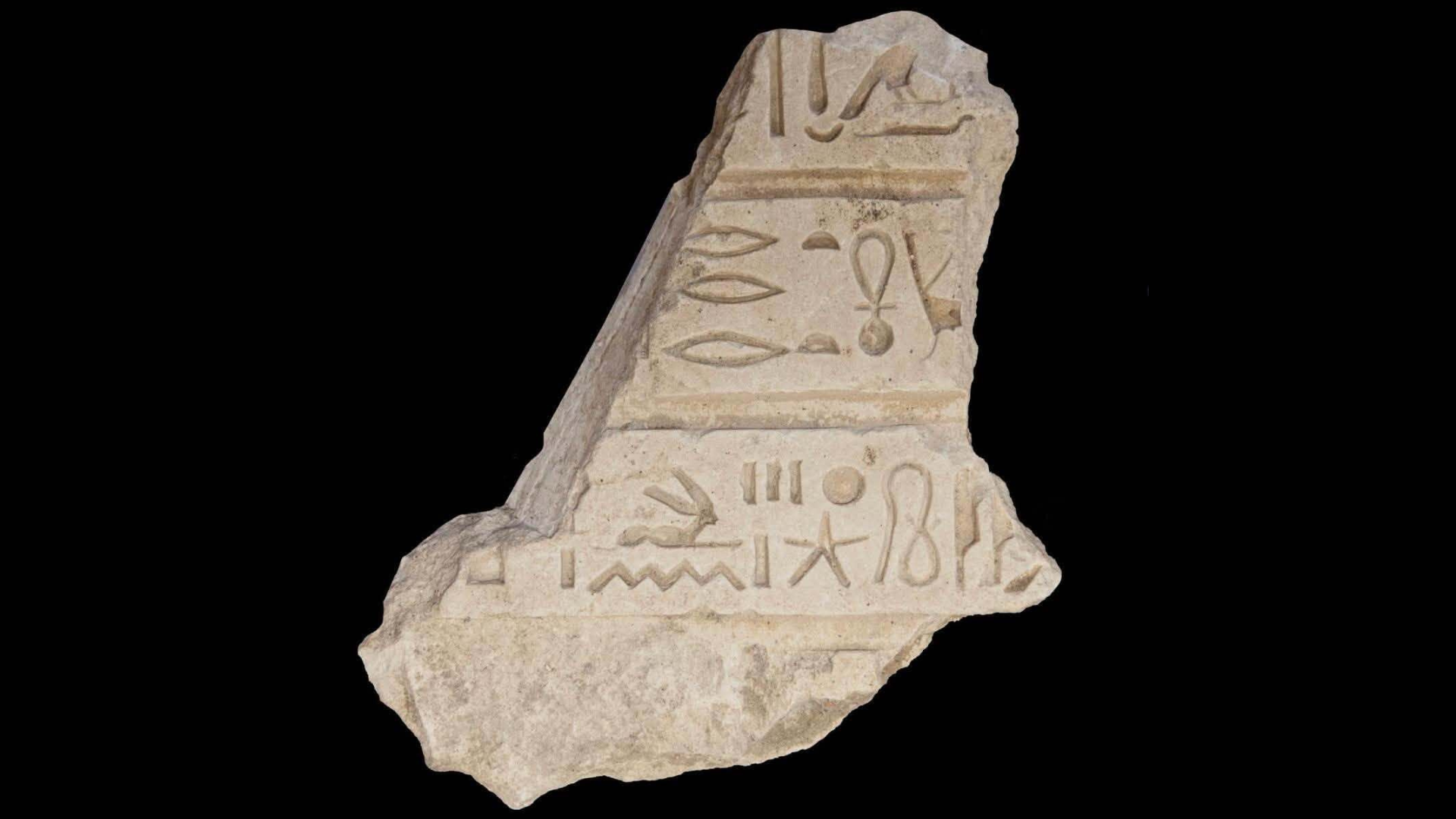
A remarkable archaeological discovery near an ancient military route in Egypt has unveiled a 3,200-year-old inscription that may point to the long-lost city of Mesn. This finding has generated excitement and curiosity among historians and archaeologists alike.
Significance of the Inscription
Located at Tell Abu Seifi, this inscription references Ramesses II, an influential pharaoh who ruled from approximately 1279 to 1213 B.C. The inscription notes Horus, the ancient Egyptian god known for his associations with the sky and war, as the “Lord of the City of Mesn.” This statement by Egypt’s Ministry of Tourism and Antiquities suggests that Tell Abu Seifi could very well be the historically significant city of Mesn, also referred to as Mesen. However, archaeologists caution that further investigation is needed to validate this claim.
Recent explorations at the site also exposed remnants of a temple dedicated to Horus, although it is reported to have suffered severe destruction, limiting the information that can be gleaned from it. Hesham Hussein, the director general of Delta and Sinai Archaeology at Egypt’s Ministry of Tourism and Antiquities, highlighted the challenges posed by the temple’s dilapidated state. The importance of such a temple could indicate the religious significance of the location if it indeed aligns with Mesn.
Historical Context and the Ways of Horus
Tell Abu Seifi is strategically positioned near what ancient Egyptians termed the “Way of Horus,” a crucial route connecting the eastern Nile Delta to the southern Levant. This road was heavily fortified, serving as a point of departure for Egyptian military campaigns aimed at expanding their territory into Canaan, Lebanon, and Syria. Peter Brand, a historian unconnected with the ongoing excavations, notes that this evidence strongly supports the identification of Tell Abu Seifi as the ancient city of Mesn.
The presence of Horus-centric inscriptions further emphasizes the cult’s significance in this region during that time. Ramesses II’s father initiated the construction of fortifications along this path, and Ramesses himself utilized this route during his military engagements, including the notable Battle of Kadesh against the Hittites.
Ongoing Research and Skepticism
Despite the compelling evidence, some experts urge caution in declaring Tell Abu Seifi as Mesn. Archaeologist James Hoffmeier emphasizes the need for more data, including ceramic findings, to solidify the claim. There’s also the complexity of other sites in the vicinity that feature similar inscriptions linking them to Mesn, raising questions about the exact location of this ancient city. Gregory Mumford, an anthropology professor, even suggests that Mesn might encompass a wider area, comprising multiple archaeological sites.
As inquiries continue, Egyptologists call for more extensive research, especially concerning the inscriptions found at Tell Abu Seifi. Notably, historical documents indicate a second settlement named Mesn located in southern Egypt, adding to the layers of complexity surrounding this topic.
In summary, the discovery at Tell Abu Seifi has opened a captivating chapter in Egypt’s archaeological narrative, one marked by fervent interest, academic debate, and the promise of further exploration. As research progresses, we may soon uncover more about this enigmatic lost city and its invaluable role in ancient Egyptian history.