
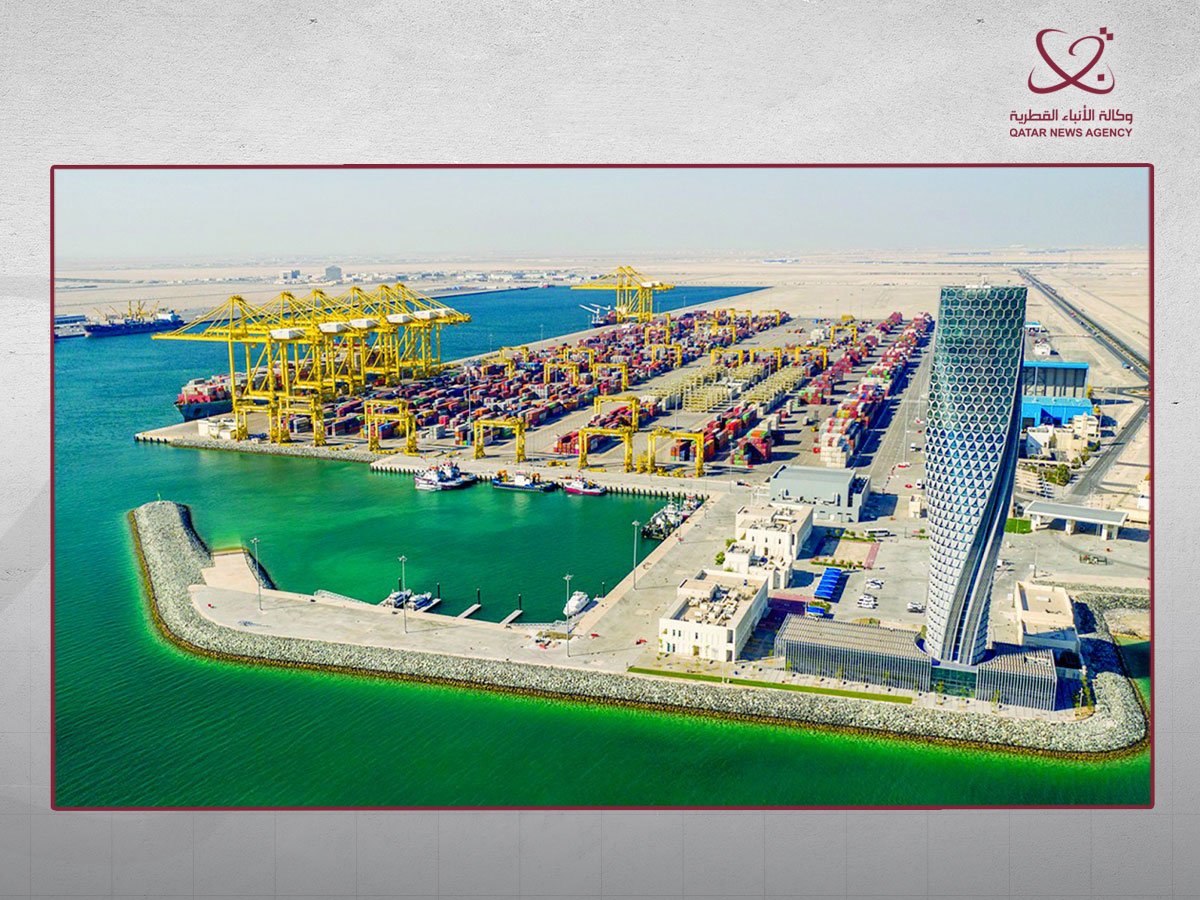
Hamad Port: Central to Qatar’s Food Security
Hamad Port plays a critical role in maintaining Qatar’s food security by facilitating the smooth flow of essential goods. Recent figures reveal that over 90,000 tonnes of grain were processed at the port between May and July of this year, showcasing the robustness of Qatar’s food security framework and its commitment to market stability through strategic planning and investment in infrastructure.
Enhancing Logistics and Infrastructure
As a cornerstone of Qatar’s logistics network, Hamad Port greatly contributes to meeting domestic demand. Its robust operational capacity, combined with cutting-edge infrastructure and extensive maritime connections, bolsters efforts to support the national economy. The port serves as a pivotal gateway for trade, linking Qatar to over 100 maritime destinations globally. This extensive connectivity not only reinforces food security but also enhances national exports, enabling smoother trade flows.
Captain Abdulaziz Nasser Al Yafei, Executive Vice President of Operations at Mwani Qatar, emphasized that the port is engineered to handle future trade growth effectively. With an annual design capacity of 7.5 million Twenty-foot Equivalent Units (TEUs), it can accommodate increased domestic demand, making it a key asset in Qatar’s economic landscape.
Integrated Operational Systems
The operational efficiency of Hamad Port is supported by a comprehensive 24/7 monitoring system that tracks every vessel, container, and truck movement. This integrated approach ensures continuous coordination among all relevant entities, enhancing operational reliability. Mwani Qatar’s partnerships with various government departments—including the Ministry of Transport and the General Authority of Customs—facilitate streamlined procedures, further improving cargo flow efficiency both to and from the port.
Food Sector Infrastructure Development
Beyond cargo handling, Hamad Port is equipped with specialized facilities designed for the storage, processing, and packaging of food products. These features represent an essential aspect of Qatar’s food sector infrastructure, playing a crucial role from the arrival of imports to their eventual distribution. Such capabilities not only enhance food quality but also ensure a stable supply of essential goods.
Mwani Qatar continues to evolve Hamad Port’s functionalities to align with market needs and expand trade opportunities. By establishing partnerships with global shipping lines and investing in both infrastructure and operational enhancements, the port is reinforcing its status as Qatar’s primary gateway for maritime trade.
Since its inauguration in 2016, Hamad Port has consistently undergone phases of development as part of Qatar’s broader investment in maritime transport and logistics. This ongoing strategic investment is integral to the nation’s competitiveness and development goals, aligning closely with the Qatar National Vision 2030. As the port progresses, it stands as a testament to Qatar’s commitment to ensuring food security and driving economic growth.