
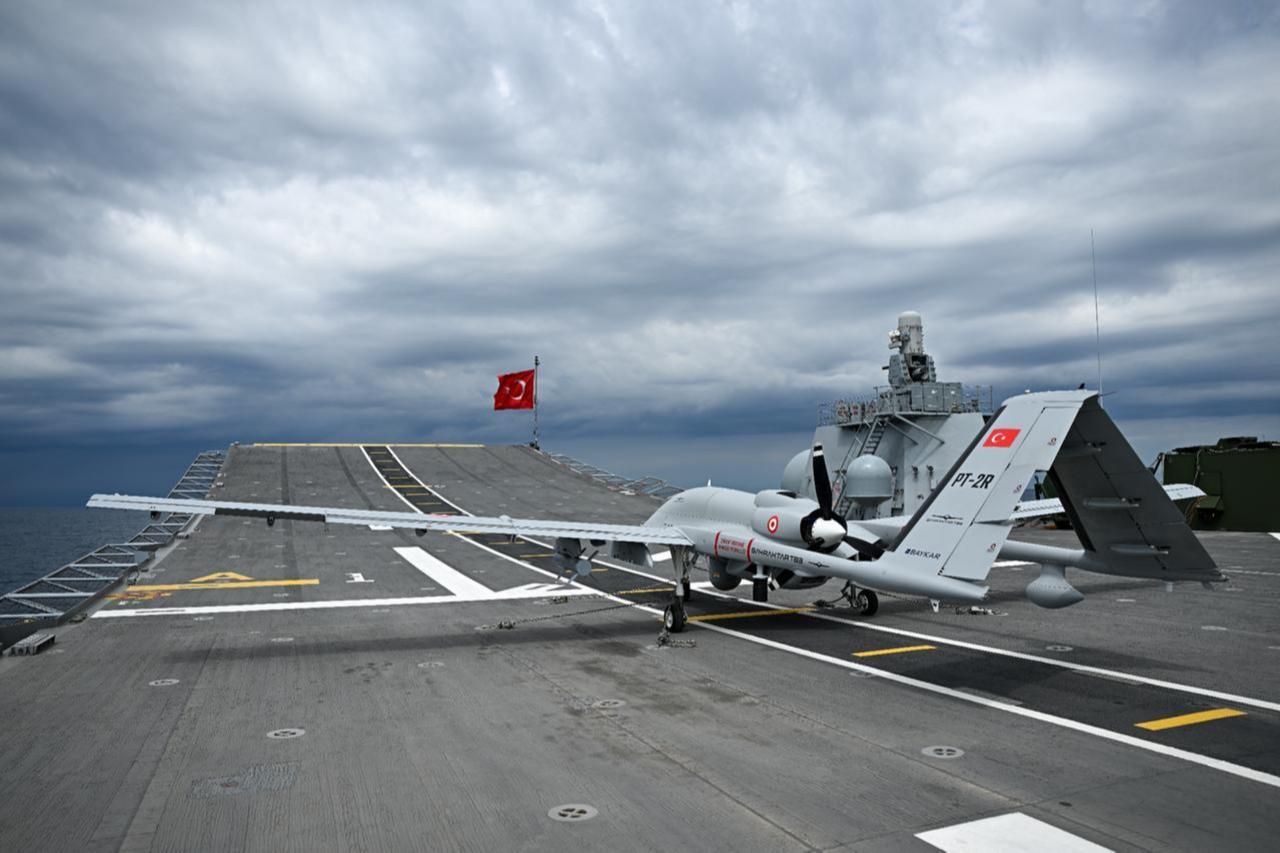
Türkiye has recently escalated its drone surveillance activities in the Aegean Sea, employing Bayraktar unmanned aerial vehicles (UAVs) for routine flights close to Greek territories. According to various reports from Greek media, this increase in drone operations has been noted over the past few weeks, specifically targeting areas classified by Türkiye as national maritime parks.
Surveillance Operations Intensify
On August 16, Türkiye announced the establishment of two new national maritime parks, aimed at protecting specific marine areas. These zones include one located between Fethiye and Kas, which surrounds Kastellorizo, and another along the Turkish coasts of Tekirdag and Canakkale, stretching towards Samothraki and Limnos. Greek officials have reported that these Bayraktar drones, launched from the Canakkale region, have been conducting their surveillance missions at altitudes of 17,000 feet over Greek islands such as Samothraki and Alexandroupoli.
While the UAVs have been mainly spotted in airspace near these islands, Greek authorities assert that the drones do not generally enter Greek airspace. Instead, they seem to be focused on reconnaissance missions, avoiding interference with commercial air traffic. Whenever the drones infringe upon Greek airspace, Greek F-16 fighter jets are promptly dispatched to intercept them. Reports indicate that incidents of airspace violations coincide with Türkiye’s declaration of national maritime parks.
Drone Activity Insights
On August 17, just a day after Türkiye designated the maritime parks, Greek air traffic control logged several incidents involving the entry of Turkish military aircraft into Greek airspace, including one CN-235 maritime patrol plane and multiple UAVs. On August 25, four Bayraktar drones alongside another CN-235 were recorded operating within Greek airspace. In response, the General Staff of National Defense in Greece stated that all such operations were documented and the Turkish aircraft were identified and intercepted under international norms.
Moreover, late-night drone flights have raised concerns within Greek defense circles. A recent report from To Vima indicated that a Bayraktar TB2 drone followed an unusual flight path over the eastern Aegean shortly before midnight, supposedly as part of a larger intelligence and reconnaissance strategy. These nighttime operations may serve multiple purposes, such as testing Greek radar response to low-visibility conditions while utilizing state-of-the-art thermal-imaging technology to track troop movements and assess defensive positions.
Greece’s Response and Defense Strategy
In light of these intensified surveillance activities, Greece is taking steps to enhance its air-defense network, which is known as “Achilles’ Shield.” This multifaceted system will integrate various anti-aircraft, anti-ballistic, and anti-drone technologies into a cohesive command-and-control framework. The development of such a robust defense system reflects Greece’s urgency to counter potential aerial threats posed by Türkiye’s proactive drone operations.
Additionally, the Greek defense strategy includes non-kinetic ways to neutralize hostile UAVs, further underscoring the growing priority given to securing its airspace against increasing Turkish UAV activity. As Türkiye continues its drone flights over the Aegean, the geopolitical landscape in this region remains tense, suggesting that this situation may evolve significantly in the future.
Given the significance of this aerial dominance, both nations are likely to maintain a vigilant stance, as the implications of drone surveillance and military readiness shape the dynamics in the Aegean Sea.