
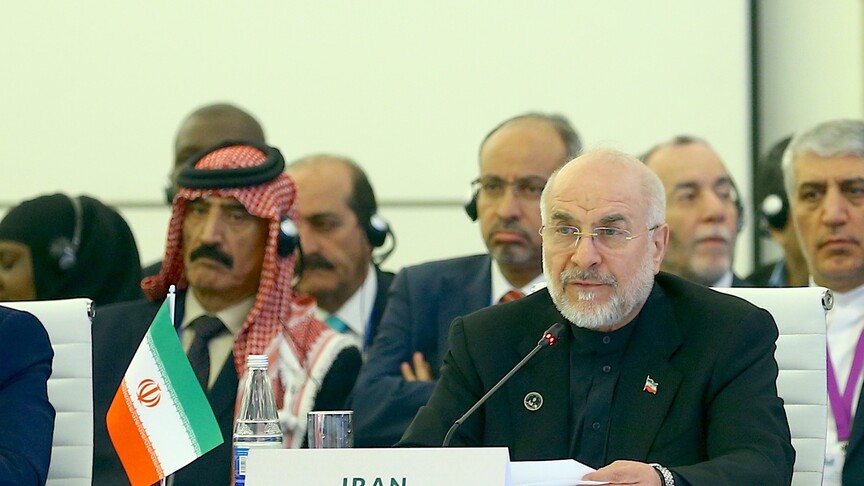
On September 6, 2026, Iranian Parliament Speaker Mohammad Bagher Qalibaf issued a stark warning to the United States, asserting that any future aggression toward Iran’s interests would result in a significantly stronger and more painful response. This statement reflects escalating tensions between the two nations and heralds a troubling shift in Iran’s military posture.
Changing Dynamics in U.S.-Iran Relations
During a parliamentary session, Qalibaf emphasized that the era of measured or “proportionate responses” has concluded. He articulated that recent Iranian military actions against U.S. bases were merely the beginning of a more assertive approach. “The Americans must have understood that the era of ‘proportionate responses’ is over,” he declared. This shift signals a potential escalation in military confrontations between the two powers, raising concerns about stability in the region.
Qalibaf’s remarks come in the context of a conflict that reignited earlier in the year when the U.S. and Israel initiated strikes against Iran. This prompted Iran’s retaliation through missile and drone strikes aimed at U.S. installations across the Middle East. The Speaker asserted that these Iranian military operations have intensified pressure on Washington, suggesting that the U.S. government’s portrayal of the battlefield through artificial intelligence-generated imagery is an effort to manipulate public perception.
The Memorandum of Understanding and Ongoing Tensions
Amidst these rising hostilities, Iran and the U.S. reached a memorandum of understanding in June, facilitated by Pakistan and Qatar. This agreement aimed to de-escalate tensions, reopen the vital Strait of Hormuz, and tackle existing economic sanctions. However, the spirit of cooperation appears fragile, as both sides have since accused one another of failing to adhere to their commitments outlined in the memorandum.
The ongoing military skirmishes exemplify the breakdown in trust between the two nations. Despite the diplomatic overtures made earlier in the year, military tensions have only escalated, particularly regarding navigation through the strategically important Strait of Hormuz—a crucial pathway for global oil shipments.
Future Implications for Regional Stability
The implications of Qalibaf’s statements are far-reaching. As Iran signals a readiness to adopt a more aggressive military stance, concerns mount over how this may affect regional stability and international relations. The continuous cycle of hostilities could lead to further entrenchment of both nations in their respective positions, complicating any future diplomatic resolutions.
Iran’s continued missile and drone attacks against U.S. positions in the region, juxtaposed against ongoing American military operations targeting Iranian interests, further indicate that both sides remain on high alert. As the conflict evolves, the potential for miscalculations or unintended escalations grows, necessitating vigilant monitoring of developments in U.S.-Iran relations.
In this complex scenario, the future of diplomatic engagement between Iran and the United States remains uncertain, raising critical questions about how the international community can facilitate dialogue and promote peace in a landscape marked by confrontation and mistrust.