
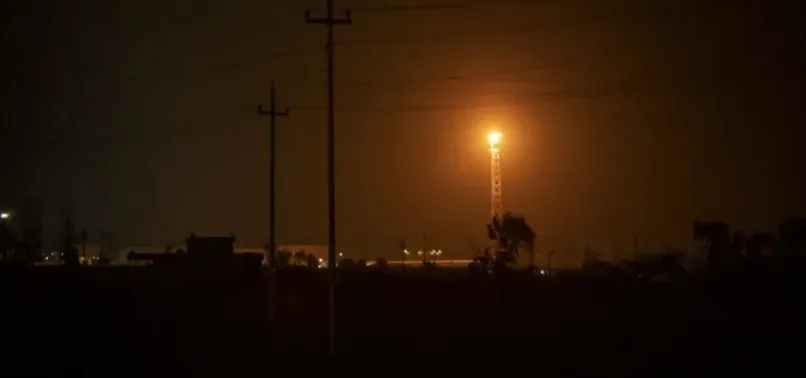
Iran’s Islamic Revolutionary Guard Corps (IRGC) announced on Sunday that it successfully targeted and eliminated a U.S. military tethered surveillance aerostat in a drone strike near Erbil airport in northern Iraq. This operation underscores the rising hostilities between the two nations, particularly in a region that has become increasingly volatile in recent months.
Details of the Incident
The IRGC’s assertion was reported by Iran’s Tasnim news agency, which stated that the U.S. military’s Persistent Surveillance Systems-Tethered (PSS-T) aerostat was “completely destroyed” by drones from the IRGC Aerospace Force. The incident occurred during heightened tensions between Iranian and American forces in the area on a Wednesday, although specific details of this day remain vague. The IRGC has also shared footage purportedly capturing the moment when the surveillance system was hit, illustrating their capability and intent to act against perceived threats.
The Purpose of the Aerostat
Unlike standard balloons, the PSS-T aerostat is designed to remain tethered at a specific point, functioning similarly to a surveillance tower. This capability allows it to monitor activities in its vicinity continuously. Its destruction represents a significant loss for U.S. military operations that rely on such systems for intelligence gathering and reconnaissance. While the U.S. military has not publicly responded to these claims, the implications of this loss could affect their operational capabilities in the region.
Context of Rising Regional Tensions
The incident comes amid escalating tensions that have surged since U.S.-Israeli strikes on Iranian positions began on February 28. Tehran has retaliated with missile and drone strikes directed at U.S. and Israeli assets throughout the region. The ongoing cycle of attack and counterattack serves to heighten the already fragile stability of the area, creating a breeding ground for further military engagements and hostilities.
In light of these tensions, a memorandum of understanding was signed in June, facilitated by Pakistan and Qatar. This agreement outlined measures aimed at de-escalating hostilities, reopening the crucial Strait of Hormuz, and addressing economic sanctions that have strained relations. However, since the signing, both sides have accused one another of failing to adhere to their commitments, complicating the situation further.
Implications for Future Relations
As military tensions continue to mount, the failure of both Iran and the United States to uphold the terms of their agreement poses a significant barrier to any hopes for peace and normalization of relations. The ongoing disputes regarding sanctions and maritime navigation in the Strait of Hormuz remain critical issues that need resolution. The recent drone strike emphasizes the urgency and complexity of the situation, highlighting the intricate web of military, political, and economic factors at play in this vital region.
In conclusion, the destruction of the U.S. surveillance aerostat marks a pivotal moment in the ongoing conflict between Iran and the United States. With both nations locked in a cycle of provocations and accusations, the potential for confrontation remains high. Achieving a stable resolution will require sustained diplomatic engagement and a commitment from both sides to honor existing agreements, a challenging task given the current climate of distrust and hostility.