
Israel is urged to fulfill its obligations under the Gaza peace roadmap for progress to occur, according to Nickolay Mladenov, the High Representative for Gaza at the Board of Peace. Speaking at the recent Hili Forum in Abu Dhabi, he acknowledged some advancements compared to the previous year, yet emphasized that the situation remains critical for achieving a viable political solution.
Current Status of the Gaza Peace Process
Mladenov highlighted the necessity of ensuring that agreed-upon measures are implemented to significantly improve the living conditions of the Gaza populace. Despite some negotiations with Israel regarding its commitments, Mladenov lamented that tangible improvements are still lacking. He noted ongoing talks focused on Israel’s withdrawal in exchange for Hamas’s disarmament and the subsequent reconstruction efforts in the region.
Over the past seven months, Mladenov has been engaged in intense negotiations with Hamas, characterizing these discussions as both challenging and crucial. He praised the mediation efforts from Türkiye, Egypt, and Qatar, alongside support from the United Arab Emirates and other nations in the region, acknowledging their pivotal roles in facilitating dialogue.
Living Conditions and Future Paths
The dire living conditions in Gaza were a key point in Mladenov’s address. He warned that the residents could not endure another harsh winter under the existing circumstances. Outlining three potential scenarios, he emphasized the need for a strategic approach: either maintain the status quo, escalate military operations, or adopt the Board of Peace roadmap. The third option is viewed as the most sensible, which requires an agreement on disarmament, the eventual withdrawal of Israeli forces, and reconstruction efforts aided by international and regional support.
Mladenov also articulated a sobering viewpoint: failure to advance the peace roadmap may render the two-state solution nearly impossible. He stressed the importance of transitional governance, disarmament, and a withdrawal from Gaza as foundational steps toward sustainable peace.
Political Dynamics and the Role of Governance
When questioned about the potential impact of Israel’s upcoming elections on existing commitments, Mladenov acknowledged that electoral politics often lead to volatile reactions. However, he maintained that Israelis generally desire a resolution to the persistent crisis in Gaza. The suffering endured by both Israelis and Palestinians was highlighted, asserting the urgent need for political dialogue to facilitate coexistence.
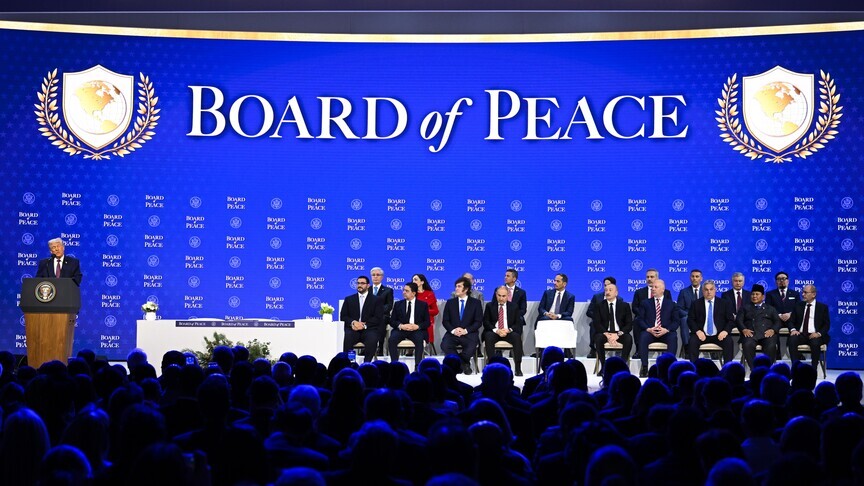
Established in January as a part of a broader initiative by former U.S. President Donald Trump, the Board of Peace aims to oversee Gaza’s transition, covering governance, security, and reconstruction. This effort is supported by UN Security Council Resolution 2803. Additionally, the Palestinian National Committee for the Administration of Gaza has been formed to manage civilian administration responsibilities and restore public services within the enclave.
The roadmap released by the Board of Peace on July 31 lays out the steps necessary for the next phase—this includes disarming Hamas, a phased Israeli withdrawal, administrative transfer to the Palestinian committee, and the establishment of an international stabilization force.
In summary, the third Hili Forum’s theme, “Gulf at Crossroads: Conflict, Consequences, and Course Correction,” encapsulates the critical dialogue surrounding the future of Gaza. Co-organized by the Emirates Center for Strategic Studies and Research and the Anwar Gargash Diplomatic Academy, the forum underlines the urgent need for collaborative efforts in moving forward with peace initiatives.