
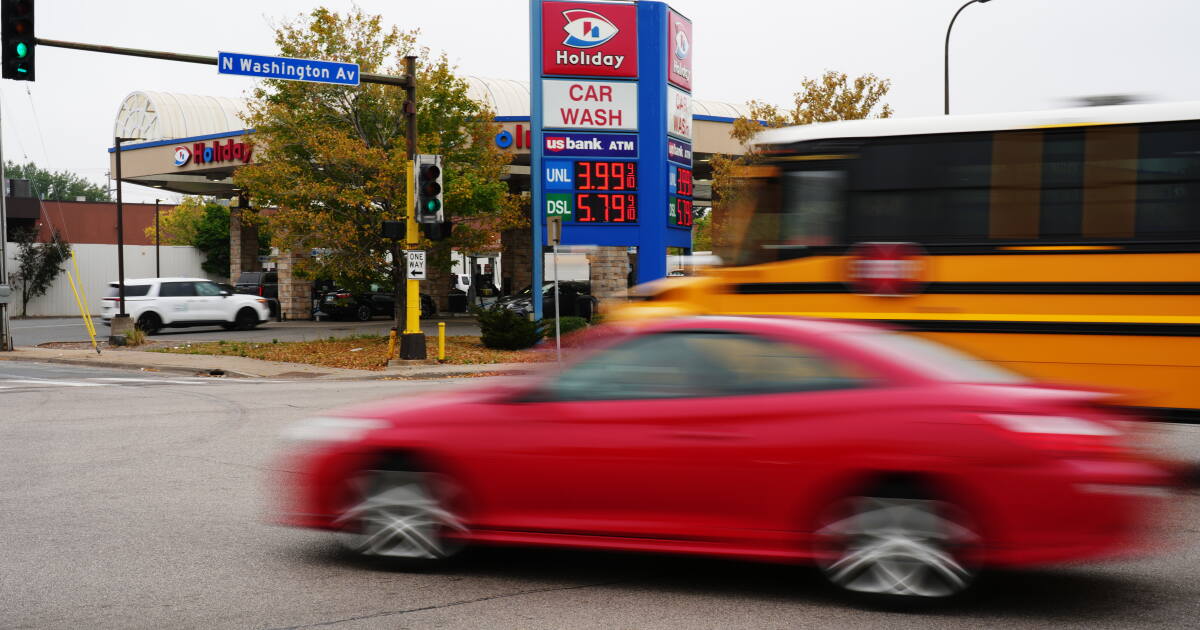
As summer winds down and the Labor Day weekend approaches, the cost of filling up gas has reached alarming heights across the United States. Families planning last-minute trips may find that the expenses associated with travel are considerably more burdensome than in previous years.
Rising Gas Prices Across the Nation
The average price of regular gasoline now stands at $4.14 per gallon as the holiday draws near. This figure is nearly one dollar higher than it was last year and significantly surpasses the previous Labor Day record of $3.82 set back in 2012, according to data from AAA. The impact of soaring oil prices is being felt acutely by everyday travelers, forcing many families to reconsider their summer road trip plans.
Nicole Collins, a Philadelphia resident, had intended to visit friends in South Carolina but opted to stay home due to rising fuel costs. “Gas is pretty high right now. It doesn’t help that we also have a baby, so we have added expenses,” Collins stated outside a gas station in Claymont, Delaware, where the price was $4.19 per gallon. Her sentiment reflects a broader trend among families who are distancing themselves from their usual summer travel routines.
Factors Behind the Price Hikes
Gas prices have surged following U.S. and Israeli strikes on Iran in February, leading to a significant reduction in crude oil traffic through the crucial Strait of Hormuz. The geopolitical tensions in the region are among the primary reasons for the ongoing volatility in prices, as highlighted by Tom Seng, a professor of energy finance. While U.S. Energy Secretary Chris Wright acknowledged the current high prices, he indicated efforts are underway to lower them, although there’s no guarantee of immediate relief.
National gas prices currently remain below the peak of $5.02 per gallon seen in June 2022. However, the situation looks much bleaker in the diesel market, which has reached a national average of $5.85—a record high. The hike in diesel prices directly affects not just freight and delivery services but also consumer goods, impacting prices in grocery stores and online delivery services.
The Unpredictable Future of Fuel Prices
Typically, gas prices decline as the summer driving season comes to an end and refineries transition to producing a more cost-effective winter blend. However, various unpredictable factors are complicating matters this year. U.S. refineries are operating at full capacity, and any disruptions from unexpected events, such as hurricanes or technical issues, could limit fuel availability and keep prices elevated.
Beyond the Middle East turmoil, Ukrainian drone strikes on Russian refineries and reduced output from Chinese facilities are resulting in further gasoline shortages. According to Matthew Metzgar, a clinical professor of economics, the overall decline in fuel production indicates that consumers may face continued price pressures in the near future.
Despite these concerns, some experts, including Secretary Wright, are optimistic about a drop in gas prices over the coming months. He pointed out that futures markets are predicting lower prices, with bulk gasoline intended for sale in November priced approximately $0.35 less than current rates. This indicates a belief among market analysts that relief may be on the horizon.
For now, consumers looking to alleviate some of the strain on their wallets can utilize price comparison apps, which are particularly useful for long trips. Fuel costs at interstate stations can be significantly higher than those just a short drive away, offering savvy travelers the opportunity to save money while on the go.