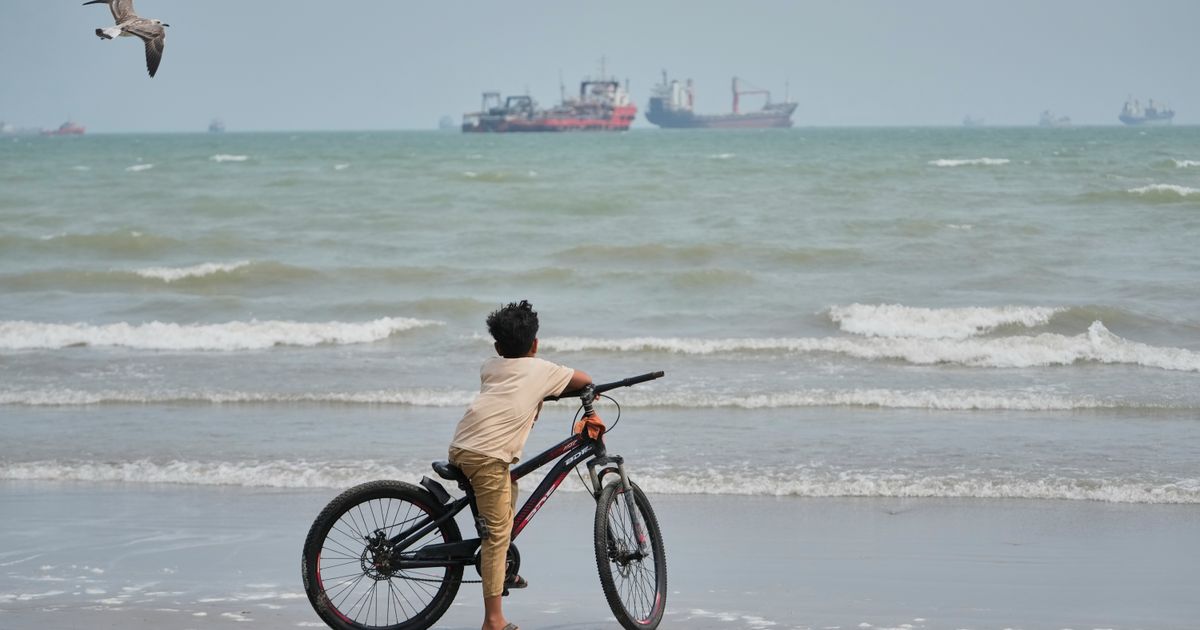
In the port city of Bandar Abbas, located on the strategic Strait of Hormuz, economic turmoil has taken its toll on residents. Once bustling with activity, the waterfront now stands in stark contrast to its former vibrancy. Following six months of escalating conflict and intensified U.S. sanctions, residents are grappling with increasing hardships.
Economic Struggles Amidst Blockade
The impact of the U.S. blockade is palpable at the local docks. Mohammad Torabian, who works providing services to passengers, reflects on the stark decline in activity. Pre-war, the docks were humming with as many as 50 trucks unloading essential goods daily. Presently, the situation is drastically different, with most of the area remaining vacant. Torabian laments, “The business right now is terrible,” noting that around 500 individuals once supported themselves from opportunities at the dock but are now left unemployed.
The significance of Bandar Abbas has long been tied to its maritime activity, specifically through its proximity to Shahid Rajaee, one of Iran’s primary commercial ports, capable of managing vast amounts of cargo annually. Iranian leaders have voiced their discontent with the blockade reinstated in April, following failed negotiations to resolve ongoing tensions. U.S. officials have made it clear that they intend to maintain economic pressure on the region, crucial for global oil shipping.
Shrinking Markets and Vanishing Customers
The economic ripple effect is evident beyond the waterfront, significantly affecting retail sectors. In the market shops, the grim realty is voiced by Mehrdad Jahangiri, who manages a children’s clothing store. He reports a staggering drop in sales, estimating that business has dwindled by roughly half compared to last year. “There are simply no customers,” Jahangiri states, describing the market’s pervasive quiet.
The timing of the conflict has exacerbated the situation, coinciding with Nowruz, the Iranian New Year season when shoppers typically flock to stores. Merchants depend on these sales to carry them through the year, and the war has effectively dashed those hopes. Now, as families prepare for the school year and the accompanying traditional shopping, Jahangiri notes that the anticipated crowds have yet to materialize.
Economic hardship has begun to force merchants to adapt in ways they haven’t before. Many are trying to offer discounts or permitting trusted customers to pay off their purchases over time. The downturn has been severe enough that Jahangiri has found himself falling behind on rent and accumulating debts—an unthinkable situation in better times.
Fears Beyond Financial Losses
For those whose livelihoods rely on the sea, the challenges stretch beyond merely losing business. Motorboat driver Abbas Golzanaei recounts how safety concerns have drastically altered his workdays. Whereas he once traveled up to 30 miles for work, the current conflict has compelled him to restrict his journeys to no more than eight miles. “The sea is not safe,” he explains.
This retraction in range translates to fewer passengers and diminished income for Golzanaei, who also faces difficulties in securing gasoline. Meanwhile, distant cargo vessels linger offshore, caught in a web of uncertainty just like the residents of Bandar Abbas, as they await clarity on when they might safely resume operations.
As residents wrestle with both immediate economic pressures and safety concerns, the future remains precarious. The stories emerging from Bandar Abbas serve as a vivid reflection of the broader regional strife, encapsulating the human toll of ongoing conflict and economic blockade.