
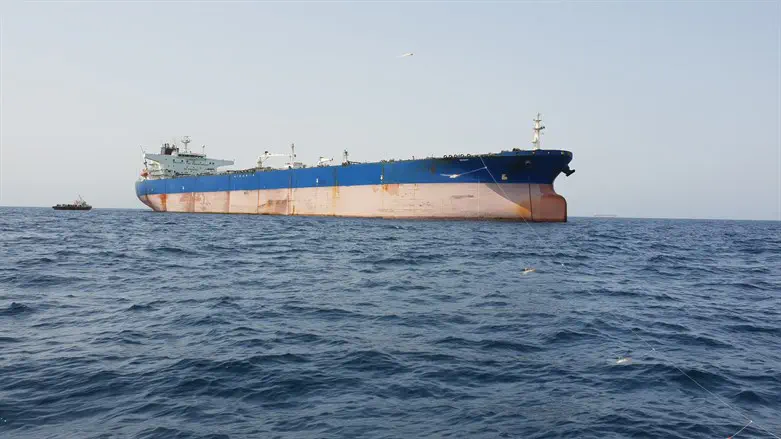
Iran has escalated tensions with the United States, asserting it will engage in what it terms “economic warfare.” On Tuesday, an official from Tehran indicated plans to establish a new maritime exclusion zone in the Persian Gulf, alongside claims of deploying advanced ballistic missiles against American warships. This rhetoric signals a troubling chapter in the ongoing hostilities that have marked the six-month conflict between the two nations.
Renewed Hostilities in the Gulf
This fresh wave of threats surfaces following continued military engagements. Over the weekend, U.S. forces targeted Iranian assets, striking three oil tankers as tensions flared. In response, Iranian state media reported the launch of a Qassem Basir missile directed at U.S. naval vessels, underscoring the intensity of the current standoff. Despite efforts by the U.S. to restore safety to the critical Strait of Hormuz, Iran has persisted in its disruptive tactics, complicating maritime navigation in this vital trade route.
The current conflict began with U.S. and Israeli airstrikes on February 28, and diplomatic solutions appear elusive. Iran has indicated it will soon unveil maps detailing a newly established restricted maritime zone within the Gulf. Mohsen Rezaei, the secretary of Iran’s Supreme National Security Council, commented on these developments, asserting that the exclusion area will begin alongside the U.S. naval blockade and will have severe implications for vessels attempting to enter.
Military Posturing and Missile Developments
Rezaei sent a clear warning on social media, asserting that recent U.S. military actions have provoked a fundamental recalibration of Iran’s military posture towards American forces. The Qassem Basir missile, highlighted in Rezaei’s statements, is touted as a sophisticated weapon capable of evading missile defenses and designed to engage targets effectively in electronic warfare scenarios. This missile underscores Tehran’s ongoing efforts to enhance its military capabilities amid escalating pressures.
While U.S. operations have inflicted damage on Iran’s conventional military resources, Tehran maintains its missile and drone prowess, using these assets to threaten international shipping in the Strait of Hormuz. Reports suggest that Iranian forces have targeted tankers not authorized to pass through this crucial waterway, as well as launching attacks on Gulf nations that host U.S. military bases.
The Impact of the U.S. Naval Blockade
The confrontation has only intensified as the U.S. naval blockade exerts increasing pressure on Iranian oil exports. According to analysts from Kpler, no Iranian crude has successfully traversed the blocking forces since mid-July, and the limited quantities of oil being loaded onto tankers remain confined within the Gulf. The volume of Iranian crude oil held on vessels outside the blockade has also significantly diminished, with current estimates dropping from 90 million barrels in July to around 29 million barrels.
Moreover, oil procurement from Iran has witnessed a stark decline, with Gulf oil officials reporting little activity in the trading of Iranian crude cargoes. Consequently, shipping traffic through the Strait of Hormuz has plummeted, with an average of just ten commodity vessels navigating the strait daily—a stark contrast to the robust traffic seen before the outbreak of conflict, which accounted for roughly 20% of global oil and liquefied natural gas shipments.
As the geopolitical chess game unfolds, the implications for global oil markets become clearer. U.S. President Donald Trump has forecast significant reductions in oil prices following a potential victory over Iran, suggesting that a successful conclusion to the conflict might see prices drop sharply. The situation remains fluid, and the international community is closely watching how these developments will affect oil supply and regional stability moving forward.