
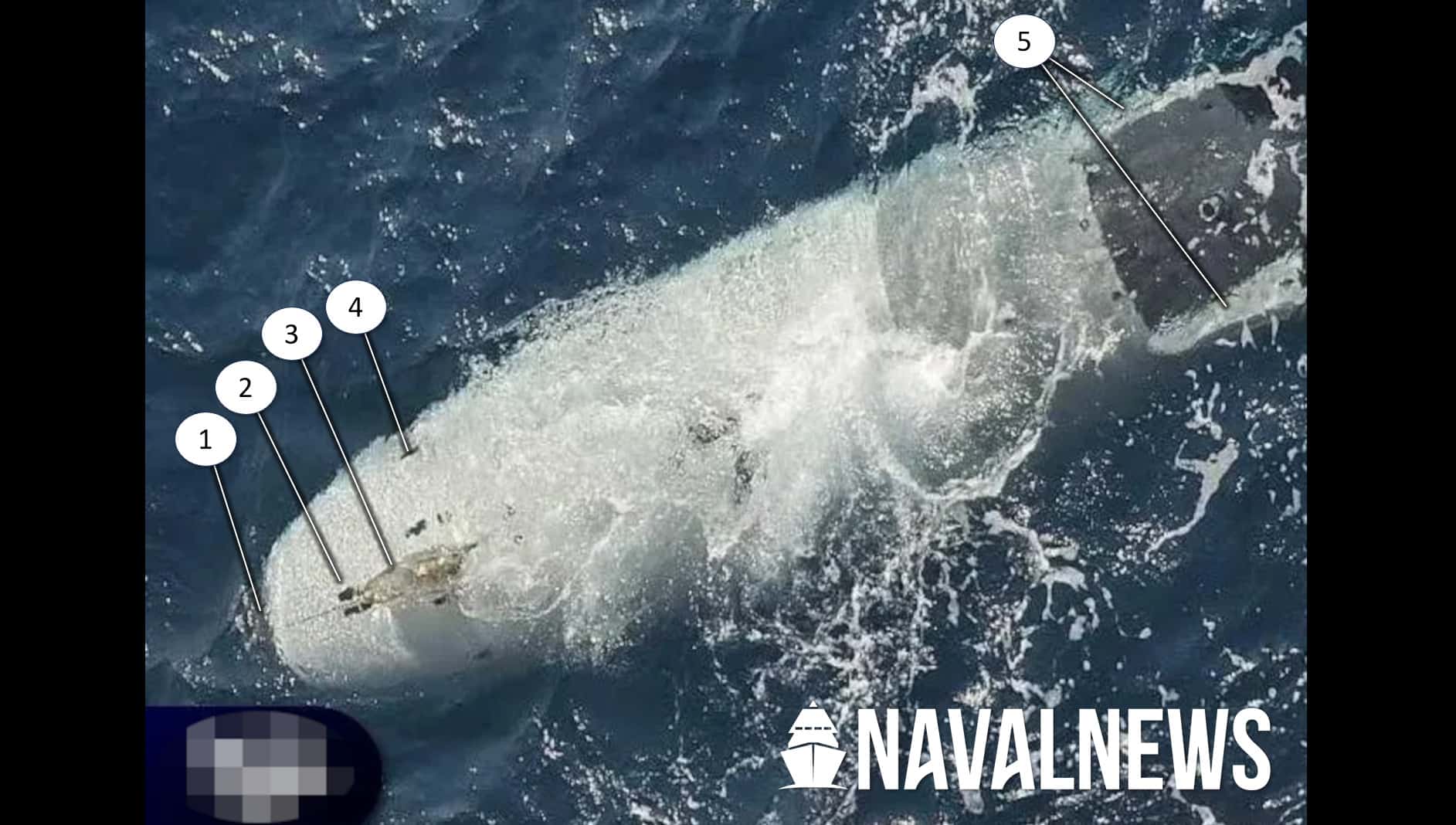
Iran has recently made headlines with the reported capture of an American-designed underwater drone, closely resembling the Anduril Dive-LD model. This incident reportedly took place in the strategic Straits of Hormuz, a vital waterway for global trade and energy transportation.
Details of the Captured Drone
The Iranian Islamic Revolutionary Guard Corps (IRGC) announced the capture, and while their claims lack independent verification, the evidence shared through various channels appears credible. Images released show a partially submerged drone that bears a striking similarity to the Anduril Dive-LD, particularly in its structure and intricate design elements. Features such as flood holes, fastenings, and the distinctive forward-transparent mast all closely match the specifications of the American AUV.
The Dive-LD is versatile, designed for a range of missions including Intelligence, Surveillance, and Reconnaissance (ISR), as well as mine countermeasures (MCM). There is speculation that this drone could potentially be equipped with armament, increasing its tactical versatility.
Specifications of the Dive-LD
The Anduril Dive-LD is a large-displacement autonomous underwater vehicle measuring approximately 5.8 meters (about 19 feet) in length and 2 meters (4 feet) in diameter, weighing around 3 tons. This AUV is engineered for long-duration missions, with the capability of operating over several days. According to its manufacturers, Anduril, the drone features extensive open interfaces and sizeable payload bays, allowing for the rapid integration of various sensors and devices tailored for specific defense or commercial tasks. The exact payload of the captured drone remains unclear from the available photographs.
The Dive-LD is currently in service with the U.S. Navy, particularly operational under the Unmanned Undersea Vehicle Group (UUVGRU) 1 and Undersea Vehicle Squadron (UUVRON) 3. Despite its deployment, detailed information about the Dive-LD has been limited in public discourse. Notably, Anduril is also providing the U.S. Navy with the larger Dive-XL version, which has similarities to the Australian Navy’s Ghost Shark model.
Iran’s Evolution in Underwater Drone Technology
While the captured Dive-LD represents a significant leap forward compared to existing Iranian underwater designs, Iran has long been engaged in the development of weaponized drones. They have produced various types of underwater drones, at least two of which have been reportedly supplied to the Houthi Movement in Yemen. Analysis of seized arms shipments highlights the evolution of Iranian technology, showcasing practical designs that have matured over time.
The acquisition of the Dive-LD could potentially further strengthen Iran’s underwater drone capabilities, allowing for improved operational effectiveness. Moreover, there is concern that the technology could be shared with Iran’s allies, including major global players like Russia and China, which could alter the balance of military power in the region.
In summary, the reported capture of the U.S.-designed Dive-LD not only raises questions about the ongoing security dynamics in the Gulf region but also highlights evolving technologies in underwater warfare. The implications of this incident will likely resonate through military and geopolitical discussions in the near future.