
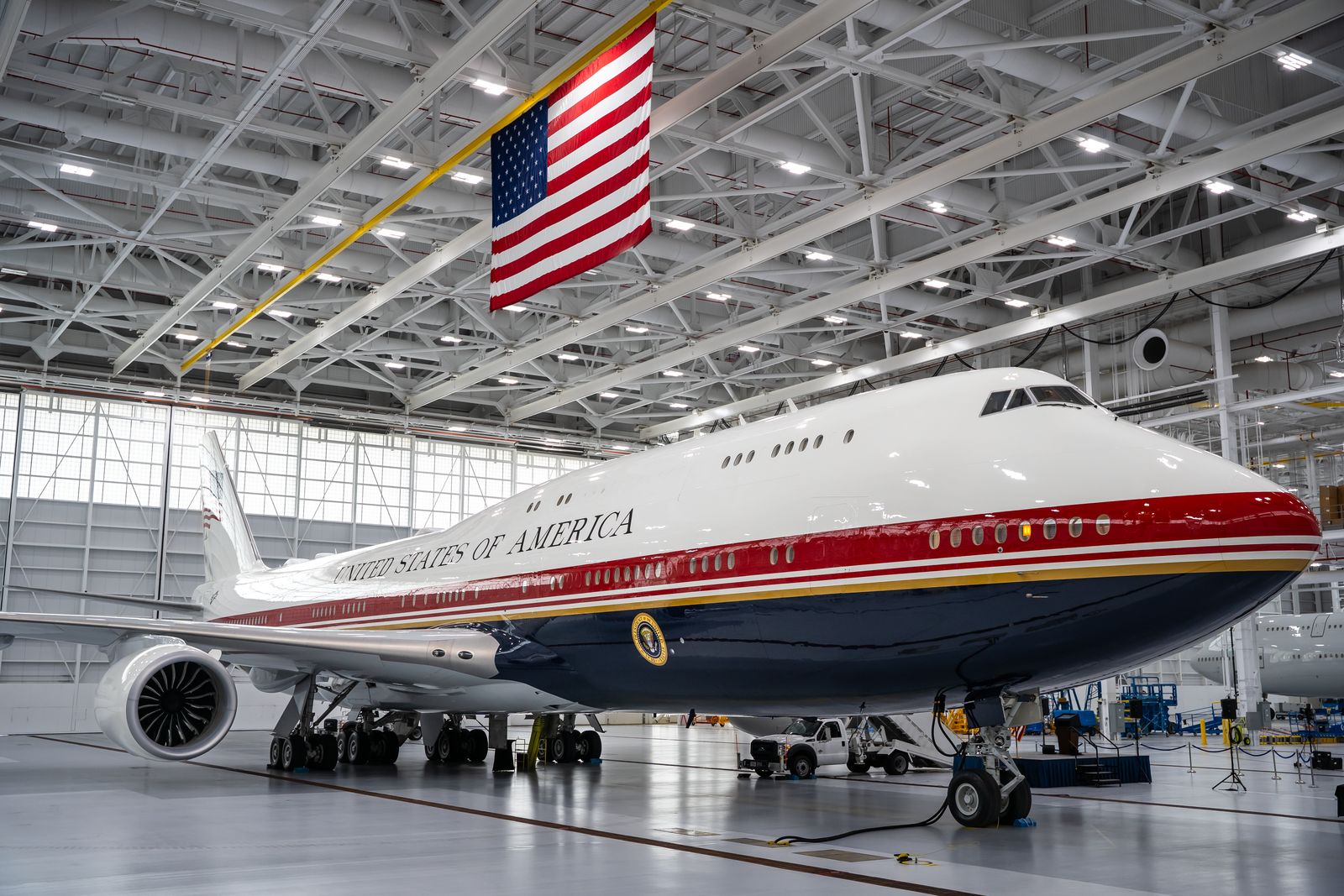
An unexpected malfunction involving an emergency evacuation slide occurred on a presidential aircraft previously gifted by Qatar, causing delays in President Donald Trump’s scheduled departure from Dallas. This incident has reignited discussions surrounding the controversial acceptance of the aircraft, which has been utilized temporarily while modifications are made to the new Air Force One jets.
Incident Details in Dallas
As maintenance crews prepared the modified Boeing 747 for the president’s return to Washington following a Republican event, the inflatable slide unexpectedly deployed. Although such occurrences, known as inadvertent deployments, are not entirely uncommon in aviation, they typically necessitate several hours of technical work to ensure safety before the airplane can take off again. Fortunately, no individuals were injured during this incident, as the president was not on board at the time.
The unexpected slide deployment added significant time to President Trump’s planned itinerary, requiring both staff and Secret Service members to remain on the ground while maintenance personnel addressed the issue and restored the aircraft for flight. This emergency slide is an essential safety feature, designed to deploy rapidly during an evacuation. Consequently, safety checks and recertification were necessary before the aircraft could resume service.
Questions Surrounding the Qatari Donation
The recent incident has shifted the spotlight back onto the decision to accept the aircraft as a donation from Qatar. When the arrangement was initially announced, it fostered bipartisan concern, prompting critiques regarding constitutional, ethical, and security implications. While some supporters defended the move as a cost-effective alternative given the delays with Boeing’s new VC-25B aircraft, skeptics raised fundamental doubts about the wisdom of utilizing a jet from a foreign government.
The Boeing replacement program for Air Force One has struggled with delays and ballooning budgets since its inception. The acceptance of the Qatari aircraft was intended as a stopgap measure, yet the necessary modifications to meet security and operational standards had already raised eyebrows among aviation analysts, who remain concerned regarding the costs and timelines involved in retrofitting a foreign-owned plane.
Political Implications and Reactions
The delays stemming from the slide incident quickly captured the attention of social media, where critics highlighted the mechanical failure as indicative of broader issues linked to the aircraft’s diplomatic origins. Commentators compared this incident to ongoing problems with existing presidential aircraft, emphasizing the potential concerns about flying in a plane whose acceptance sparked significant political debate.
Supporters of President Trump downplayed the gravity of the situation, emphasizing that maintenance problems can arise with any aircraft regardless of its source or history. The White House has not issued an extensive statement elaborating on the details of the malfunction but has confirmed that the president experienced a delayed return to Washington.
Future Considerations and Maintenance
Air Force maintenance teams plan to conduct a thorough examination of the slide mechanism and associated door assembly to assess the cause of the malfunction. Investigators will consider possibilities ranging from mechanical errors to sensor malfunctions during ground operations. These findings could potentially influence future maintenance strategies for the aircraft and similar systems.
As the president continues a rigorous travel schedule, the Dallas incident—while concerning—did not disrupt any subsequent commitments. Questions surrounding the long-term viability of the Qatari-donated aircraft will likely endure, particularly in light of the challenges faced by the Boeing replacement program. Critics remain poised to leverage this incident in their arguments against the aircraft, while the administration maintains it remains a reliable option during this transitional period.