
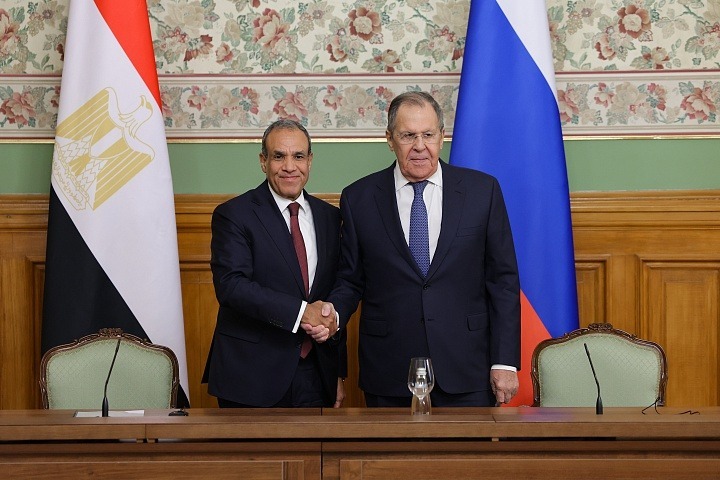
Russia is strengthening its economic presence in Egypt, focusing on key sectors crucial for bilateral collaboration. Recent developments, particularly in industrial and energy projects, highlight the country’s strategic engagement as it positions itself in a competitive market influenced by Western powers.
Development of the Russian Industrial Zone
On July 15, 2023, Cairo and Moscow revealed the appointment of an industrial developer for the Russian Industrial Zone (RIZ) situated in the Suez Canal Economic Zone. Egyptian Foreign Minister Badr Abdelatty described this milestone as crucial for the zone’s operation. Anton Alikhanov, Russia’s Industry Minister, highlighted Cairo’s legislative initiatives as instrumental in propelling this project forward. The Crystal Fund, led by Alexander Galushka, a former Russian minister, has been designated as the developer. This organization is responsible for various state projects and will serve as a gateway for Russian enterprises entering the Egyptian market, with plans spanning machine manufacturing, pharmaceuticals, electronics, and petrochemicals.
Initially agreed upon in 2018, the project was redefined in 2021 to cover two sites on either side of the Suez Canal. The construction is set to begin in 2026 at Ain Sokhna, with operations anticipated to start by 2030. This development signifies a commitment to long-term growth in bilateral economic ties, as both nations eye the advantages the RIZ can provide.
The El-Dabaa Nuclear Power Plant: A Major Bilateral Project
The El-Dabaa Nuclear Power Plant represents a significant component of Russia’s investment strategy in Egypt. Initiated in July 2022, this facility aims to diversify Egypt’s energy portfolio, with completion and full operation expected by 2030. The plant will employ four VVER-1200 reactors, collectively generating up to 4,800 megawatts of electricity. Financed largely through a $25 billion loan from Russia, this project underscores Moscow’s willingness to engage in large-scale endeavors that require substantial financial backing and long-term commitments—something many Western investors are hesitant to undertake.
In a celebratory event in November 2025, Russian President Vladimir Putin and Egyptian President Abdel Fattah al-Sisi marked the installation of the reactor pressure vessel, intensifying the sense of collaboration between the two countries. The project is not merely an energy solution but a political statement about the deepening ties between Russia and Egypt amid a complex geopolitical landscape.
Challenges in Political Alignment
Despite the growing economic partnerships, Egypt remains cautious about fully aligning with Russia, particularly in light of its relationships with the European Union and the United States. Talks regarding a free trade agreement with the Eurasian Economic Union (EAEU) have stalled, reflecting the complexities of Egypt’s diverse economic interests. Russian engagement often fills specific gaps that Western entities overlook, yet Egypt is simultaneously exploring investments from the EU aimed at renewable energy solutions.
The precarious game Egypt plays, balancing interests between Moscow and Western partners, reveals a strategic pragmatism. While Russia offers long-term industrial and energy projects, the EU provides different types of financial assistance, particularly in modernizing Egypt’s energy grid. This divergence highlights the challenge for Egypt in leveraging partnerships without compromising its broader foreign policy objectives.
Future Considerations: A Delicate Balance
As Russia continues to enhance its economic foothold in Egypt, the key question remains whether these initiatives will translate into significant political influence. History shows that while economic ties often facilitate trade, they do not necessarily align political stances. Egypt has engaged with Russia’s offerings while remaining a prominent recipient of EU investments. This balancing act is not without its complexities, especially as trade negotiations and geopolitical interests evolve.
Looking ahead, the potential revival of the EAEU agreement will be pivotal in shaping Egypt’s political landscape. Such an agreement would not only indicate a shift towards a deeper political alignment but could also reflect Egypt’s broader strategic intentions in navigating an increasingly multipolar world. The development of a local commercial infrastructure through the RIZ may serve as a foundation for stronger ties, but the political ramifications will demand careful consideration from Egyptian leaders eager to maintain their diverse alliances.