
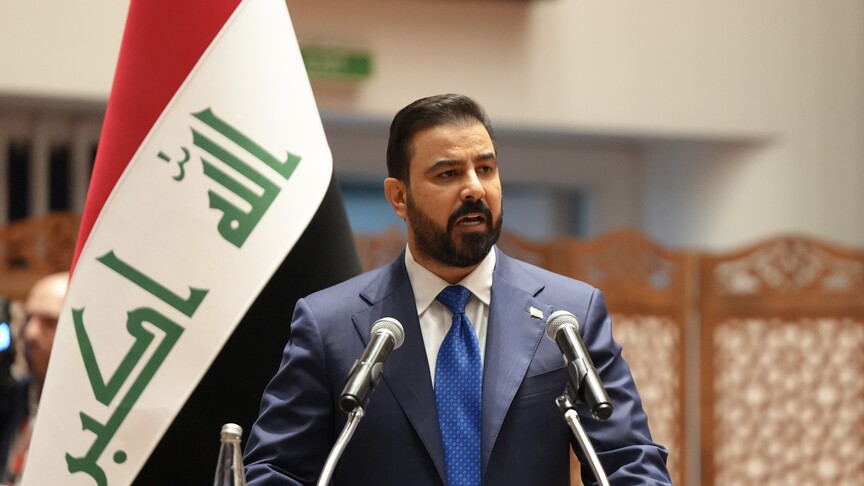
On May 16, 2026, Iraq welcomed a new chapter in its political landscape as Ali al-Zaidi officially took office as the country’s Prime Minister. This transition marks the end of Mohammed Shia al-Sudani’s tenure and is seen as a significant event in Iraq’s ongoing efforts to stabilize its governance.
Transition of Power in Iraq
The handover ceremony took place in Baghdad, signaling an important moment for the country. According to the Iraqi News Agency (INA), the event underscored the peaceful transition of power within the government, which is essential for maintaining public confidence and political stability. The Iraqi Parliament expressed its support for al-Zaidi on May 14 by granting him and 14 ministers in his Cabinet the necessary vote of confidence. However, the Parliament deferred discussions on nine additional ministerial appointments, leaving a complete Cabinet yet to be finalized.
Formation of the New Government
The groundwork for this new administration began on April 27, when Iraqi President Nizar Amidi assigned al-Zaidi the task of forming a new government. This decision emerged from the Coordination Framework Alliance, the dominant parliamentary bloc, which recommended al-Zaidi for the premier role. This political framework is part of Iraq’s established quota system. Under this structure, representation in key government positions is divided along ethnic and sectarian lines: a Kurdish figure holds the presidency, a Shia serves as Prime Minister, and a Sunni represents the parliamentary speakership. Currently, this intricate balance is embodied by leaders such as Amidi, al-Zaidi, and Hebat al-Halbousi.
Political Landscape in Iraq
Iraq’s complex political environment has consistently required careful navigation among its diverse populations. The new Prime Minister, al-Zaidi, inherits a range of challenges, including managing the relations among different ethnic and sectarian groups while also addressing pressing social and economic issues. His leadership is crucial not just for the functioning of the government but also for fostering national unity in a country still recovering from decades of conflict.
As al-Zaidi officially steps into his role, his government has the opportunity to make significant strides. With the support of found allies in Parliament, the hope is that his administration can effectively address the political and social challenges that have affected Iraq for years. Moving forward, all eyes will be on how his government tackles crucial issues such as security, economic development, and public services, which are integral to the lives of Iraqi citizens.
Overall, the installation of Ali al-Zaidi as Prime Minister symbolizes a pivotal moment in Iraq’s governance. The forthcoming efforts of this new administration will be crucial for defining the country’s future and reinforcing its democratic foundations. As Iraq continues to evolve politically, it’s essential for its leaders to work collaboratively, upholding the principles of accountability and transparency to gain the trust of the populace.