
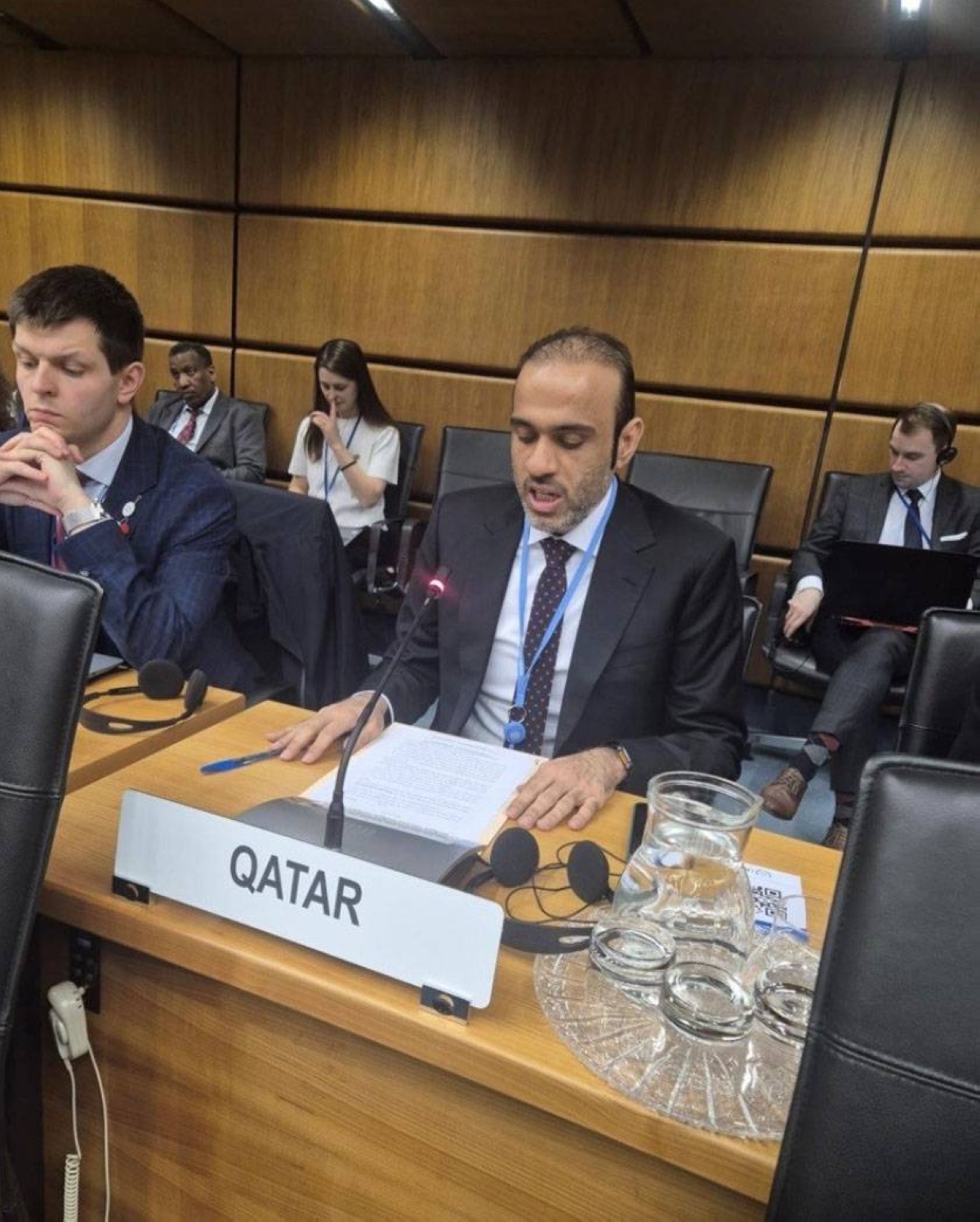
The State of Qatar has expressed its strongest condemnation of the Houthi group’s attacks on civilian and economic infrastructures within the Kingdom of Saudi Arabia. Additionally, Qatar denounces the recent aggressions from the Islamic Republic of Iran against several Arab nations. This stance underscores Qatar’s unwavering support for its Arab neighbors and its firm rejection of any actions aimed at displacing the Palestinian people.
Qatar’s Position at the International Level
Qatar’s condemnation was articulated by Jassim Yacoub Al Hammadi, the country’s Ambassador to Austria and its Permanent Representative to the United Nations and International Organizations in Vienna. Speaking at the Board of Governors meeting of the International Atomic Energy Agency (IAEA), he addressed the issue under the agenda item “Any Other Business,” specifically highlighting Iran’s hostile actions against Arab states and the ongoing plight of the Palestinians.
Ambassador Al Hammadi explicitly criticized the Houthi group’s targeting of Saudi Arabian civilian and economic sites, as well as its assaults on commercial vessels in the Red Sea. He emphasized the urgent threat these actions pose to maritime safety and international navigation rights, reaffirming Qatar’s solidarity with Saudi Arabia and its support for necessary measures to protect national security and sovereignty.
Condemnation of Iranian Aggression
Furthermore, the Ambassador condemned recent Iranian attacks on several Arab countries, including Jordan, Bahrain, Kuwait, and the UAE. He characterized these acts as blatant violations of national sovereignty and international law. Al Hammadi referred to Security Council Resolution 2817, which categorically denounced such Iranian actions, labeling them a significant threat to global peace and security. The resolution calls for Iran to cease any unlawful activities and to respect international navigation rights, especially in the critical Strait of Hormuz.
In his remarks, Al Hammadi urged the need for diplomatic channels and dialogue in order to prevent further military escalation in the Arabian Gulf. He warned that ongoing Iranian aggression could spiral into a more serious crisis, undermining both political and diplomatic efforts to secure regional stability and trust.
The Palestinian Cause Remains a Priority
On the topic of the Palestinian Territories, Ambassador Al Hammadi stressed that current developments in the Arabian Gulf should not overshadow the urgency of the Palestinian issue, which he described as a “bleeding wound in the conscience of humanity.” He criticized Israel’s continued refusal to adhere to international resolutions affirming the rights of the Palestinian people, highlighting that this impunity fuels ongoing violence and displacement.
The Ambassador called attention to Israel’s policies of land annexation and forced removal of Palestinians, labeling these as serious violations of humanitarian law. He specifically pointed out remarks from Israeli officials regarding potential displacements in Gaza as direct violations of UN Security Council resolutions, particularly Resolution 2334, which condemns any actions aimed at altering the demographics of occupied territories.
Qatar’s Firm Stance on Palestinian Rights
In conclusion, Qatar categorically opposes any attempts to forcibly displace Palestinians and emphasizes their rightful claim to their homeland. The Ambassador asserted that these actions not only breach international laws but also threaten broader peace initiatives, including comprehensive US-sponsored plans to end the conflict in Gaza.
Al Hammadi affirmed that a just resolution hinges on implementing the two-state solution, which involves the establishment of an independent Palestinian state along 1967 borders, with East Jerusalem as its capital. He emphasized that these steps are essential to achieving lasting peace in the region and securing the rights of the Palestinian people.