
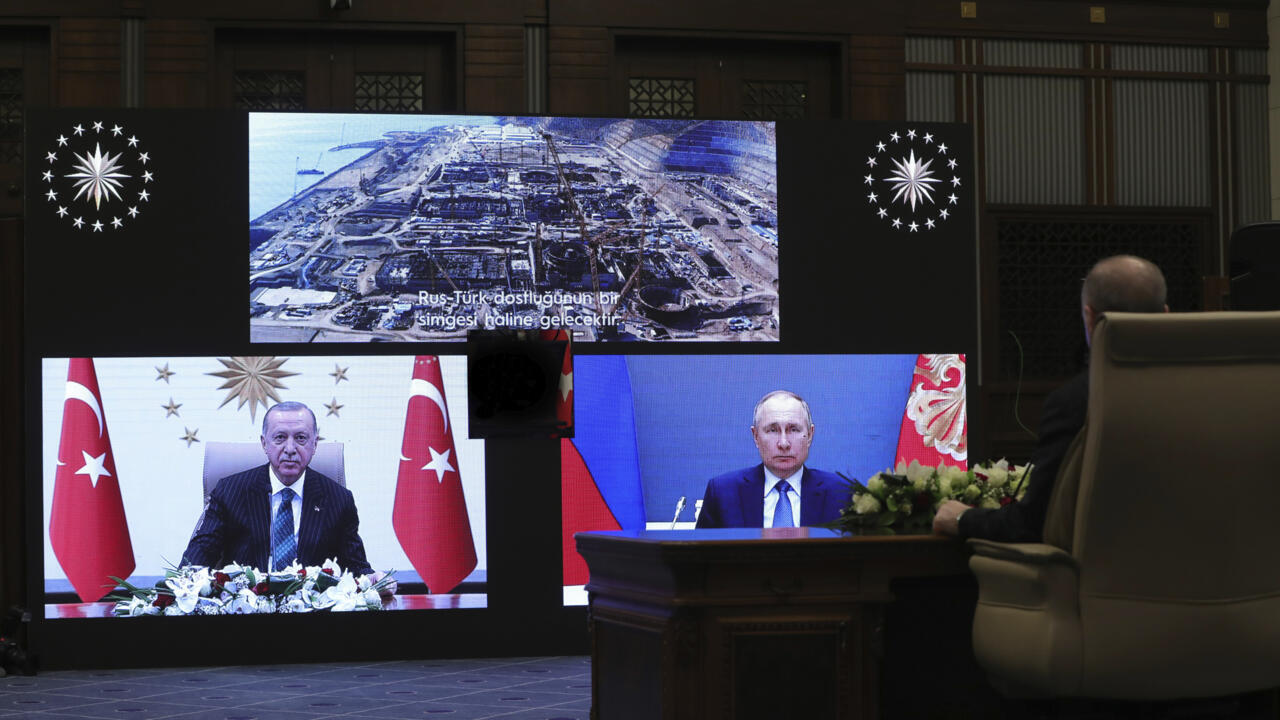
Turkish President Recep Tayyip Erdogan is indicating a strengthening of nuclear energy partnerships with Russia as the country prepares to activate its first Russian-built nuclear power station later this year. This evolving collaboration may raise concerns among Turkey’s western allies.
Strengthening Ties with Russia
During a recent summit of regional leaders in Kyrgyzstan, Erdogan communicated to Russian President Vladimir Putin that both nations would embark on initiatives to develop additional nuclear facilities, including the much-anticipated Akkuyu power plant. This plant, located on Turkey’s Mediterranean coastline and constructed by Russia’s state nuclear corporation Rosatom, is expected to begin operations soon. The announcement comes at a time when Erdogan is navigating complex geopolitical dynamics, particularly as he enhances relations with U.S. President Donald Trump.
Ozgur Unluhisarcikli, the Ankara office director for the German Marshall Fund, interprets Erdogan’s remarks as a strategic overture to Moscow. Despite geopolitical competition and Turkey’s NATO commitments, the country is unlikely to sever ties with Russia. Unluhisarcikli argues that Turkey views its partnership with Russia as a critical long-term strategy, a view that reflects Ankara’s delicate balancing act in international relations.
A Nuclear Solution for Energy Needs
For Turkey, the development of nuclear energy signifies a pivotal chance to reduce its dependence on foreign energy imports. Once operational, the Akkuyu nuclear plant could supply approximately 10% of Turkey’s electricity needs. Rosatom will recover the estimated €21.5 billion construction costs through electricity sales to Turkey, generating an annual revenue stream of about €2-3 billion. This revenue could serve as a financial lifeline for Moscow amidst intensifying sanctions from both the European Union and the United States.
George Voloshin, an expert on financial crime, suggests that the Akkuyu project allows Russia to establish a variety of state-to-state payment mechanisms. This could enable Moscow to securely store funds in Turkish banks while circumventing current sanctions. Given the projected lifespan of the project—60 to 80 years—Voloshin believes that Turkey’s engagement in nuclear power will influence the bilateral relationship between the two nations for the foreseeable future.
Balancing Foreign Relations
Turkey’s growing reliance on Russian energy resources has sparked increasing concern domestically. The prospect of deepening relationships with Russia in the nuclear sector adds new layers of complexity to an already intricate diplomatic situation. Unluhisarcikli acknowledges this dilemma as potentially exacerbating existing tensions between Turkey and its European and American partners.
Despite the delicate position, Turkey continues to explore energy partnerships with other nations, including the United States and South Korea. These countries represent significant competitors to Russia in the nuclear energy arena. However, the long history of investment and collaboration between Turkey and Russia, especially in training Turkish engineers in nuclear technologies, makes it challenging for Ankara to pivot towards alternative suppliers.
Ultimately, this mutual dependence may serve to stabilize Turkish-Russian relations across various geopolitical landscapes, from North Africa to the Caucasus. Nevertheless, any initiative to escalate nuclear collaboration is bound to attract increased scrutiny from Turkey’s western allies, potentially complicating Ankara’s foreign policy even further.