
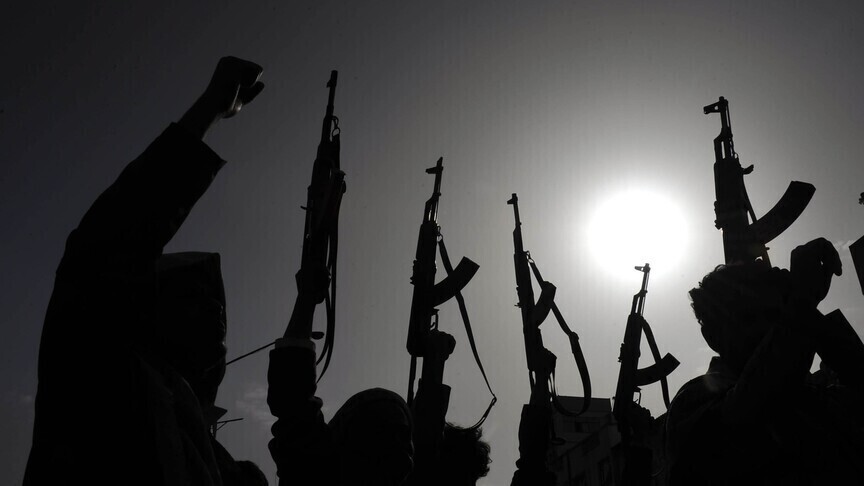
Yemen’s ongoing conflict continues to escalate, particularly with the recent assertions from the Houthi group regarding their military operations in southern Saudi Arabia. The situation remains tense as the Houthis assert their capacity to strike back against perceived aggressions.
Houthi Attacks on Saudi Military Base
On a recent Sunday, the Houthi movement announced it had conducted an assault involving ballistic missiles and drones targeting a military installation in Sharurah, Saudi Arabia. Yahya Saree, the Houthi military spokesperson, detailed that this operation aimed at critical military assets, including weapons depots and command-and-control centers. According to their official communications posted on the social media platform X, Saree claimed the strikes were successful in achieving their objectives.
He emphasized that this assault was a direct response to the ongoing Saudi military actions in Yemen. Furthermore, he issued a warning, indicating that future assaults could reach deeper territories within Saudi Arabia if the hostilities persisted. The aggressive rhetoric highlights the volatile nature of the current situation between these opposing forces.
Impact on Civilian Populations
Following the Houthi claims, Saudi authorities reported an incident earlier on the same Saturday, where a projectile struck the Al-Tuwal region in the Jazan area. This attack resulted in injuries to two individuals and caused significant damage to local infrastructure, including a mosque, various buildings, and vehicles. Such incidents further underscore the perilous implications of the ongoing conflict, where civilian life is often caught in the crossfire of military strategies.
Changing Dynamics on the Ground
Recently, territorial control in Yemen has shifted notably amid escalating clashes between the government forces and Houthi fighters. Since July, the Houthis have claimed full control over the western Al-Hudaydah province, advancing into the Taiz province and capturing the strategic coastal city of Mokha along with its pivotal Red Sea port. This territorial expansion has positioned them alarmingly close to the Bab el-Mandeb Strait, a crucial maritime corridor of global significance.
Conversely, Yemeni government forces have made some gains in the northern Al-Jawf province, moving closer to its capital, Al-Hazm. Clashes continue in several provinces, illustrating the ongoing intensity of confrontations that seem to have reignited after a period of relative calm.
The Broader Context of the Conflict
Since 2014, Yemen has faced turmoil following the Houthi takeover of the capital, Sanaa, and multiple provinces. The conflict escalated in 2015 when a Saudi-led Arab coalition intervened to support the internationally recognized government. Years of fighting have led to catastrophic humanitarian impacts, with millions of civilians suffering from the repercussions of continuous military engagements.
As both sides prepare for further conflicts, the need for a diplomatic resolution becomes increasingly vital. The situation remains fluid, and the possibility of escalation looms over the region, emphasizing the importance of international engagement and support to mitigate the impacts of this protracted struggle. The ongoing hostilities serve as a stark reminder of the need for peace and stability in Yemen and the surrounding areas.