
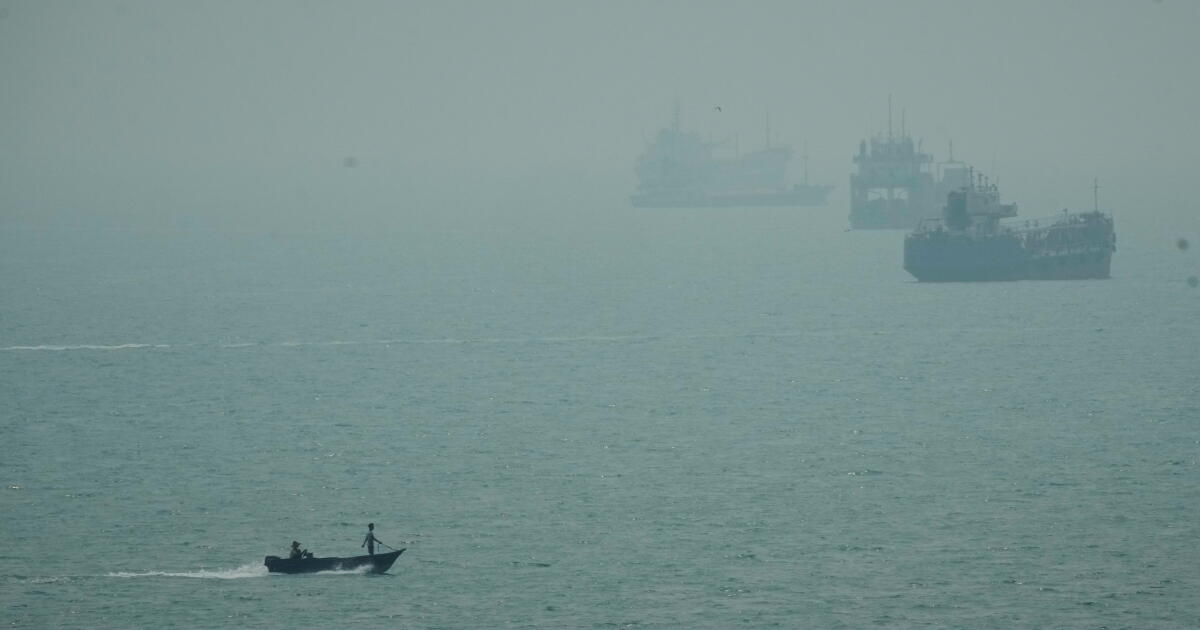
An Iranian cargo ship was reportedly attacked early Sunday off the coast of Qeshm Island in the Strait of Hormuz, according to Iranian state media sources. This incident occurs just one day before Tehran is set to brief regional nations on its contentious strategies for managing maritime traffic in such a pivotal area.
Casualties and Regional Tensions
The attack resulted in one fatality and left four others injured, reigniting concerns about security in the Strait of Hormuz. Recent escalations in the region came to light after Iranian-backed Houthi rebels gained control of an island in the Bab el-Mandeb Strait, further complicating shipping operations. Following the incident, the Qeshm governor attributed the attack to a “terrorist enemy,” though officials from the U.S. military have not yet released a statement on the matter. The U.S. has been involved in operations against Iranian-flagged vessels and faces increasing threats from Iranian military resources, particularly ballistic missiles targeting its naval ships.
Qeshm Island plays a crucial role in Iran’s efforts to establish dominance over the Strait of Hormuz. Located approximately 14 miles from Bandar Abbas, the island’s strategic position makes it a focal point for monitoring and controlling maritime navigation in the region. Ahead of the assault, Iranian President Masoud Pezeshkian proclaimed that Iran would not yield to external pressures, asserting that the nation would remain steadfast in its commitments.
Upcoming Regional Meeting in Oman
Iran announced that foreign ministers from neighboring countries are scheduled to convene in Oman on Monday to discuss collaborative approaches for managing shipping in and around the Strait of Hormuz. This upcoming meeting is poised to refocus attention on the strategic waterway just days after the Houthi rebels intensified their activities along Yemen’s Red Sea coastline. While the Houthis assert that their interests lie solely in opposing Saudi Arabia, which supports Yemen’s legitimate government, global markets are reacting with heightened concern, and oil prices have started to climb once again.
Despite the ongoing unrest, oil transportation through the Strait of Hormuz has decreased significantly, influenced by recent maritime strikes. The United Kingdom Maritime Trade Operations reported that a vessel was struck while navigating through the strait, although it remains unclear whether this incident correlates with the previously mentioned attack off Qeshm. The situation escalated further as local officials were forced to evacuate personnel from the compromised vessel due to a severe fire outbreak.
Geopolitical Implications and Future Prospects
Only Iraq has confirmed its participation in the forthcoming meeting in Oman, with other nations’ attendance remaining uncertain. Bahrain has stated it will refrain from attending, citing the absence of diplomatic relations with Iran. Iran has previously expressed views that vessels navigating through its territorial waters should be subject to charges for transit, suggesting a complex interplay of maritime rights along the Persian Gulf and the surrounding areas.
Discussions surrounding the reopening of shipping lanes hinge on the U.S. ending its economic blockade against Iran. President Pezeshkian articulated that negotiations concerning the strait do not guarantee an immediate resumption of trading routes. There are hopes that this meeting may offer a platform for Gulf nations to establish a unified front in response to ongoing hostilities.
Regional analysts suggest that Oman aims to facilitate an agreement, which could compel the U.S. administration to accept that the authority over the Strait of Hormuz should ultimately rest with the countries within the region. Iranian officials indicate a willingness to engage in dialogue with their neighbors, highlighting recent interactions between President Pezeshkian and UAE officials as steps towards reconciliation.
With tensions escalating and maritime security increasingly fragile, the strategies employed by nations bordering this vital waterway will have significant implications for global shipping and energy markets in the years to come.