
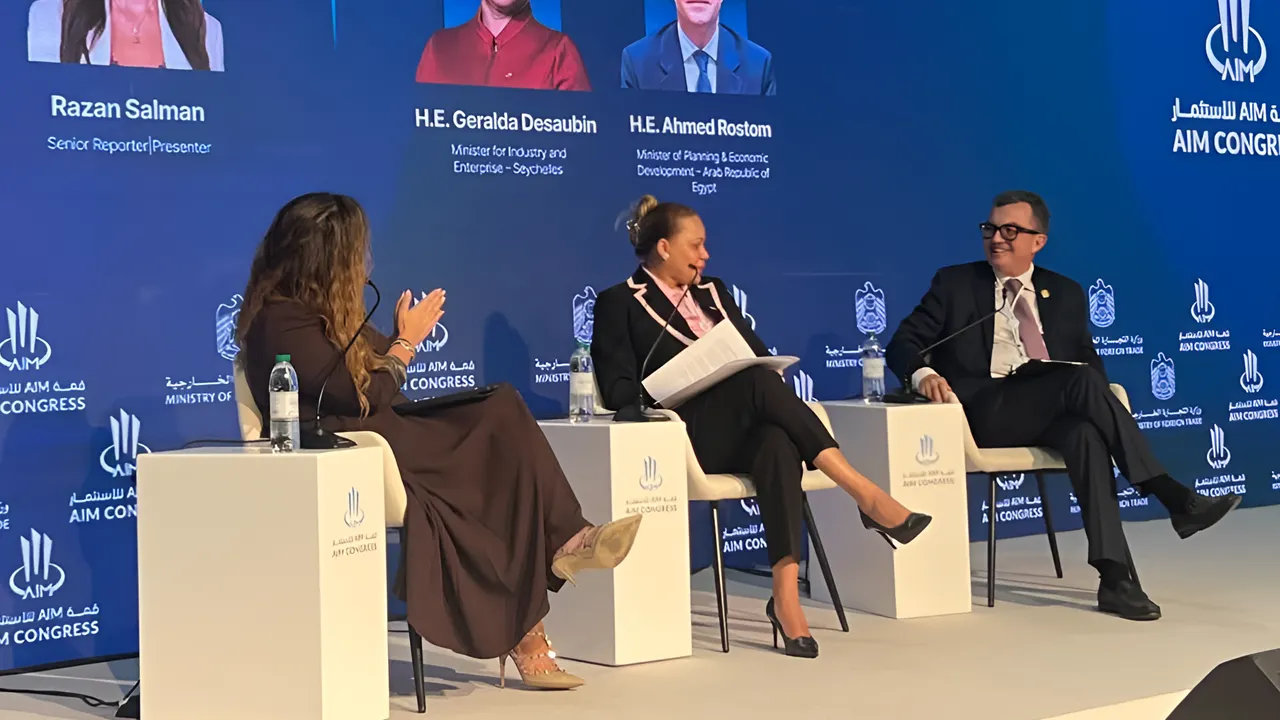
Egypt is making strides in developing a comprehensive artificial intelligence (AI) strategy after President Abdel Fattah El-Sisi introduced the initiative. The Planning Minister, Ahmed Rostom, has announced a collaborative effort with the Organization for Economic Co-operation and Development (OECD) to establish a national AI framework that aims to address the growing influence of AI technologies on the workforce and industries over the next several years.
The Pursuit of a National AI Strategy
Speaking at the 15th AIM Congress in Dubai, Rostom emphasized a five-year vision focused on the responsible implementation of AI and other emerging technologies. This strategy aims to not only enhance public understanding of AI but also standardize government operations and regulations for secure data sharing. It’s not entirely clear whether this initiative will build upon the existing National AI Strategy for 2025-2030 or mark the beginning of a new phase extending into 2030-2035.
Historically, Egypt’s AI development has been spearheaded by the Ministry of Communications and Information Technology. Various projects such as the Applied Innovation Centre and the Karnak national language model have been pivotal in this effort. However, Rostom’s announcement comes from the Ministry of Planning, indicating a broader focus that includes manufacturing and workforce implications alongside technological advancements.
Prioritizing Workforce Development
Rostom’s framing of AI integration focused explicitly on enhancing and protecting workers rather than replacing them. He stated that integrating AI into production processes should be matched with initiatives aimed at reskilling the workforce. The ultimate goal, he asserted, is to empower individuals to oversee AI systems rather than fear job displacement.
This concern over job security is reflected in a recent survey conducted by the Cabinet’s Information and Decision Support Centre, which revealed that 56% of Egyptians worry that AI adoption will lead to job losses—a statistic that has remained largely unchanged since 2023. While the International Labour Organization estimates that only 4.5% of jobs in lower-income economies could be at risk of automation due to generative AI, these figures do not alleviate public worry. Rostom acknowledged the need for the government to address these concerns head-on, advocating for increased investment in education in science and technology to ensure that disadvantaged groups are not left behind.
Revamping Existing Frameworks
Despite existing strategies, which include six foundational pillars, Rostom emphasizes that a more detailed implementation plan is essential. The current strategy, initiated in 2021, aims for the Information and Communications Technology (ICT) sector to contribute 7.7% of GDP by 2030, create over 250 AI firms, and cultivate 30,000 AI professionals. Egypt has made notable advancements, climbing 49 positions in the Oxford Insights’ Government AI Readiness Index from 2019 to 2023.
Additionally, Egypt established a National Council for Artificial Intelligence and has engaged in various partnerships with organizations such as the World Bank and UNESCO to enhance educational frameworks. The collaboration with the OECD takes this a step further, positioning Egypt’s AI strategy formulation within a global context while still adhering to localized concerns.
Why Partner with the OECD?
The engagement with the OECD is particularly noteworthy, as their AI principles serve as a non-binding reference for countries rather than mandatory guidelines. By collaborating directly with the OECD for the strategy, Egypt is signaling a more profound commitment to developing concrete, actionable frameworks for AI implementation. This partnership is not merely a placeholder but is designed to create a coherent plan surrounding workforce readiness and regulatory environments.
In essence, Egypt is focusing on the practical components that will ensure its AI vision is executable. By establishing frameworks that promote accountability, cybersecurity, and transparency, the Egyptian government is setting the stage for a robust AI ecosystem. This comprehensive approach aims not only to maintain competitiveness in global AI developments but also to secure social equity and workforce stability in the face of technological change.