
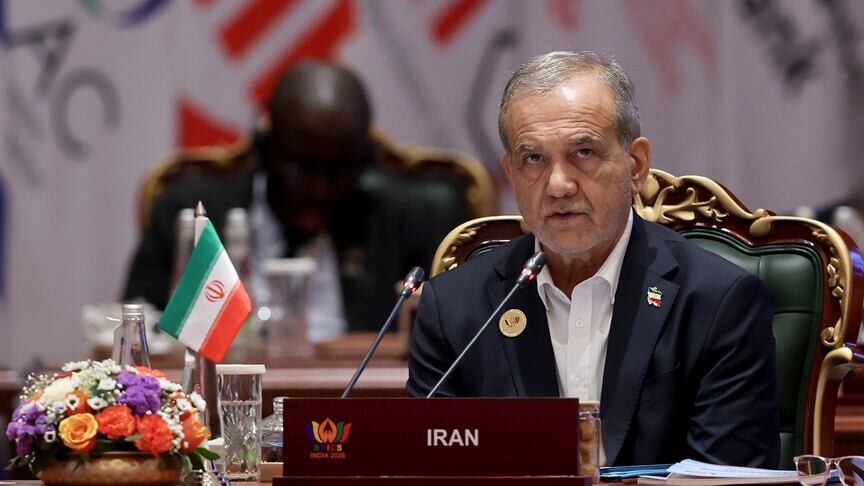
Iran and the United Arab Emirates (UAE) are set to enhance their bilateral relationship and expand cooperative efforts, as declared by Iranian President Masoud Pezeshkian. This announcement was made during a discussion with Abu Dhabi Crown Prince Khaled bin Mohamed bin Zayed Al Nahyan in New Delhi, coinciding with the BRICS Summit.
Commitment to Future Collaboration
Pezeshkian emphasized the importance of moving past historical grievances to focus on future opportunities. Both leaders expressed their intentions to foster a common understanding that would pave the way for enhanced cooperation between their nations. This commitment to a collaborative future marks a significant shift in the dynamics of UAE-Iran relations, indicating a willingness to prioritize mutual interests over conflict.
Addressing Regional Challenges
During their meeting, the two leaders also tackled pressing regional issues, discussing the necessity to mitigate tensions and promote stability in the area. They acknowledge the complexities of the geopolitical landscape, particularly in light of ongoing tensions attributed to the long-standing U.S.-Iran conflict. The discussions aimed to identify paths toward cooperation that could contribute to peace and stability in a region often beset by strife.
Context of Ongoing U.S.-Iran Tensions
The backdrop of the discussion is the current U.S.-Iran conflict, which has escalated since February. This ongoing strife originated from a series of U.S. and Israeli strikes targeting Iranian military and economic infrastructure. Retaliatory actions by Iran have further complicated the already tense situation in the region, emphasizing the need for dialogues such as the one held by Pezeshkian and Al Nahyan.
Both nations appear to recognize that despite external pressures, there exists a critical imperative to build alliances that favor peace. The dialogue between Iran and the UAE indicates a significant step toward strengthening regional cooperation amid ongoing adversities.
Implications for Future Relations
The implications of this dialogue could be manifold, with potential effects on trade, security arrangements, and cultural exchanges. As these two Middle Eastern neighbors aim to find common ground, the hope is for a transformation of relations that could extend beyond their borders. By fostering a spirit of collaboration, they might inspire other nations within the region to pursue similar pathways.
In conclusion, the recent discussions between Iran and the UAE at the BRICS Summit highlight a potentially transformative moment for their bilateral relations. With a focus on cooperation, the two countries are poised to navigate the challenges ahead while striving for a more stable and harmonious regional landscape. The commitment to address past grievances and strengthen ties could pave the way for long-term benefits, making this a noteworthy development for international relations in the Middle East.