
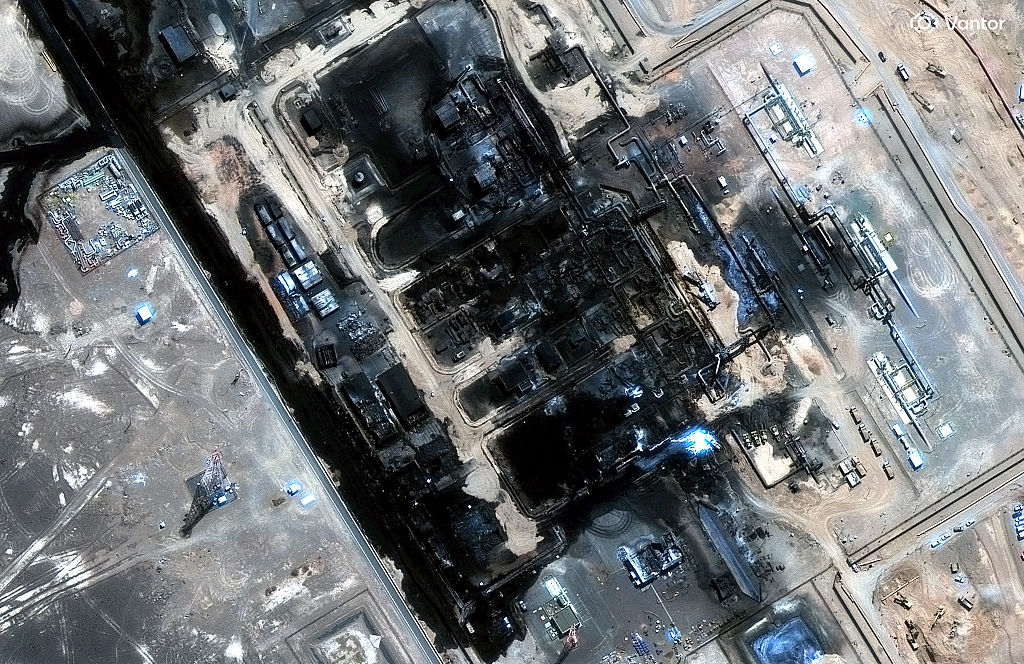
Recent satellite imagery has revealed severe damage to the East-West Pipeline following a drone strike last week. This incident is raising alarming concerns about potential energy shortages worldwide.
Pipeline Damage and Global Implications
Reports indicate that Saudi Arabia’s East-West Pipeline, a critical artery for transporting oil to the Red Sea, will remain out of commission for weeks following a drone attack. This strike, which occurred last Thursday, has instigated fear amongst investors and forecasters. According to the Associated Press, officials have estimated that repairs could take anywhere from three to five weeks, particularly affecting a major pumping facility in the region.
Saudi officials have attributed the attack to Iranian-backed militias operating out of Iraq, underscoring the escalating tensions in the region. The ramifications of this strike could be dire, as the pipeline’s downtime could halt Saudi oil exports, potentially affecting up to 4% of global oil supply, as reported by The Guardian. If repairs aren’t executed swiftly, Saudi Arabia could deplete its oil reserve stocks designated for export.
Worsening Global Energy Crisis
Satellite images made public recently demonstrate extensive fire damage to a pumping station linked to the pipeline. This infrastructure has historically been utilized to redirect oil to the Red Sea, largely to avoid the congested Strait of Hormuz, which remains largely off-limits to commercial shipping since the onset of hostilities against Iran. The ongoing conflicts, exacerbated by the war between Russia and Ukraine, have compounded the existing strain on global energy markets.
Experts have raised concerns that even in the event of prompt repairs, energy prices may not stabilize quickly. The continued closure of the Strait of Hormuz remains a significant issue, with Houthi forces recently intensifying their operations to disrupt oil shipments in the Red Sea. The political landscape, largely impacted by longstanding tensions between the U.S. and Iran, complicates the likelihood of a diplomatic resolution that could facilitate a return to normalcy in oil shipments.
Rising Oil Prices and Consumer Impact
In the wake of the pipeline’s closure, Brent crude prices surged above $109 per barrel, influencing the cost of oil-related products significantly. As a direct consequence, U.S. consumers are beginning to feel the impact, with averages for gasoline rising to $4.32 per gallon and diesel reaching another record high of $6.23 per gallon, according to data from the American Automobile Association.
This financial strain comes at a time when many Americans are already grappling with rising living costs. If the situation persists, consumers may continue to experience elevated prices at the pump, further igniting discussions around energy policies and market vulnerabilities.
The recent developments serve as a stark reminder of the intricate link between global events, regional stability, and energy prices. As governments and organizations evaluate their strategies, the need for a sustainable and secure energy policy has never been clearer. With various geopolitical tensions posing ongoing risks, the focus must shift to devising solutions that protect both the energy supply chain and consumer interests.