
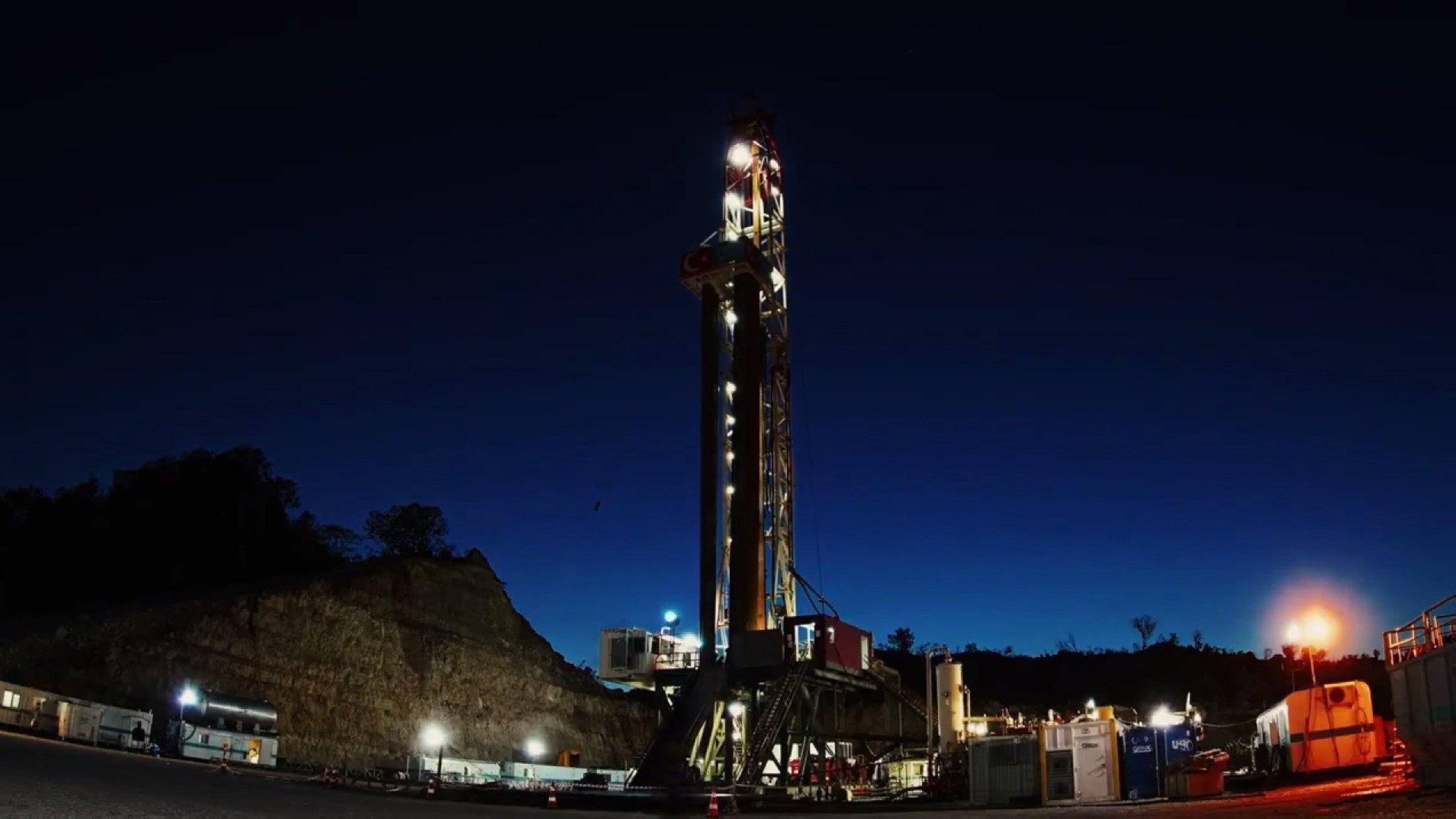
Türkiye’s journey in oil exploration has a long and storied history, dating back to the 1930s. The establishment of the Turkish Petroleum Corporation (TPAO) in 1954 marked a significant milestone. Over the decades, drilling campaigns have occurred across the country, but rising population, industrial growth, and economic development have outpaced domestic oil production. As a result, oil imports have increasingly burdened Türkiye’s energy budget and influenced its current account deficit. To address these challenges, the National Energy and Mining Policy was introduced in 2017, focusing on boosting the discovery of domestic oil and natural gas resources. This strategy led to intensified efforts onshore and advancements in seismic survey and drilling capabilities offshore, with the Gabar oil field standing out as a noteworthy achievement.
From Exploration to Record Production
In 2020, seismic surveys at Gabar in Şırnak revealed promising signs, prompting initial drilling activities. By 2021, the project picked up speed as the first wells came online, leading to continual discoveries and the establishment of additional production wells. By recent estimates, daily oil production from Gabar has hit an impressive 83,300 barrels, accumulating over 50 million barrels of crude oil since its launch. This growth is significant when compared to Türkiye’s overall production, which stood at around 65,000 barrels daily in 2022. Gabar’s output alone now exceeds this figure, indicating a substantial leap in Türkiye’s oil production capabilities.
The Economic Impact of Gabar
While Gabar cannot completely eliminate Türkiye’s reliance on oil imports, it plays a vital role in lessening the country’s import bill. Every barrel produced locally substitutes for one that would be sourced from international markets. Estimates indicate that once production approached 80,000 barrels per day, Gabar could contribute approximately $2 billion annually to the Turkish economy. Increased domestic output not only helps balance the current account but also mitigates the effects of global oil price volatility on the economy. In times of geopolitical tensions or global supply chain disruptions, the ability to produce oil domestically adds a layer of security for Türkiye’s energy needs.
Furthermore, the benefits extend beyond mere economic metrics. The development of Gabar has necessitated the construction of extensive infrastructure, including roads and production facilities, creating over 3,500 jobs—primarily in Şırnak. This transformation not only boosts employment but also revitalizes local economies, demonstrating how improved security can lead to new opportunities. The knowledge and expertise gained through Gabar’s development will also enhance TPAO’s capabilities, as the experience garnered can be applied to both domestic and international operations.
Looking Forward: Expansion Beyond Gabar
Success at Gabar is just one facet of Türkiye’s broader exploration efforts. Ongoing drilling projects are also taking place in regions like Batman, Adıyaman, Hakkari, Van, and Diyarbakır. Projections for 2026 include plans for 282 onshore and 18 offshore drillings, illustrating that Gabar is part of a comprehensive strategy rather than an isolated endeavor. Notably, efforts to explore tight oil reserves in Diyarbakır will involve advanced techniques such as horizontal drilling and hydraulic fracturing. It’s crucial to note that projected reserve quantities are potential resources and not guaranteed recoverable reserves—future drilling results will clarify the feasibility of production.
While oil will remain a key player in multiple sectors such as transportation and industry, Türkiye’s shift toward a lower-carbon energy landscape will continue. Therefore, a balanced approach that enhances investment in renewable energy while simultaneously bolstering domestic oil production appears to be the most logical strategy. Gabar should not be viewed solely as a breakthrough that negates oil imports; instead, its primary significance lies in reinforcing Türkiye’s capacity to enhance domestic production and encouraging further exploration initiatives. If sustained efforts and innovative technologies are employed, the momentum initiated at Gabar could herald a significant transformation within Türkiye’s petroleum sector.