
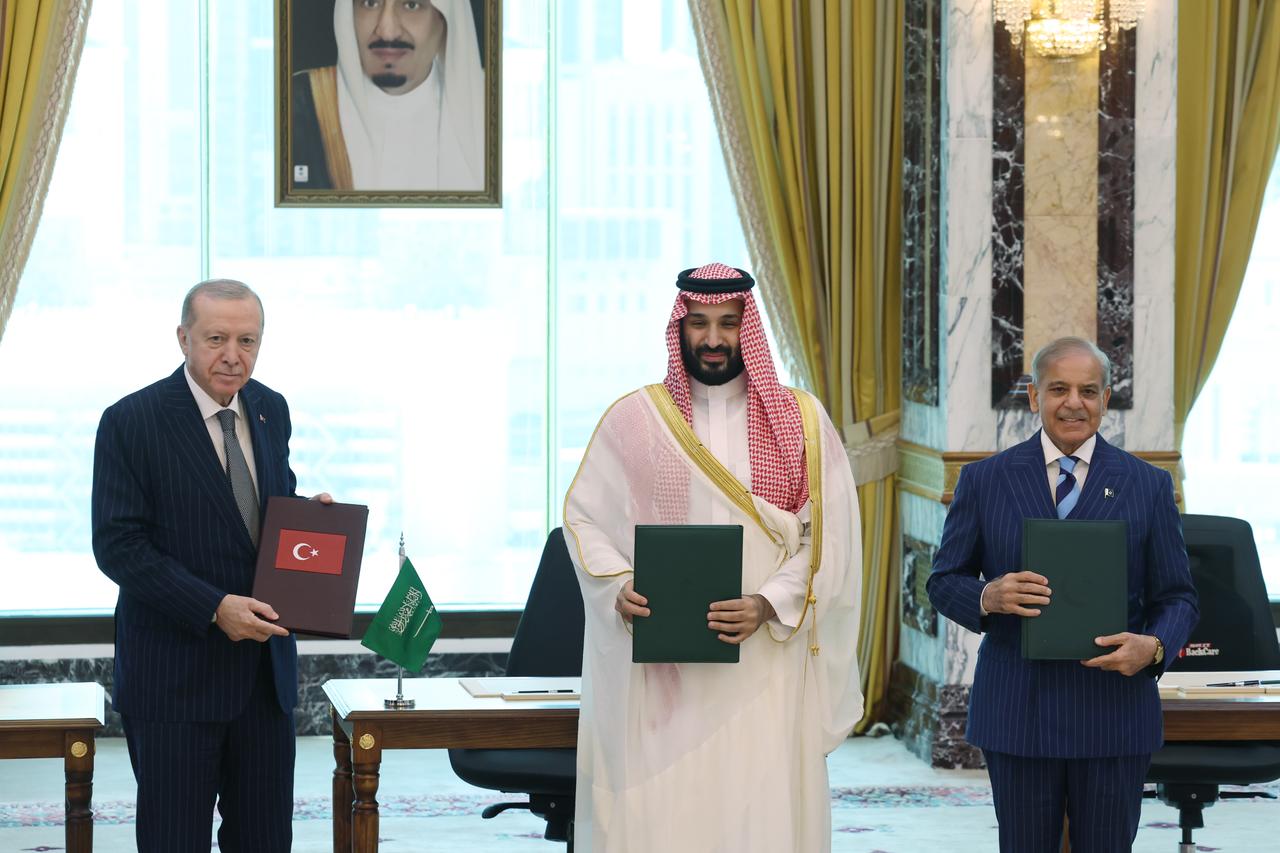
A senior Turkish representative has rebuffed allegations suggesting that the Mecca Joint Defense Agreement has inadequately addressed Houthi aggression toward Saudi Arabia. Speaking anonymously, this official emphasized that such criticisms are misleading and aim to undermine the burgeoning alliance among Türkiye, Saudi Arabia, and Pakistan.
### Clarification on the Defense Pact
The official clarified that the mutual defense commitments outlined in the agreement are not yet legally enforceable, requiring time to develop the necessary institutions and military arrangements. The pact needs to navigate the internal legislative processes of each signatory nation before defense obligations can become operative. Türkiye aims to present the agreement to its parliament shortly, potentially in October, to initiate the public ratification phase. According to the Turkish constitution, the president cannot approve security agreements without parliamentary consent. The same requirement applies to Pakistan, while Saudi Arabia has the option to ratify through a royal decree.
### Institutional Framework Under Development
Even after the agreement comes into force, effective mechanisms for threat assessment, consultation, and coordination among the three nations will still be required. The focus will be on developing defense strategies, enhancing readiness plans, and ensuring interoperability among the military forces. Historically, Türkiye has engaged in bilateral military exercises with both Pakistan and Saudi Arabia, but a trilateral exercise remains uncharted territory. A consultative meeting held in Istanbul advised establishing a secretariat in Saudi Arabia led by a Pakistani secretary-general, paving the way for further military collaboration and institutional development.
### Drawing Parallels with NATO
The Mecca Agreement’s provision for mutual defense has drawn comparisons to NATO’s Article 5. The Turkish official noted that the drafting of the pact took inspiration from NATO principles, underlining that a request for action from any member state would trigger discussions rather than an immediate military response. This reflects the nuances of collective defense, as NATO has historically shown restraint in responding to perceived threats. The absence of an instant joint reaction, as seen with documented violations of NATO airspace, underscores the complex nature of such alliances.
### Positive Prospects According to Erdogan
At a recent youth event, President Recep Tayyip Erdogan asserted that the Mecca Joint Defense Agreement signifies a substantial development for the Islamic world. He remarked that the collaboration among Saudi Arabia, Pakistan, and Türkiye signals a commitment to address shared challenges. President Erdogan emphasized the necessity of solidarity among Islamic nations, especially in light of tensions in regions like the Strait of Hormuz. He reiterated Türkiye’s efforts to navigate regional crises, proudly stating that the nation has successfully maintained its stability amidst surrounding conflicts.
The Mecca Joint Defense Agreement, signed on August 7, represents a commitment among the involved countries for mutual protection against external threats. Bangladesh has signaled interest in joining the agreement, while Iran has not received any official proposal. This collaborative effort seeks to foster a stronger defense posture among the involved nations, illustrating the evolving dynamics of regional security alliances.