
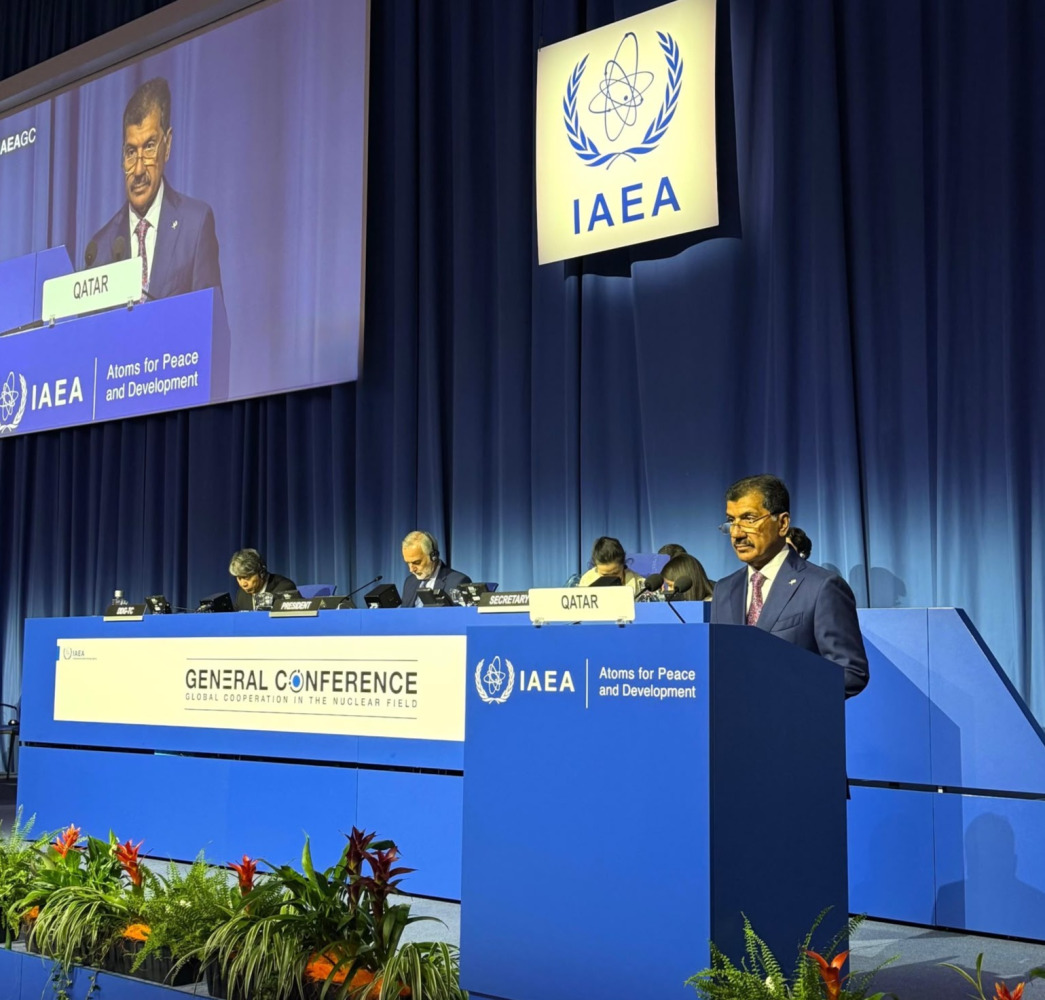
The State of Qatar has called for a heightened global commitment to the total eradication of nuclear weapons, highlighting this goal as both a humanitarian necessity and a moral obligation. This appeal comes amid escalating conflicts, competitive nuclear armament, and an increasing reliance on military force in global affairs.
International Cooperation and Multilateral Action
During the 70th General Conference of the International Atomic Energy Agency (IAEA) held in Vienna, HE Dr. Ahmed bin Hassan Al Hammadi, Qatar’s Secretary-General of the Ministry of Foreign Affairs, emphasized the need for collective international efforts to address the growing threats to global peace and security. He noted that multilateral action is crucial in the face of rising geopolitical tensions and armed conflicts.
Dr. Al Hammadi reiterated Qatar’s commitment to bolstering the IAEA’s independent operations. These efforts aim to promote the peaceful applications of nuclear energy while enhancing nuclear safety and security. He underscored the importance of maintaining an effective safeguards system to prevent the proliferation of nuclear weapons, emphasizing that this endeavor is crucial for ensuring stability both regionally and globally.
Addressing Geopolitical Tensions
The increasing geopolitical divides and armed conflicts were central to Dr. Al Hammadi’s address, where he cited specific issues, including the ongoing Israeli military operations against the Palestinian people and tensions in the Gulf and Strait of Hormuz. Furthermore, he pointed to the urgent need for stronger international frameworks for arms control and disarmament, particularly through the Nuclear Non-Proliferation Treaty, which serves as a foundational element of the global security infrastructure.
Qatar also reaffirmed its commitment to efforts aimed at establishing a nuclear-free zone in the Middle East. Dr. Al Hammadi made it clear that facilities under IAEA safeguards dedicated to peaceful endeavors should receive protection under international law, the UN Charter, and the IAEA framework, insisting that any attack on these facilities would directly threaten both regional and international security.
Support for Peaceful Nuclear Applications
In addition to addressing disarmament, Qatar welcomed the IAEA Board of Governors’ unanimous decision on September 9, 2026, to remove the item regarding Syria’s safeguards agreement from the board’s agenda. This decision is expected to aid Syria in restoring its normal standing with the agency, allowing the nation to leverage peaceful nuclear applications for development, reconstruction, and stability.
Qatar has also taken significant steps to support IAEA initiatives, including an agreement to provide USD 600,000 through the Qatar Fund for Development. This funding will bolster projects under the IAEA’s Rays of Hope initiative, targeting enhancements in radiotherapy capacity in Syria. Dr. Al Hammadi emphasized Qatar’s ongoing dedication to nuclear disarmament and the responsible use of nuclear energy, stressing the IAEA’s critical role as a partner in fostering peaceful nuclear applications and strengthening nuclear security measures.
Technical Cooperation and Future Commitments
Moreover, Qatar has established cooperative programs with the IAEA to bolster various aspects of nuclear regulation and safety. This includes improving radioactive waste management and developing national radiation monitoring capabilities, which are essential for both diagnostic and research purposes. Notably, Qatar signed a pivotal agreement with the IAEA in February 2026 to update its national policies surrounding radiation and nuclear security, thereby fortifying its legal and regulatory framework.
In conclusion, Dr. Al Hammadi reaffirmed Qatar’s unwavering commitment to nurturing a robust partnership with the IAEA. He articulated that the agency plays a vital role in advancing collaborative international efforts and developing legal frameworks to ensure the safe and sustainable future of nuclear energy while working towards the complete elimination of nuclear weapons.