
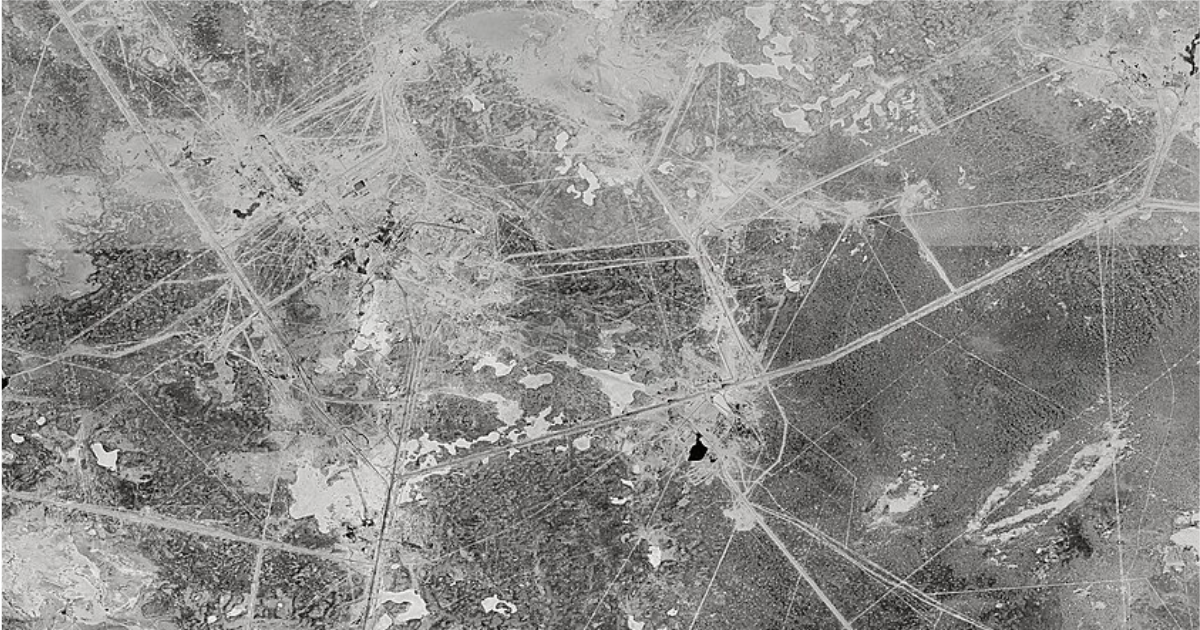
In a groundbreaking intersection of technology and archaeology, researchers have successfully utilized artificial intelligence (AI) to analyze declassified Cold War satellite imagery and uncover four previously hidden archaeological sites in Iraq. This innovative approach demonstrates how modern technology can provide invaluable insights into historical investigations, enriching our understanding of ancient civilizations.
Harnessing AI and Satellite Imagery
The project employed AI algorithms that were retrained using images from the CORONA program, a top-secret initiative during the Cold War. Originally created for espionage purposes, these satellite photographs have now become a vital tool for researchers. By leveraging machine learning, scientists programmed the AI to recognize patterns and anomalies that could indicate the presence of archaeological sites on the ground. This technique not only saves significant time and resources but also allows researchers to survey areas that may be otherwise inaccessible.
During the analysis, the AI pinpointed four sites that were lost to time—each hiding under layers of sediment and vegetation. The researchers compared their AI-generated findings with historical records, ultimately validating the locations of the ancient sites.The seamless collaboration between advanced technology and traditional archaeological methods holds the promise of discovering even more hidden historical remnants across the globe.
The Significance of Discovering Lost Sites
The excavation of these overlooked sites provides a unique glimpse into ancient civilizations that once flourished in the region. Iraq, often referred to as the cradle of civilization, is rich in history, with cultures such as the Sumerians and Akkadians having thrived for millennia. By uncovering these archaeological treasures, researchers are able to piece together narratives surrounding ancient life, trade, and social structures, contributing significantly to the scholarship of human history.
Moreover, the discovery has implications for cultural preservation. As urban development threatens ancient sites worldwide, utilizing AI to locate and protect historical remnants becomes increasingly essential. By identifying these sites before they are lost to modern expansion, archaeologists can work to safeguard them, allowing future generations to engage with their cultural heritage.
Future Implications for Archaeology
The successful application of AI in flagging hidden archaeological sites represents a pivotal shift in archaeological methodology. As AI technology continues to evolve, the potential for further advancements is considerable. Researchers envision a future where extensive geographical surveys become feasible, enabling teams to identify even more sites over larger areas and in more challenging terrains.
This innovative approach could revolutionize not just locating archaeological sites, but also understanding the broader historical landscape. With further improvements, AI could assist in simulations and predictive modeling, offering insights into how ancient societies developed and thrived. The blend of technology and archaeology is not merely about discovery; it opens avenues for public engagement, education, and cultural awareness.
In summary, the integration of AI with historical research tools has effectively ushered in a new age of archaeological exploration. This project stands as a testament to how technology, when applied thoughtfully, can unveil the stories of our past and illuminate the treasures that lie buried beneath the surface. As we continue to harness the potential of AI in archaeology, the prospects for unveiling our historical landscape appear brighter than ever.