
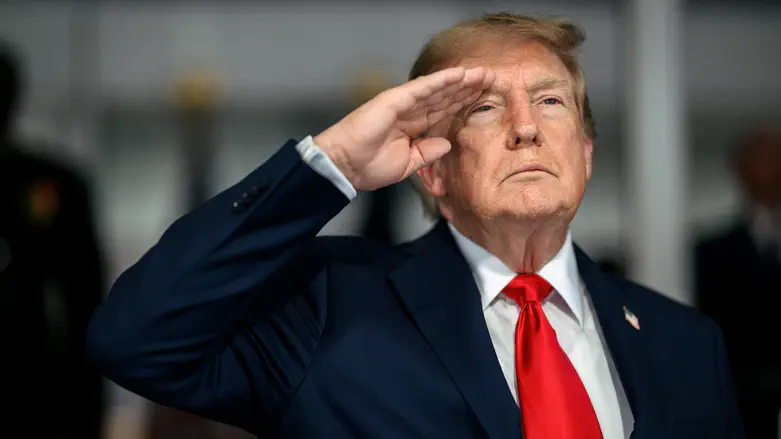
The Trump administration is moving forward with a significant military assistance proposal for Israel, amounting to $2.8 billion. This development, reported by Reuters, highlights the ongoing commitment of the U.S. to bolster Israel’s defense capabilities amidst rising tensions in the region.
Details of the Proposed Military Package
According to a U.S. official who requested anonymity, the proposed military package includes a substantial supply of weaponry, specifically 20,000 MK 84 bombs and another 20,000 BLU-117 bombs. This extensive procurement underscores the strategic partnership between the two nations, aiming to enhance Israel’s military readiness. The unofficial report indicates that this proposal has already been shared with congressional committees which oversee significant arms sales. These congressional consultations are crucial as they determine the vetting process for such large-scale military transactions.
Context Surrounding the Proposal
The timing of this proposal is notable, particularly as it comes after President Trump’s recent efforts to reassure Israel amid escalated tensions with Iran. In an exclusive interview with Israel’s Channel 12, Trump reassured, “Israel should not worry. You know why? Because I’m the president, and I will take care of Israel.” This statement aims to reinforce the U.S. commitment to Israel’s security and to alleviate any concerns stemming from the complex geopolitical environment.
Further complicating matters, the proposed military assistance follows a recent vote in the U.S. House of Representatives. In July, a significant amendment aimed at terminating $3.3 billion in military and foreign aid to Israel was rejected by a considerable margin (313-104). This amendment, introduced by Rep. Thomas Massie of Kentucky, one of the most vocal critics of U.S. foreign aid, described Israel as the “biggest welfare recipient of the United States.” However, Massie was notable as the only Republican to support the amendment, highlighting a divide within party lines regarding U.S. support for Israel.
Implications for U.S.-Israel Relations
This military package proposal is indicative of the long-standing alliance between the United States and Israel, which has been a hallmark of U.S. foreign policy in the Middle East. As regional threats evolve, so does the nature of U.S. assistance, which not only includes financial aid but also military technology and arms that are crucial for Israel’s defense strategy.
Moving forward, the proposal will await further scrutiny from Congress, where opinions on foreign aid and military assistance could play a significant role in its approval. Given the contentious climate surrounding U.S. foreign aid and military support, this situation serves as a litmus test for the strength of U.S.-Israel relations in an evolving political landscape.
In conclusion, the proposed $2.8 billion military package underscores the United States’ unwavering commitment to Israel’s security amidst regional challenges. As discussions progress in Congress, the outcome will potentially shape the future of U.S. foreign policy in relation to Israel and the broader Middle Eastern geopolitics. The strategic implications of this proposed aid will be closely watched by international observers, as they signal the trajectory of U.S. involvement in Israel’s defense.