
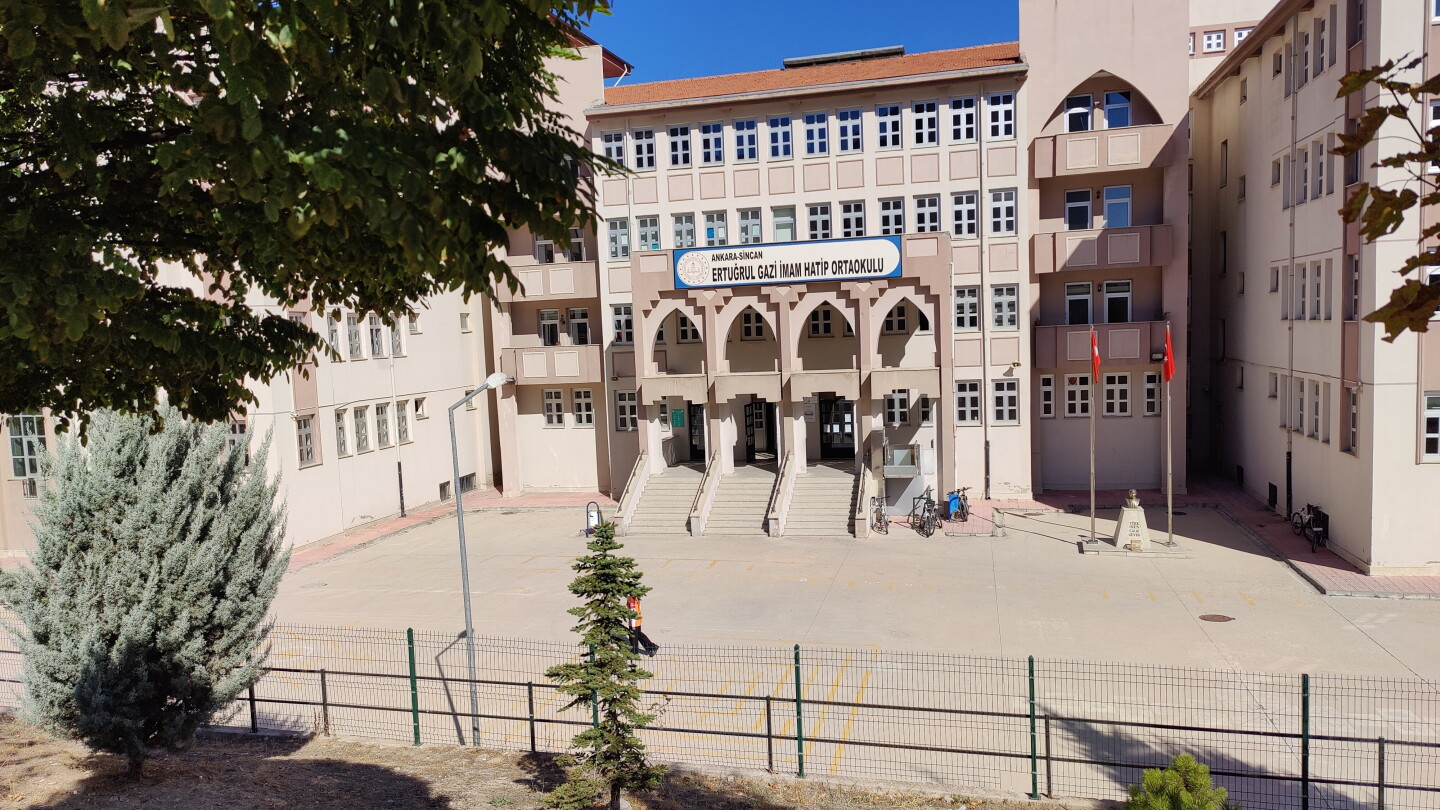
A recent event in Turkey has brought to light the growing intersection of religious education and political ideology, particularly through the organization of ÖNDER, which supports the network of imam-hatip schools. This network, backed by the Turkish state, has roots that extend deep into the nation’s educational and societal fabric, with a reach that influences millions of students and alumni. The appearance of Abdusselam Haniye, son of a prominent Hamas leader, at a meeting in Trabzon emphasizes the significant role of these institutions in propagating militant ideologies under the political endorsement of President Recep Tayyip Erdoğan.
The ÖNDER Organization and Its Extensive Reach
The ÖNDER Association represents an influential network encompassing nearly 10 million graduates from imam-hatip schools, which are state-funded religious educational institutions. With roughly 600 affiliated groups active across all 81 provinces in Turkey, ÖNDER is not a marginal entity but a powerful organization that connects students, educators, and communities. The magnitude of this network facilitates the dissemination of ideas and narratives that align with specific political and religious ideologies, effectively shaping the youth of Turkey.
Current data indicates that more than 1.2 million students are enrolled in imam-hatip schools, highlighting the significant impact of this educational system. During a recent congress, senior officials, including Safi Arpaguş, the president of Turkey’s religious authority (Diyanet), explicitly stated their intention to extend their influence beyond enrolled students to reach all youth across the nation. Arpaguş articulated a vision where the imam-hatip initiative is tasked with imparting Islamic values and Turkish cultural identity to the entire young population, positioning these schools as key vehicles for ideological transmission.
Haniye’s Message in a State-Backed Platform
The significance of Haniye’s appearance cannot be overstated. He was not simply addressing a gathering of followers; instead, he leveraged a state-backed educational environment to promote his message. His speech included praise for Turkey’s political leadership, particularly Erdoğan, and presented a narrative likening the imam-hatip system to Gaza’s educational infrastructure, which he claimed produces committed generations capable of political and militant engagement.
Haniye’s remarks framed education as a tool for cultivating a populace ready for both political activism and armed resistance, proclaiming that the educational successes in Gaza should inspire Turkish youth. He encapsulated an educational philosophy that intertwines religious education with militant goals, thereby reinforcing a narrative that encourages youth involvement in regional conflicts under the guise of cultural duty and spiritual commitment.
Broader Implications and Future Directions
The congress highlighted an alarming trend: the blending of educational initiatives with militant ideology, as evident from video presentations featuring Hamas military spokesmen and chants of support for the organization. This indicates a deliberate effort to normalize militant rhetoric within the framework of religious education. Such messaging finds a receptive audience among young people, given the extensive network of ÖNDER and its connections to state institutions.
As Turkey navigates its political landscape under Erdoğan’s leadership, the implications of embedding militant ideology within educational systems extend beyond national borders. A generation influenced by these teachings could shape future geopolitical dynamics in ways that challenge prevailing narratives about conflict in the Middle East.
In summary, the intersection of education, religion, and militant ideology exemplified by Haniye’s engagement with ÖNDER raises serious questions about the role of educational institutions in shaping political consciousness. As Turkey continues to evolve under its current leadership, the ramifications of these developments are poised to resonate both domestically and internationally.