
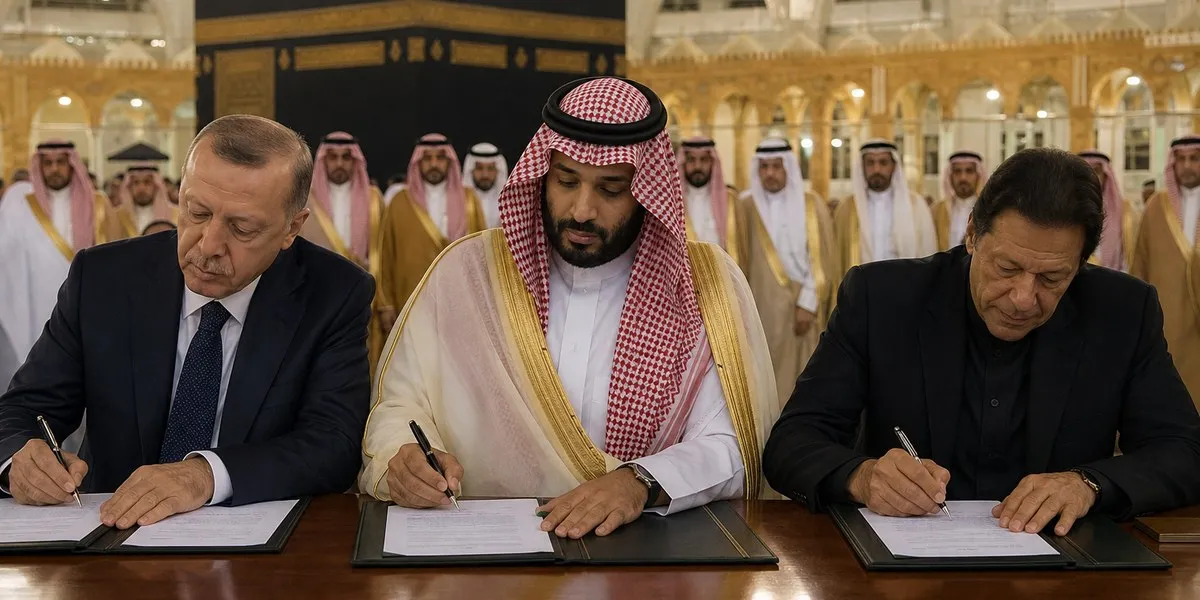
In recent developments, Saudi Arabia’s Mecca Joint Defense Agreement involving Turkey and Pakistan does not immediately imply that these countries will join the ongoing conflict in Yemen. This analysis, based on insights shared in The Jerusalem Post, highlights prevalent misconceptions regarding the implications of this agreement in light of Houthi advancements.
Understanding the Agreement’s Intentions
It is observed that various media channels have connected Houthi assaults and the security situation surrounding Mecca to the constraints of the defense agreement between Saudi Arabia, Turkey, and Pakistan. However, the author argues that the notion of Turkey and Pakistan being compelled to intervene militarily against the Houthis might stem from a flawed interpretation of the alliance’s purpose. The agreement was formed while the Yemen conflict was already in progress, and there is no evidence suggesting that Saudi Arabia intended to request troop deployments or air defense support from Ankara or Islamabad at the time of signing. Interestingly, Riyadh had already maintained defense collaborations with Pakistan prior to this agreement, providing a backdrop to the current arrangement.
Mecca Agreement vs. NATO
A critical comparison made within the article warns against equating the Mecca Joint Defense Agreement with the NATO alliance. Historically, NATO has refrained from participation in several conflicts, such as the Vietnam War, the Falklands War, and Northern Ireland, despite its collective defense principles. The author draws parallels between Saudi Arabia’s situation in Yemen and the United States’ involvement in Vietnam, emphasizing that Riyadh backs Yemen’s internationally recognized government while the Houthis receive advanced weaponry from external forces. This analogy helps to clarify the complexities surrounding the regional dynamics without oversimplifying them.
Potential Contributions of Turkey and Pakistan
Turkey and Pakistan hold the potential to offer valuable military insights and advice to Saudi Arabia, but the actual impact may be somewhat limited, according to the author’s perspective. Riyadh must first articulate a coherent policy regarding the conflict in Yemen before relying heavily on external partners. The premise of the Mecca Joint Defense Agreement appears less about mobilizing military forces from Turkey and Pakistan and more about fostering a spirit of cooperation among the nations involved. This proactive stance sets the stage for future collaboration rather than immediate military action.
In summary, the Mecca Joint Defense Agreement is a nuanced framework that aims to strengthen alliances rather than thrust partner nations into the spotlight of an ongoing military engagement. Understanding the true nature and intentions behind such agreements is crucial not only for regional security but also for assessing the evolving landscape of international alliances in the Middle East. As various stakeholders grapple with the complexities of the conflict in Yemen, a careful analysis underscores the significance of strategic partnerships and informed policy-making.