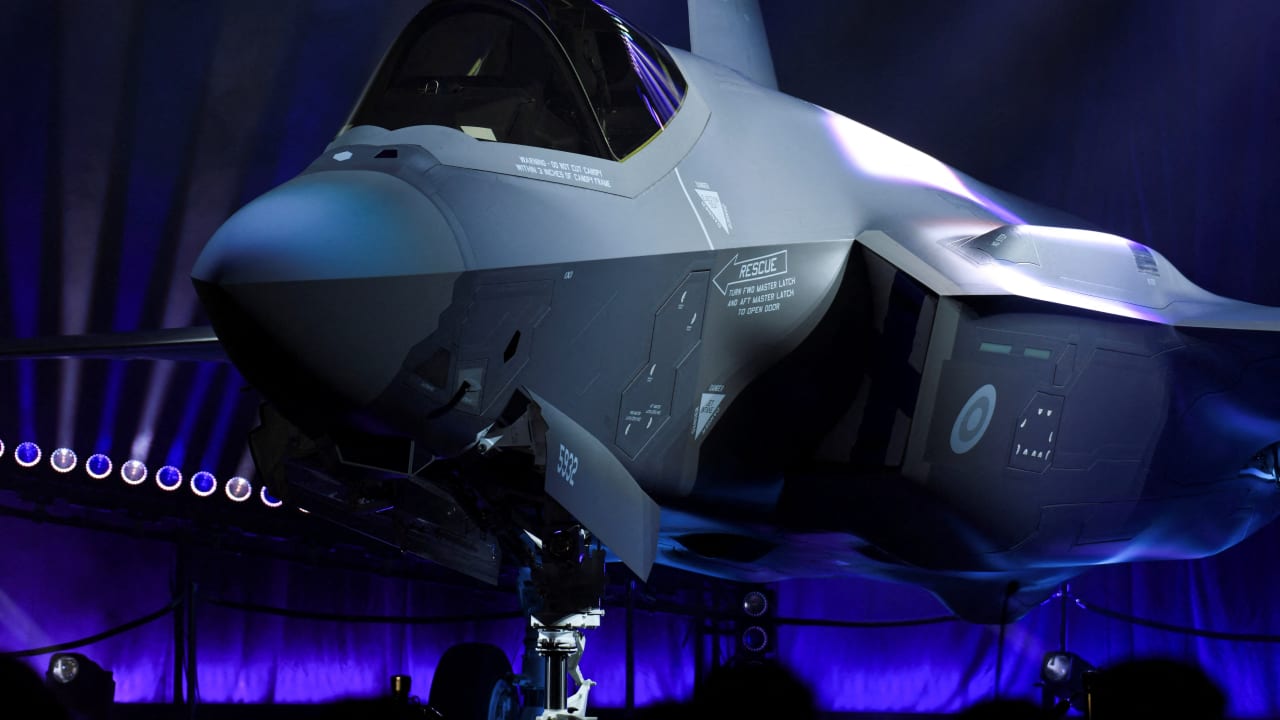
In light of recent geopolitical developments, the potential sale of F-35 fighter jets to Saudi Arabia has sparked significant discussion among national security experts. Following the State Department’s tentative approval of a $24.3 billion arms deal, experts are emphasizing the importance of addressing Israel’s qualitative military edge (QME) before proceeding with any agreements.
Significance of Israel’s Military Advantage
According to Jonathan Ruhe, a Fellow for American Strategy at the Jewish Institute for National Security of America (JINSA), the implications of this sale extend far beyond mere military transactions. The F-35 program is fundamentally designed to enhance U.S.-led collective defense efforts. For any sale to Saudi Arabia to be justifiable, it must ensure that Israel’s military superiority is preserved. As it stands, Israel is the only nation in the Middle East equipped with the F-35, and U.S. law requires that regional arms sales account for its defensive capabilities in countering credible threats.
Ruhe argues that American leadership is crucial in this context. “America must demonstrate its commitment to integrating Saudi Arabia into a new regional security architecture,” he stated, adding that Riyadh needs to show its reliability as a partner before acquiring such advanced technology. Therefore, addressing Israel’s QME should form a key component of the negotiations surrounding the F-35 sale to the kingdom.
Regional Security Dynamics with China
Another critical concern revolves around Saudi Arabia’s relationship with China, particularly in the field of defense and technology. Experts worry that ongoing collaborative ties between Riyadh and Beijing might compromise U.S. interests, particularly concerning sensitive technologies associated with the F-35. Washington must leverage its influence to ensure that Saudi Arabia formally ends any military cooperation with China, reinforcing that the kingdom is a dependable ally in U.S.-led security initiatives.
In assessments by U.S. intelligence, there are alarming fears that China could gain unauthorized access to sensitive F-35 technology via espionage within Saudi Arabia or through its existing military partnerships. These concerns highlight the need for rigorous checks and balances around F-35 systems to prevent potential leaks of sensitive data.
A Broader Strategy for Arms Sales
Ruhe emphasizes that the discussion surrounding the F-35 sale ought to be situated in a broader strategic framework, concerning not just the advanced capabilities of individual aircraft but also the implications for U.S.-Saudi relations and regional stability. He believes that the U.S. holds significant leverage in these negotiations due to its ability to offer greater security benefits compared to China.
This potential deal includes not just the aircraft itself but also crucial support services such as secure communications systems, training, and logistical backing. As the nature of modern warfare becomes increasingly complex, nations such as the U.S. must remain vigilant about the alliances they forge and the implications these have on their position in global security dynamics.
The proposed sale of F-35 jets to Saudi Arabia serves as a litmus test for the U.S. commitment to maintaining its strategic partnerships in the Middle East while safeguarding Israel’s military edge. Consequently, resolving these pivotal issues—Israel’s QME and Saudi Arabia’s relationship with China—will be paramount before any transaction is finalized.